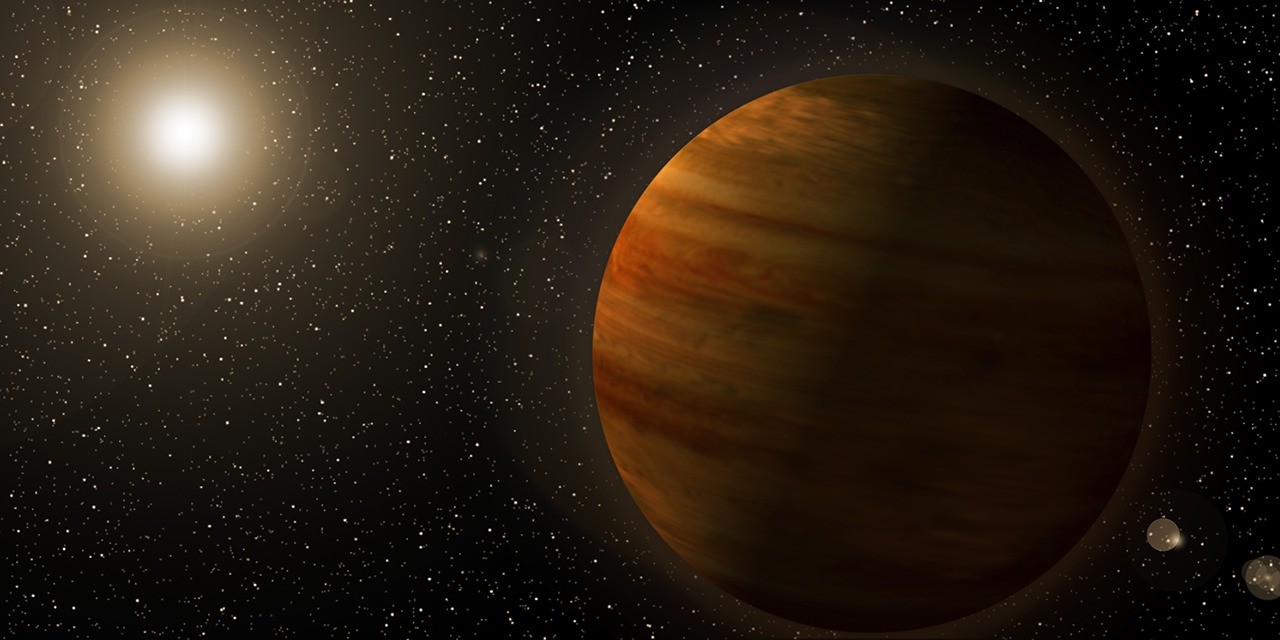
NASA's TESS mission has detected an exoplanet using gravitational waves for the first time, marking a fundamental shift in how astronomers discover worlds beyond our solar system. The planet, a super-Jupiter in a wide orbit around its host star, was found through ripples in space-time rather than the traditional transit method that TESS typically employs.
The Transiting Exoplanet Survey Satellite normally identifies planets by measuring the slight dimming of starlight as worlds pass in front of their parent stars. This transit technique works best for planets orbiting close to their stars. The new detection demonstrates that TESS can now unlock distant planetary systems by sensing gravitational wave signatures, expanding the mission's scientific reach dramatically.
Gravitational waves result from massive objects accelerating through space. When a super-Jupiter orbits far from its star, the orbital mechanics generate detectable gravitational wave signals. By combining TESS observations with gravitational wave data from ground-based detectors, researchers identified this previously hidden world. The discovery validates predictions that space-based observatories could contribute to gravitational wave astronomy.
This represents a convergence of two major astronomical fields. Gravitational wave detection, pioneered by the Laser Interferometer Gravitational-Wave Observatory (LIGO) and validated through neutron star mergers and black hole collisions, now extends to exoplanet discovery. TESS, launched in 2018 to survey nearly the entire sky for transiting exoplanets, reveals its capabilities span beyond its original mission design.
The super-Jupiter finding has implications for understanding planetary formation and migration. Wide-orbiting giant planets challenge traditional models of how solar systems develop. Detecting them through gravitational waves opens pathways to study worlds that transit methods alone would miss, particularly massive planets in eccentric or distant orbits.
The detection also demonstrates TESS's