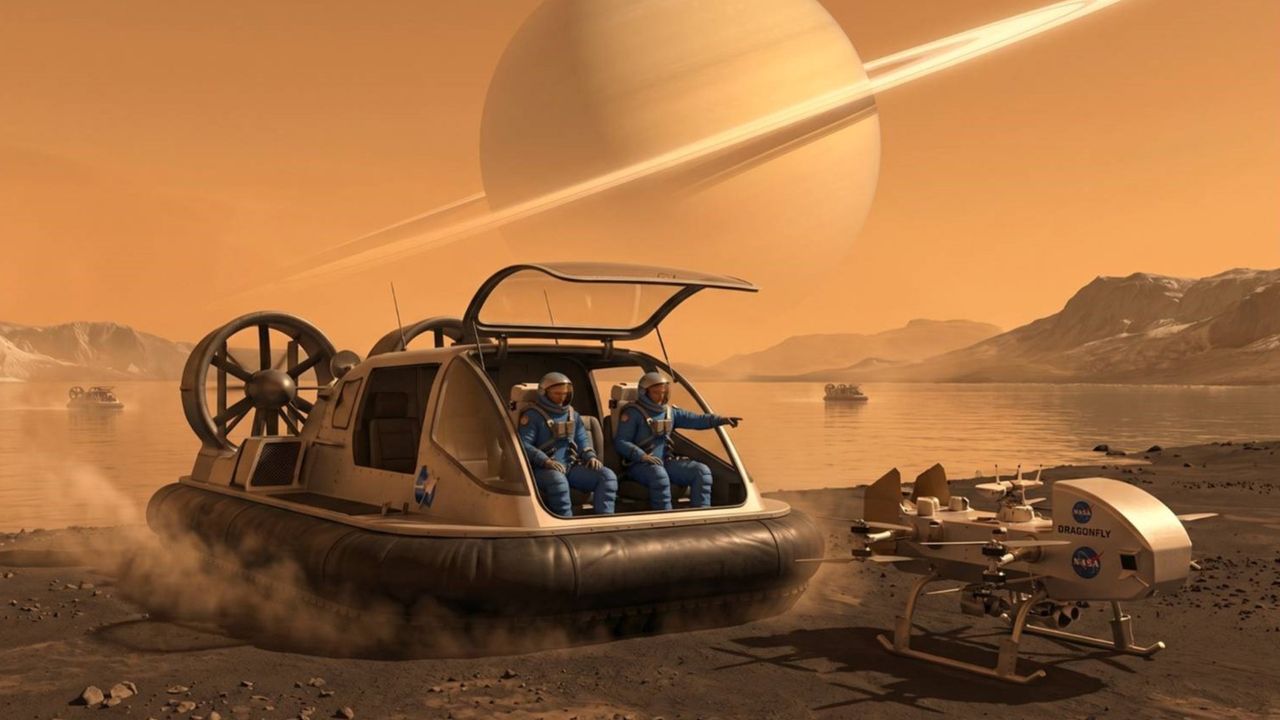
Scientists gathered for the inaugural "Humans to Titan Summit 2026" to chart pathways for crewed exploration of Saturn's largest moon. The meeting represents the first organized effort to develop concrete plans for landing humans on Titan, a world that researchers increasingly view as accessible for future missions.
Titan stands apart in our solar system. It possesses a thick nitrogen atmosphere denser than Earth's, stable surface conditions, and abundant organic chemistry. These features make it fundamentally different from airless bodies like the Moon or Mars. The moon's methane cycles and hydrocarbon lakes create a landscape suited for human operations, according to attendees.
The summit addressed critical challenges. Transportation systems must withstand Titan's extreme cold at 94 Kelvin. Life support systems require redesign for an atmosphere with different composition and pressure. Power generation becomes complex under Titan's distant location from the Sun, where solar panels generate minimal electricity. Scientists discussed nuclear reactors and radioisotope thermoelectric generators as solutions.
Titan's distance presents logistical hurdles. A journey requires multiple years of travel, placing demands on crew psychology and vehicle reliability. Yet researchers noted that Titan's thick atmosphere offers natural landing advantages. Parachutes work effectively during descent, reducing reliance on complex propulsive landing systems required for Mars or the Moon.
The scientific return justifies the effort. Titan's prebiotic chemistry mirrors conditions on early Earth. Studying its organic molecules, cryovolcanism, and hydrocarbon cycles could reveal pathways for life's emergence. The moon's internal ocean may harbor microbial life, making subsurface exploration a central objective.
Previous robotic missions established the foundation. NASA's Cassini-Huygens mission returned detailed data on Titan's surface and atmosphere. The upcoming Dragonfly rotorcraft mission, launching in the 2030s,