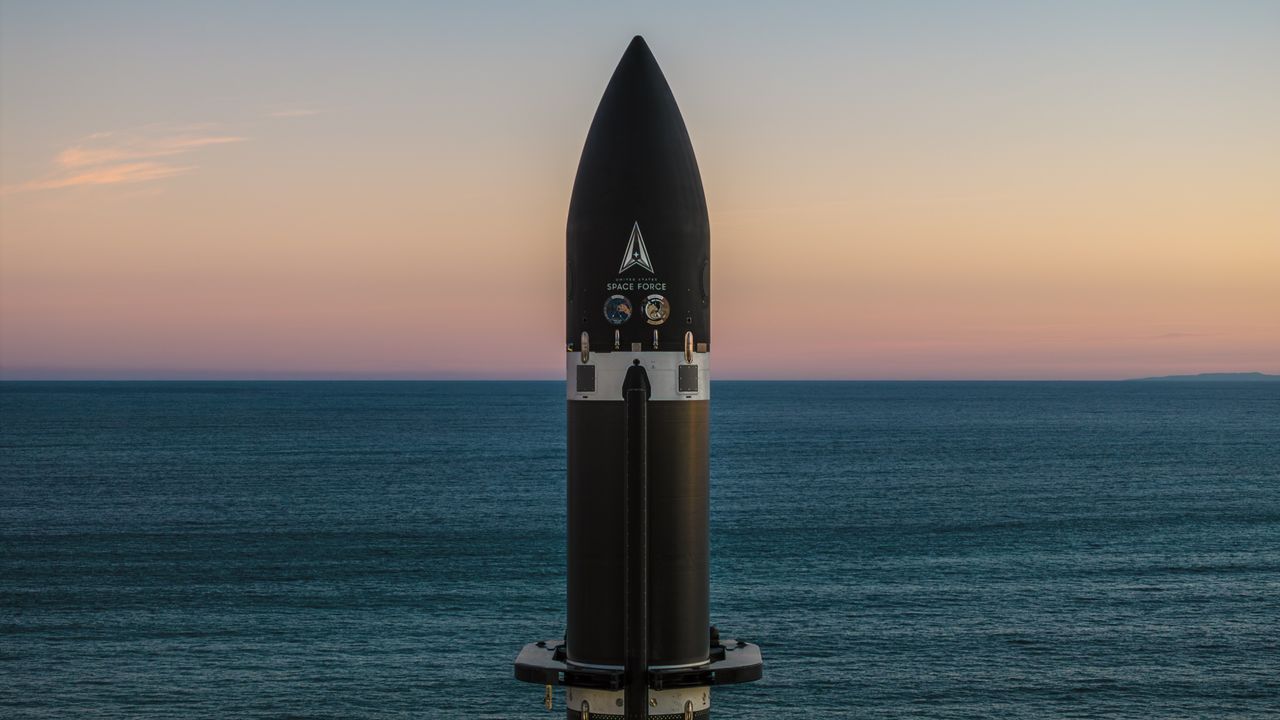
The U.S. Space Force completed its first tactical satellite intercept during the "Victus Haze" mission, demonstrating a new operational capability in orbital warfare. A private spacecraft successfully rendezvoused with and intercepted another satellite in space, validating the military's ability to maneuver against orbital targets during conflict scenarios.
The mission represents a watershed moment for space operations. Previous intercept demonstrations focused on debris removal or scientific objectives. Victus Haze differs fundamentally. It tested the Space Force's capacity to execute real-time tactical decisions against moving targets in orbit, capabilities essential for protecting U.S. and allied satellites during peer conflict with adversaries like Russia or China.
The Space Force contracted with a private company to conduct the intercept, leveraging commercial space infrastructure for national defense. This partnership model has become standard practice for military space operations, allowing rapid development and deployment of capabilities that would take years through traditional acquisition channels. The private sector's agility in spaceflight now directly supports American strategic interests.
Orbital interception involves extraordinary technical precision. The interceptor spacecraft must calculate approach vectors, match velocities with a moving target traveling at roughly 17,500 miles per hour, and close to within meters. Navigation errors of even small fractions cascade during orbital mechanics. The successful completion confirms both the Space Force's planning sophistication and the contractor's operational excellence.
The geopolitical implications run deep. Russia and China possess their own anti-satellite weapons. The demonstrated ability to intercept targets establishes that the United States can respond to orbital threats with its own active countermeasures. This capability strengthens deterrence by raising the cost of any adversary attempt to disable American space assets.
Space dominance increasingly determines terrestrial military advantage. GPS navigation, secure communications, early warning systems, and targeting data all depend on satellite networks. An adversary that destroys these assets cripples modern warfare