# Independence Day at 30: The Sci-Fi Blockbuster That Redefined Alien Invasion Cinema
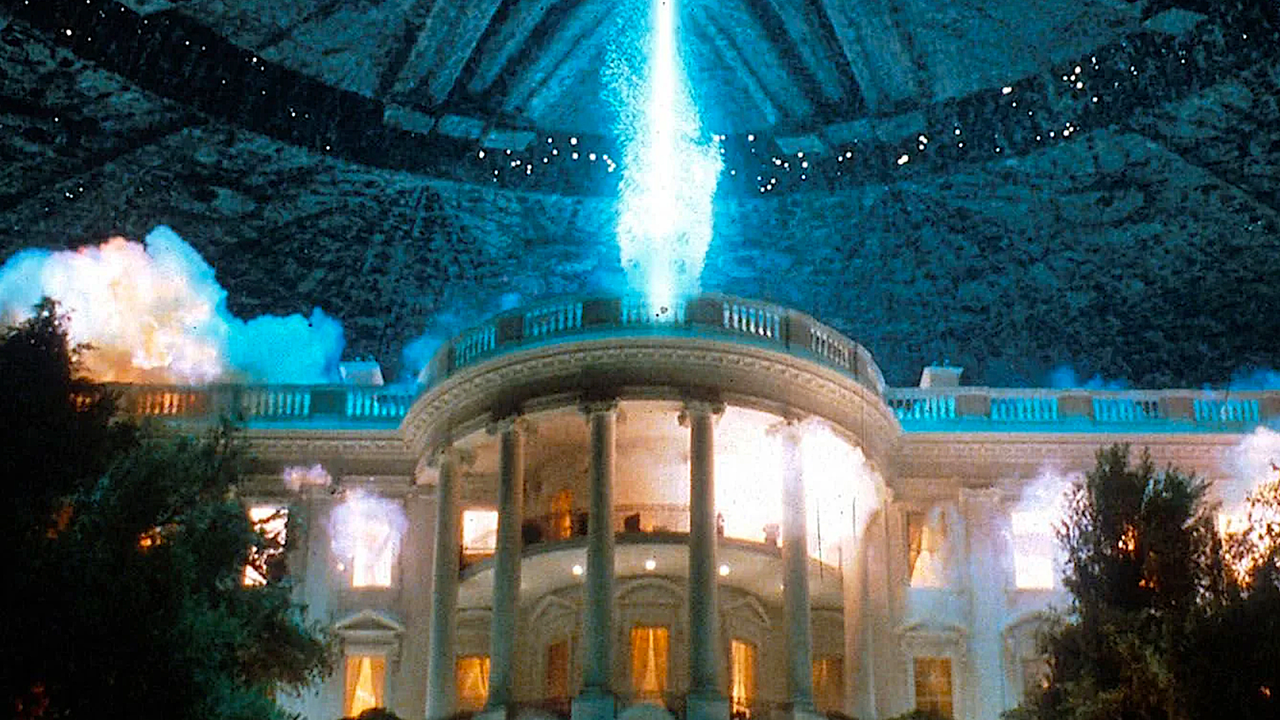
Roland Emmerich and Dean Devlin created a cultural phenomenon with Independence Day, the 1996 alien invasion film that fundamentally altered how Hollywood approached large-scale science fiction storytelling. The film's audacious destruction of iconic American landmarks, particularly the White House, set a new standard for disaster-scale spectacle that influenced blockbuster cinema for decades.
The film's opening sequence delivers extraterrestrial first contact on a scale audiences had never witnessed. A massive mothership hovers over Earth's major cities while smaller attack craft systematically obliterate urban centers. The narrative follows President Whitmore (Bill Pullman) and a ragtag coalition of pilots, scientists, and civilians as they mount a desperate counteroffensive against an alien armada threatening human extinction.
Emmerich and Devlin's creative partnership produced a script that balanced technical precision with genuine human stakes. The filmmakers grounded their science fiction premise in recognizable Earth locations and governmental structures, making the fantastical scenario feel immediate and terrifying. The decision to destroy the White House, a symbol of American power, became the film's most memorable visual and generated significant cultural conversation.
The production relied on then-cutting-edge practical effects combined with emerging digital technology. Visual effects supervisor Dean Cundey orchestrated destruction sequences using scale models, pyrotechnics, and early computer graphics. This hybrid approach created tactile, believable devastation that CGI-alone efforts often failed to achieve.
Independence Day grossed over $800 million worldwide, becoming one of the highest-grossing films of the 1990s. The film's success established the modern blockbuster template: international appeal, ensemble casting, escalating stakes, and spectacle that justified theatrical exhibition. Its influence permeates