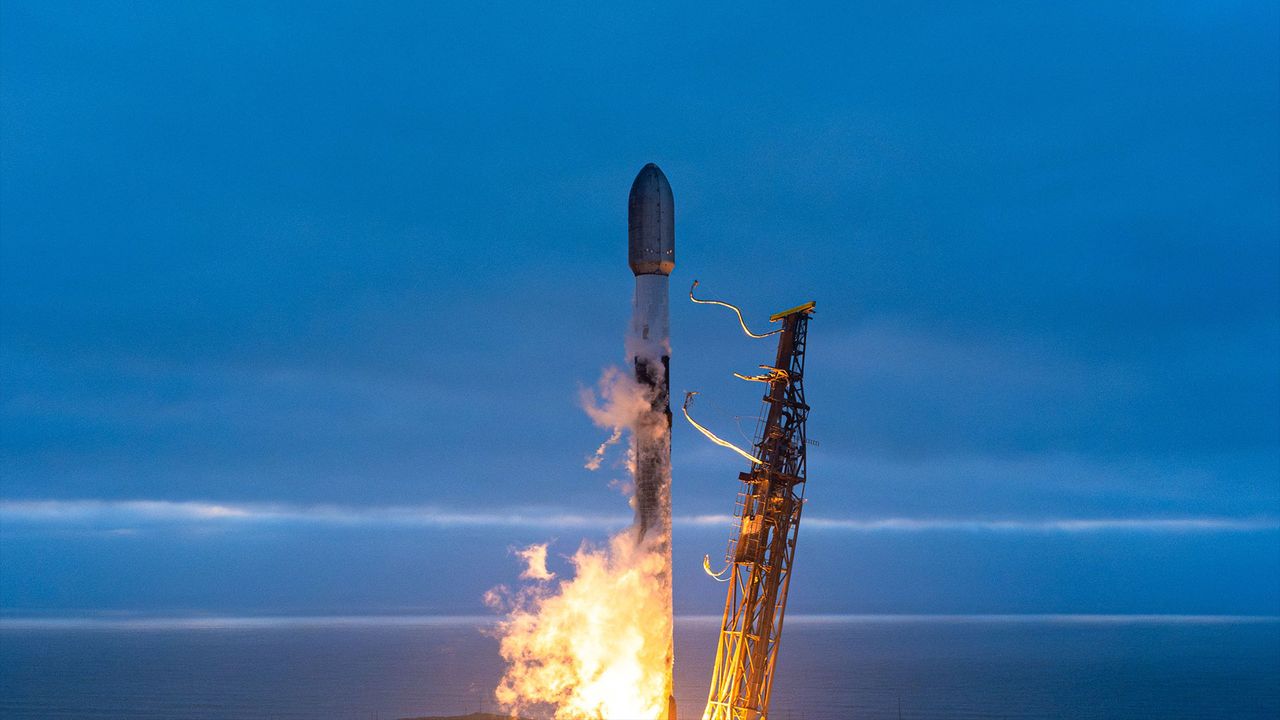
A SpaceX Falcon 9 rocket lifted off from Vandenberg Space Force Base in California on Wednesday, July 1, 2026, carrying 24 Starlink internet satellites into orbit. The launch continued SpaceX's relentless cadence of deploying its broadband constellation, which now numbers in the thousands of operational satellites.
Starlink satellites operate in low Earth orbit, roughly 340 miles above the planet's surface. Each satellite weighs approximately 573 pounds and carries phased-array antennas that beam internet service to ground terminals across the globe. SpaceX designed the constellation to provide high-speed, low-latency connectivity to underserved regions worldwide, competing directly with traditional internet service providers.
The Falcon 9 represents the workhorse of modern spaceflight. Its first stage returns to Earth for landing and reuse, dramatically reducing launch costs compared to expendable rockets. This reusability enabled SpaceX to achieve the launch tempo necessary for deploying thousands of Starlink satellites while maintaining commercial and government contracts.
Vandenberg Space Force Base, situated on California's central coast, serves as a critical launch site for polar and sun-synchronous orbits. The facility allows SpaceX to deploy satellites into different orbital inclinations than those launched from Kennedy Space Center in Florida, optimizing coverage across various latitudes.
SpaceX has now launched over 6,000 Starlink satellites since 2019, with thousands more in development. The company plans to deploy up to 12,000 satellites in its initial constellation, followed by authorization for an additional 30,000 units. This deployment strategy represents humanity's largest satellite constellation ever constructed.
The Starlink network already provides internet service to more than 2 million users globally, including remote areas previously limited to unreliable or nonexistent connectivity options. The constellation supports