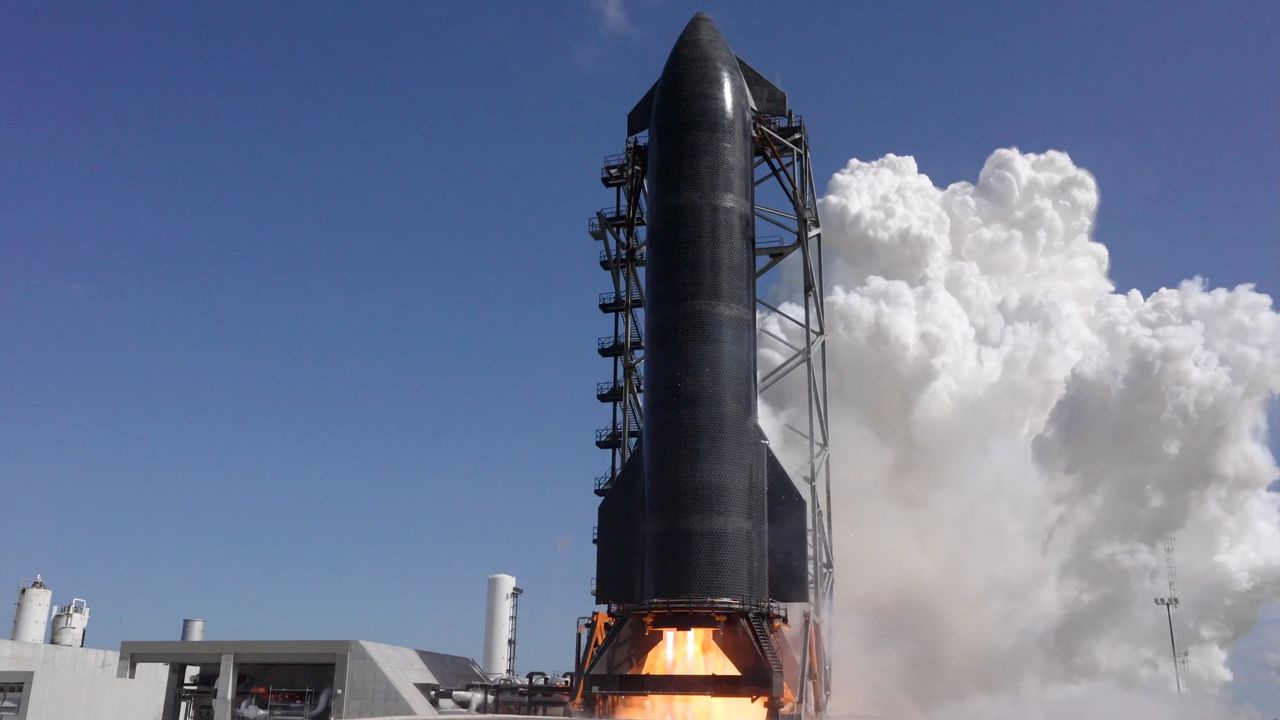
SpaceX conducted a full engine test of Starship at its Starbase facility in Texas, firing all six of the Super Heavy booster's engines simultaneously for one minute. The test represents critical preparation work ahead of the vehicle's 13th integrated flight test.
The company routinely performs static fire tests before attempting orbital launches. These ground-based burns validate engine performance, fuel system operations, and structural integrity under full thrust conditions. All six Raptor engines reaching full power together signals readiness for the next flight attempt.
Starship comprises two stages. The Super Heavy booster contains the six engines tested. The upper-stage Starship spacecraft sits atop the booster and carries its own engines for orbital maneuvers and landing burns. SpaceX has conducted 12 integrated flight tests since April 2023, with each iteration pushing closer to the program's goals of rapid reusability and full orbital capability.
The 13th flight test represents another step toward SpaceX's long-term objectives. The company aims to demonstrate booster catch capability using the launch tower's mechanical arms, controlled Starship reentry, and eventual landing in the Indian Ocean. Each test flight yields engineering data that refines the design and operational procedures.
Starship development directly supports NASA's Artemis lunar program. NASA selected the Starship HLS variant to land astronauts on the Moon during Artemis III. The vehicle must prove it can execute precise landings with cargo and crew. Additionally, SpaceX envisions Starship as its deep space exploration platform, eventually supporting Mars missions and interplanetary cargo transport.
Static fire tests like this one remain unglamorous but essential. They occur at the launch site before each flight attempt, ensuring all systems function within specification. SpaceX's rapid iteration approach relies on thorough ground testing to identify issues before they emerge during flight. The six-engine burn