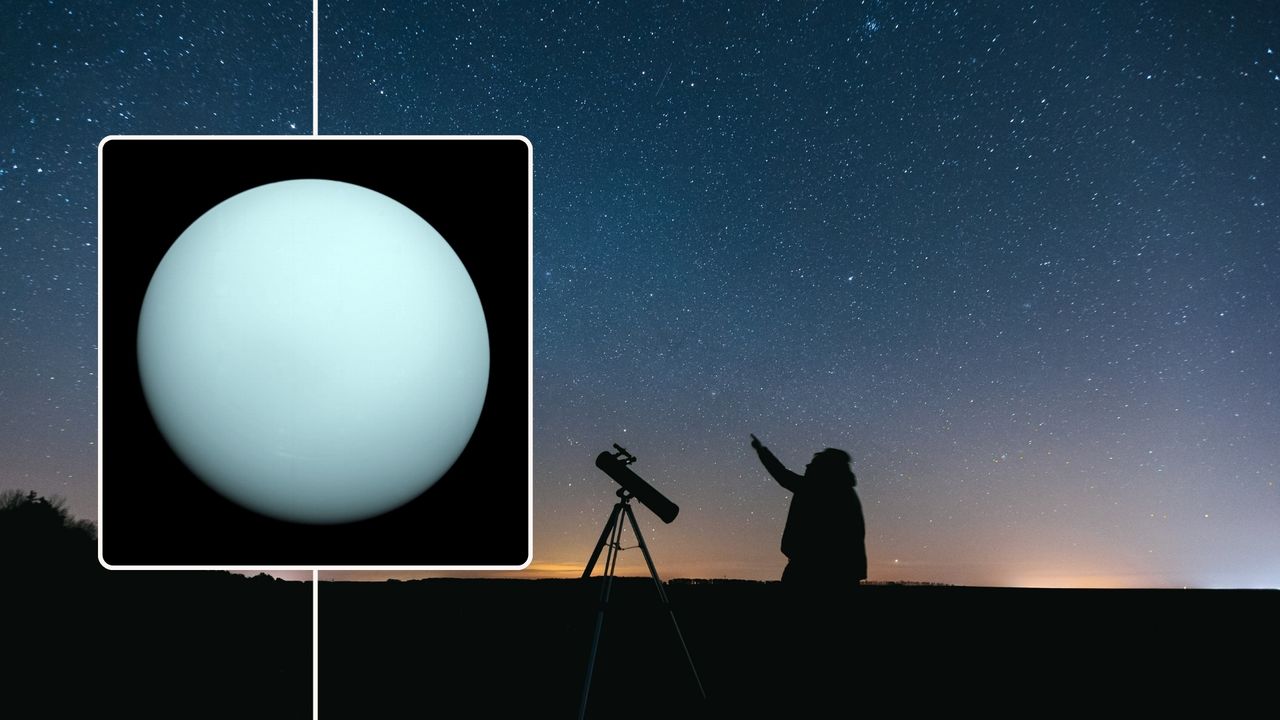
Uranus reaches an optimal viewing window this week as Mars passes nearby in the night sky, offering amateur astronomers a rare opportunity to locate the ice giant that typically remains invisible to the naked eye. The seventh planet from the Sun presents one of the most challenging naked-eye observing targets for casual stargazers, requiring dark skies and knowledge of where to look.
Mars serves as a celestial guide post during this conjunction. The brighter, ruddy planet acts as a reference point for finding Uranus, which shines at magnitude 5.3 — just barely within naked-eye visibility under ideal conditions. This alignment happens because the two planets share similar positions in the sky from Earth's perspective this week, though they remain vastly separated in space.
Uranus occupies a position in the constellation Aries. Observers should locate Mars first, then search the immediate area nearby. Binoculars significantly improve the chances of spotting Uranus, revealing the planet's distinct bluish-green hue caused by methane in its atmosphere. Telescopes show Uranus as a small disk, lacking the dramatic details visible on Jupiter or Saturn.
The ice giant orbits at an average distance of 1.8 billion miles from the Sun. Unlike the other planets visible to naked eyes, Uranus was discovered in 1781, making it the first planet found in the modern era. Its slow orbital path means it remains in the same region of sky for extended periods, returning to conjunction with faster-moving planets like Mars at predictable intervals.
This week's close approach provides a training moment for skywatchers seeking to expand their observing skills. Locating Uranus demonstrates the difference between casual stargazing and dedicated astronomy. Successfully spotting it represents a milestone in amateur astronomy, marking the transition from observing obvious celestial objects to hunting fainter, more elusive targets.