The Wright brothers would not achieve powered flight for another 127 years after American independence. Yet the trajectory from that moment of grounded terrestrial existence to modern spaceflight represents humanity's most dramatic technological leap.
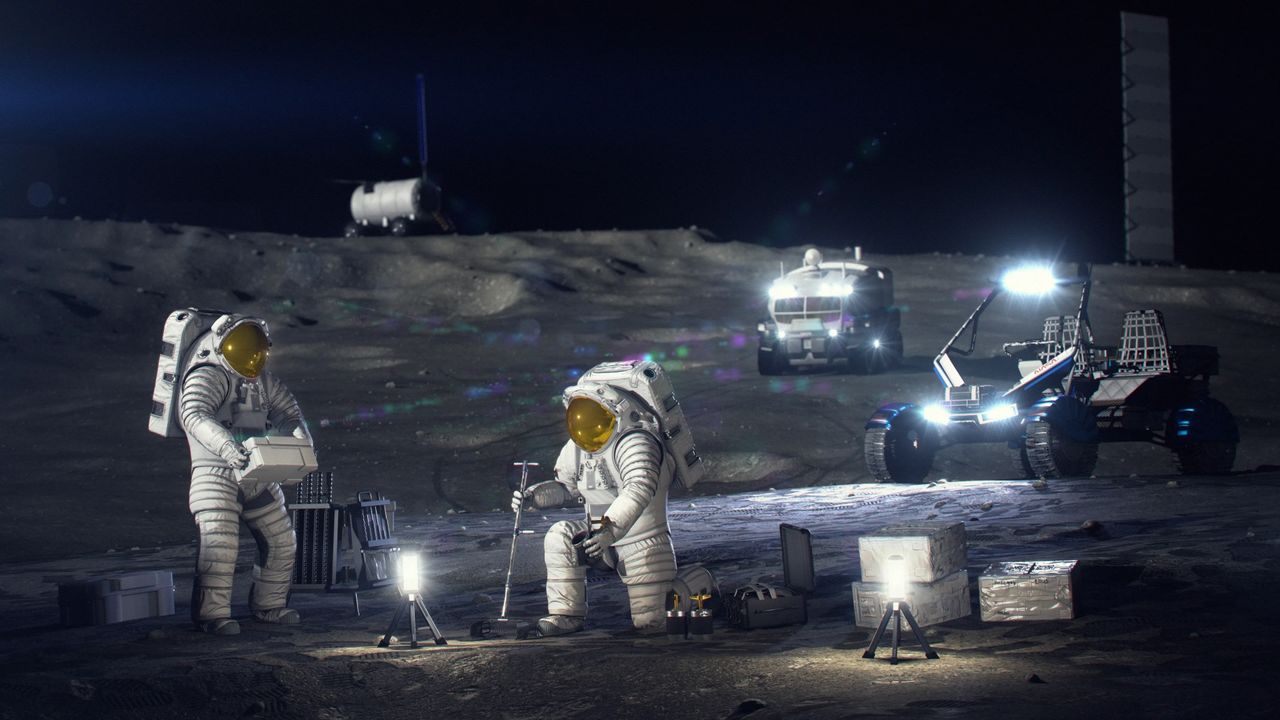
Today, NASA's Artemis program stands poised to return humans to the lunar surface for the first time since Apollo 17 touched down in 1972. The gap between those two eras spans less than a century. In 1776, the fastest humans could travel was by horse. Now robotic probes operate on Mars while astronauts conduct research aboard the International Space Station in continuous orbit.
The Artemis missions target the lunar south pole, a region rich in water ice and permanently shadowed craters that Apollo never explored. NASA aims to establish sustainable human presence there, not merely visit and return. The program integrates commercial partnerships through contracts with companies like SpaceX and Blue Origin, fundamentally different from Apollo's government-only model.
This next chapter of lunar exploration carries profound implications. The moon serves as a proving ground for technologies and procedures needed for Mars missions. Understanding how humans function in low gravity over extended periods, managing life support systems, and extracting resources from lunar regolith directly informs deep space architecture.
The Artemis missions also represent geopolitical stakes. China's lunar program advances rapidly, and establishing American presence matters for long-term cislunar domain authority. Commercial entities now bid competitively for lunar contracts, transforming space exploration from a purely governmental endeavor into an economic frontier.
From horseback speed in 1776 to lunar orbit in the 21st century, the acceleration compounds. The next seven years until Artemis achieves sustained human return to the moon will reshape how civilization understands both its past and its future in space.