In 1776, humanity understood the cosmos through telescopes and mathematics alone. Isaac Newton's laws governed celestial mechanics. The solar system consisted of six known planets orbiting the sun. No one had left Earth's surface.
Two and a half centuries later, humans walk on the moon. Rovers explore Mars. Spacecraft transmit images from the edge of the solar system. The James Webb Space Telescope peers into the infrared universe, revealing galaxies formed merely hundreds of millions of years after the Big Bang.
The transformation accelerated after 1957. The Soviet Union launched Sputnik 1, forcing the space race into existence. NASA formed in 1958. The Apollo program landed twelve Americans on the lunar surface between 1969 and 1972. Skylab, the Space Shuttle, and the International Space Station extended human presence beyond Earth.
Robotic exploration reshaped planetary science. Mariner 4 flew past Mars in 1965. Voyager 1 and Voyager 2, launched in 1977, still transmit data from interstellar space. NASA's Perseverance rover searches Mars for microbial fossils. The Hubble Space Telescope revolutionized astronomy in 1990. TESS hunts exoplanets. The Event Horizon Telescope imaged a black hole.
Technology drove these advances. Rocket engines improved. Computing power exploded exponentially. Sensors became more sensitive. Autonomous systems let machines explore hostile worlds without constant human control.
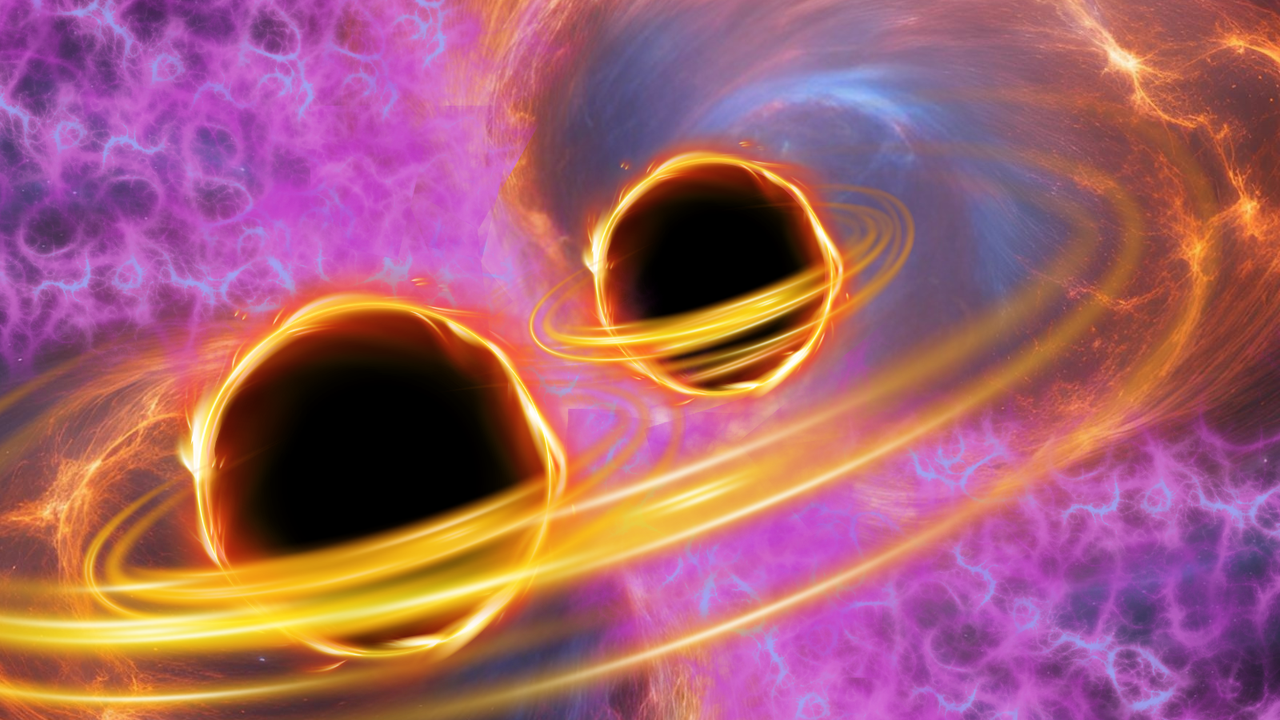
The understanding of space itself transformed. Scientists mapped the cosmic microwave background radiation, proving the Big Bang theory. Dark matter and dark energy emerged as mysteries comprising 95 percent of the universe. Gravitational waves, predicted by Einstein in 1916, were finally detected by LIGO in 2015.
From 1776 to 2