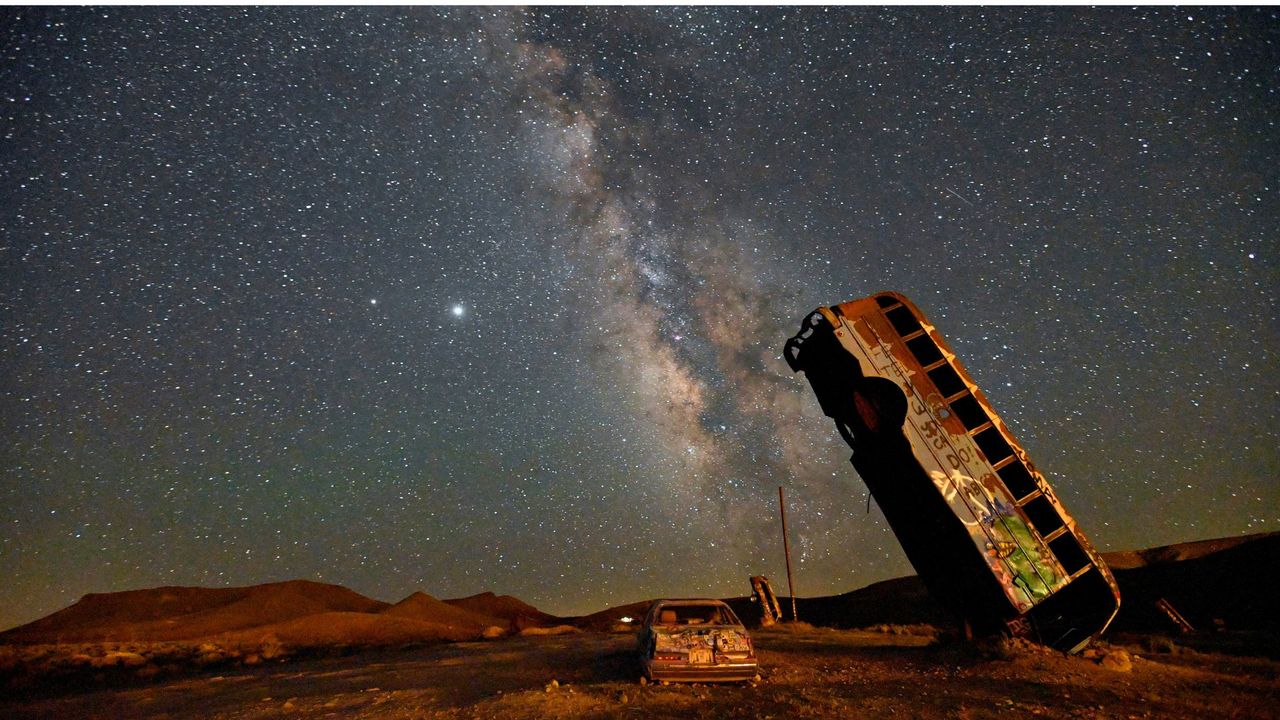
This Independence Day weekend, stargazers can observe four celestial objects that connect to American space exploration and heritage. The Moon's Sea of Tranquility hosts the Apollo 11 landing site, where Neil Armstrong and Buzz Aldrin touched down on July 20, 1969. Using binoculars or a small telescope, observers can locate the landing module's touchdown point in this ancient lunar mare. The site remains one of humanity's greatest engineering achievements and marks America's first crewed lunar landing.
The constellation Cygnus contains Albireo, a binary star system appearing as a striking blue-white pair through telescopes. This cosmic Eagle, as Cygnus translates, represents the spirit of exploration and discovery that defines American space programs.
The North America Nebula, also in Cygnus, resembles the continent's outline when viewed through binoculars or telescopes. This emission nebula lies about 1,600 light-years away and spans roughly 50 light-years across. Its shape offers a patriotic visual metaphor for terrestrial and celestial connections.
These targets celebrate America's 250th anniversary by linking ground-based astronomy with the nation's contributions to space exploration. The Apollo program demonstrated American ingenuity and technical prowess, establishing human presence beyond Earth. Ongoing programs like NASA's Artemis mission continue this legacy by planning lunar returns.
Observers need minimal equipment to spot these objects. The Apollo 11 site requires magnification to resolve clearly, while the North America Nebula appears best under dark skies away from light pollution. Binoculars work well for initial observations, though telescopes reveal finer details.
This weekend offers a rare convergence of patriotic celebration and astronomical observation. Looking skyward connects present-day Americans to both the cosmic realm and the pioneering efforts that established American dominance in space exploration