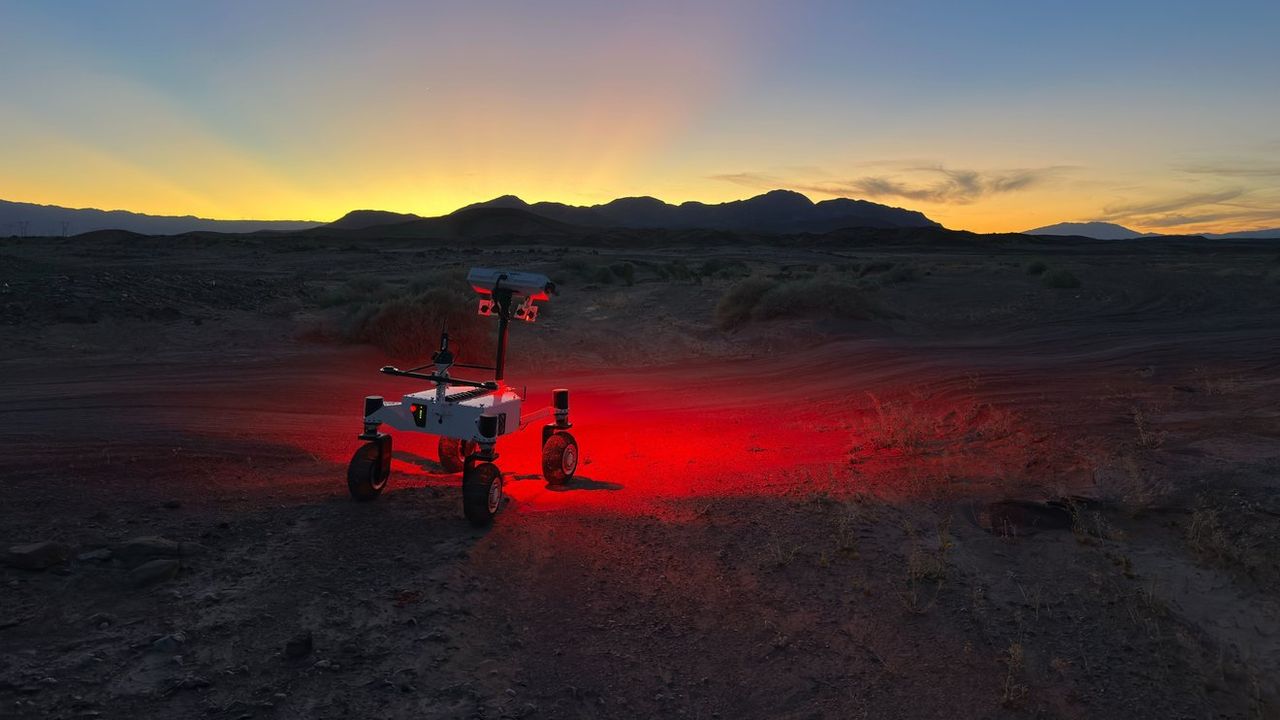
NASA tested an advanced rover prototype in California's desert landscape that represents a leap forward in autonomous navigation technology. The rover demonstrates self-directed decision-making capabilities that distinguish it from previous generations of Mars and lunar explorers.
The prototype incorporates artificial intelligence systems enabling the rover to assess terrain independently and chart its own path without waiting for commands transmitted from Earth. This autonomy becomes critical on Mars, where communication delays of up to 22 minutes create a lag between Earth-based commands and rover execution. A rover that thinks for itself can navigate obstacles, identify hazards, and optimize routes in real-time rather than following pre-programmed sequences.
Traditional rovers like Curiosity and Perseverance operate under strict command sequences, with scientists on Earth directing every movement. Operators must anticipate terrain challenges days in advance. The new prototype shifts this paradigm. Onboard processing allows the rover to evaluate rock formations, dust patterns, and slope angles as it encounters them, then adjust its navigation strategy accordingly.
Testing in California's desert provides invaluable data on how these systems perform across varied topography without the expense and logistics of Mars operations. The desert environment replicates the kind of challenging terrain rovers will face during future Mars missions, particularly those venturing into unexplored regions or pursuing longer-range traverses.
This technology directly supports NASA's Artemis program objectives and future crewed Mars missions. Autonomous rovers can scout ahead of human astronauts, identify safe landing zones, locate resources, and explore hazardous areas humans cannot access immediately. The capability to navigate independently accelerates scientific discovery and reduces mission risk.
As NASA plans longer, more ambitious expeditions across the Martian surface, rovers equipped with advanced autonomy will become essential assets. The California desert tests validate that these systems work reliably before integration into actual planetary missions, ensuring that future explorers possess the independence and capability to survive and thrive in environments millions