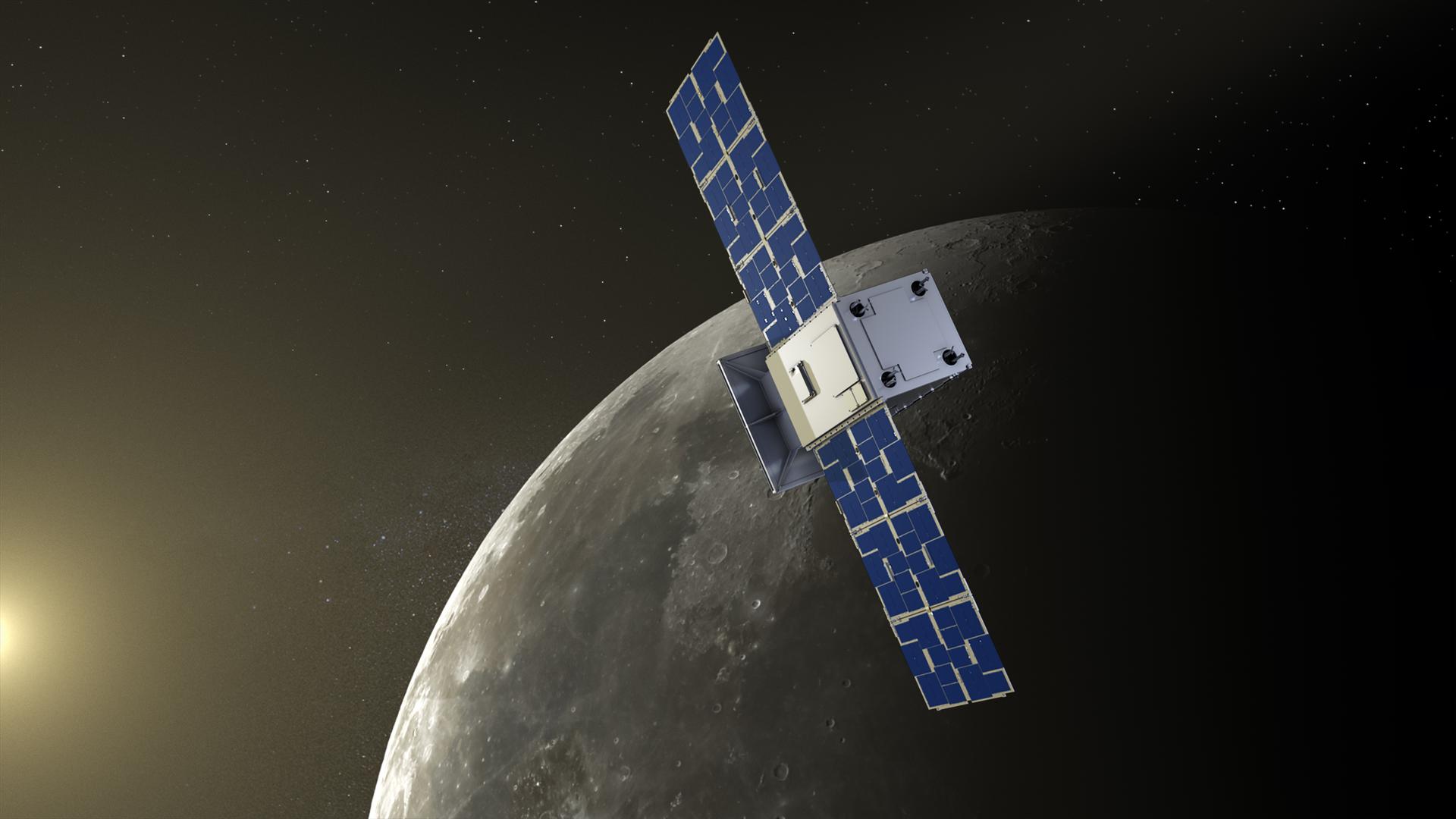
NASA's CAPSTONE spacecraft has completed its extended mission testing critical technologies that future lunar operations will depend on. The autonomous positioning and navigation systems CAPSTONE validated represent a fundamental shift in how spacecraft will function near the Moon, operating independently without constant Earth-based navigation support.
CAPSTONE launched to test the Cislunar Autonomous Positioning System Technology Operations and Navigation Experiment payload in actual lunar orbit conditions. The mission addressed a core challenge for sustained human exploration: spacecraft orbiting the Moon cannot rely on traditional ground-based navigation that works in Earth orbit. GPS signals fade at lunar distances. Radio signals experience significant delays. Future crewed missions, cargo operations, and lunar surface activities require systems that enable spacecraft to determine their own positions and navigate autonomously.
By extending operations beyond its primary mission timeline, CAPSTONE gathered additional validation data on these autonomous technologies. This testing directly informs the systems that future Gateway station operations, lunar landers, and surface exploration missions will require. Gateway, the planned lunar outpost that will support Artemis missions, depends on reliable autonomous navigation to maintain station-keeping in lunar orbit while supporting crewed and cargo operations.
The technologies CAPSTONE validated include autonomous orbit determination, inter-spacecraft communication, and navigation without relying on deep space network assets. These capabilities reduce operational overhead for NASA and enable more efficient use of limited lunar communication bandwidth. They also provide redundancy for crewed missions, a safety critical consideration for astronauts operating far from Earth.
CAPSTONE's extended mission demonstrates NASA's commitment to validating exploration technologies before committing humans to lunar operations. The spacecraft operated in a near-rectilinear halo orbit around the Moon, a complex orbital path planned for the Gateway station itself. Testing systems in the actual target orbit environment provides confidence that technologies will perform as designed during crewed Artemis missions.
The mission advances NASA's broader lunar exploration architecture. Reliable autonomous navigation enables the