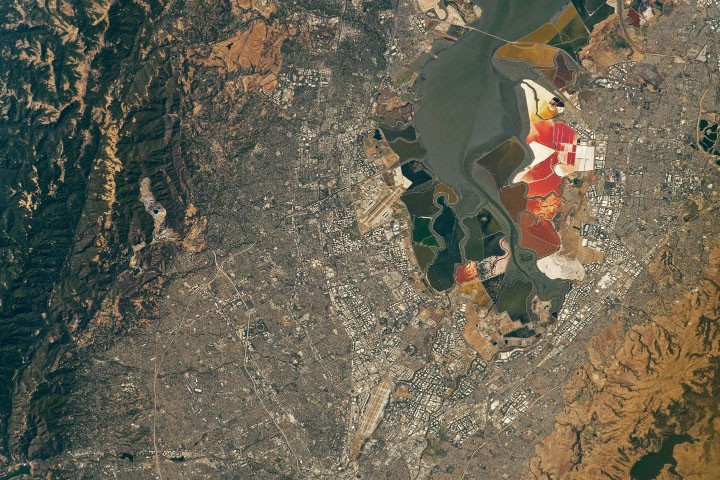
Astronauts aboard the International Space Station have captured orbital imagery of multiple cities set to host the 2026 FIFA World Cup. Operating from an altitude of 250 miles, crew members aboard the ISS documented several host cities using onboard cameras, providing rare perspectives of urban infrastructure and landscapes from low Earth orbit.
The International Space Station, a collaborative effort among NASA, Roscosmos, the European Space Agency, and other international partners, maintains a permanent human presence in orbit. Its vantage point allows astronauts to document Earth's surface with precision impossible from ground level. The space station completes approximately 16 orbits daily, passing over most populated regions of the planet during its 90-minute orbital period.
NASA released these photographs to highlight the unique capabilities of human spaceflight for Earth observation. The images showcase the 2026 World Cup host cities as they appear from space, revealing urban development, transportation networks, and geographical features surrounding each venue. The tournament will take place across the United States, Mexico, and Canada, with matches spanning multiple stadiums and host cities across the three nations.
This documentation represents a continuation of the ISS's Earth observation mission. Astronauts regularly photograph cities, natural phenomena, and infrastructure from orbit, contributing to both scientific research and public engagement with space exploration. The images serve educational purposes while demonstrating how orbital perspectives provide context for understanding global events and human settlements.
The 2026 World Cup represents a rare multinational sporting event, and viewing its host cities from orbit underscores the scale of human infrastructure visible from space. These photographs connect the abstract concept of global connectivity with concrete imagery, showing how major urban centers appear when observed from the vantage point of the International Space Station.