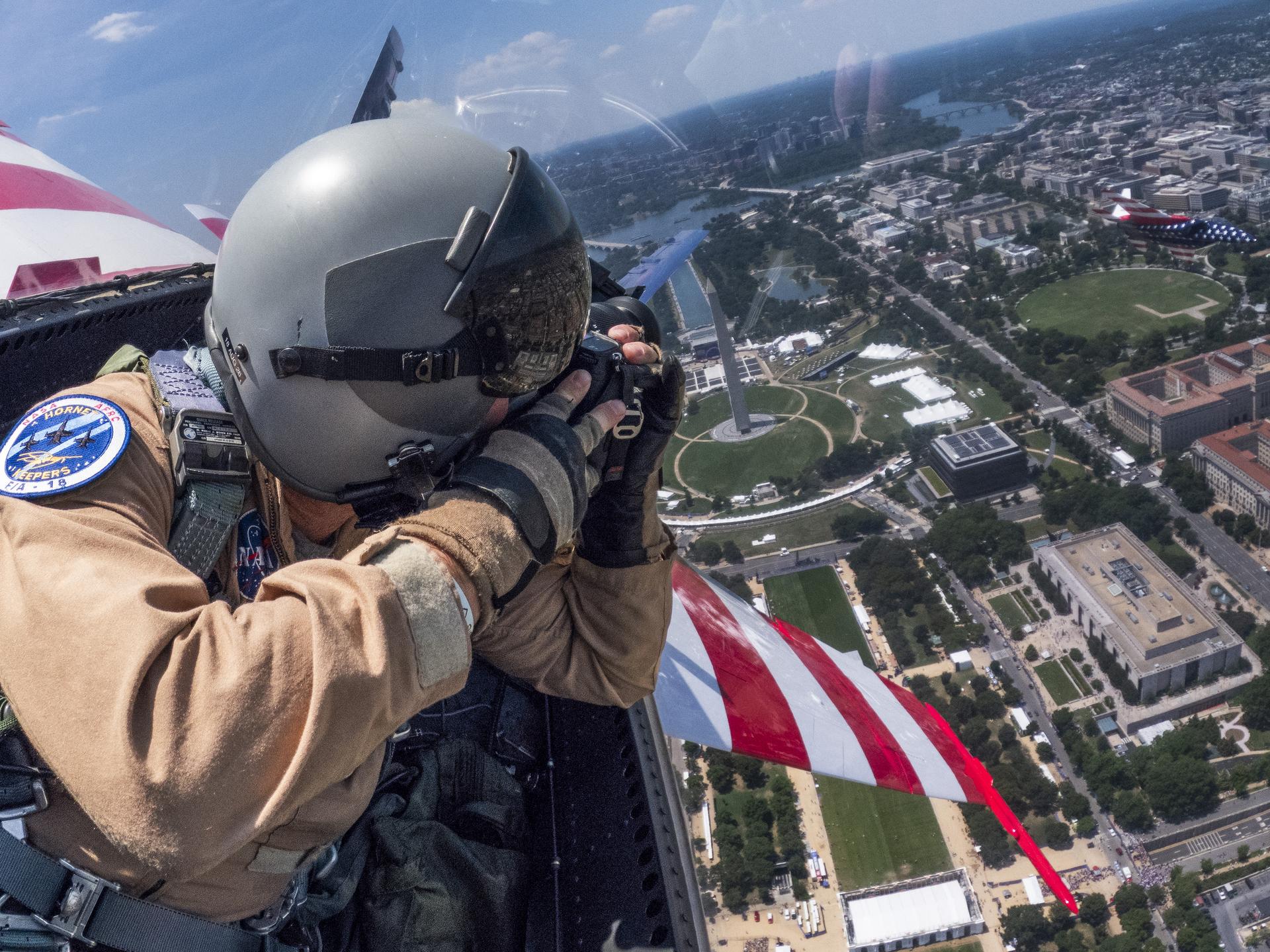
NASA photographer Jim Ross captured striking aerial images from an F-18 fighter jet flying over Washington, documenting the agency's flight research operations from a vantage point accessible to only a handful of professionals. Ross, based at NASA's Armstrong Flight Research Center in Edwards, California, works in a specialized role that combines aviation expertise with photojournalism to record aircraft testing and research missions in progress.
Flight photographers at NASA operate from chase aircraft during critical test flights, capturing real-time documentation of experimental planes, sensor systems, and aeronautical research that would otherwise remain invisible to the public. These images serve dual purposes: they provide mission-critical visual records for engineers analyzing flight behavior and aerodynamic performance, and they communicate NASA's aviation work to taxpayers and the broader public.
Armstrong Flight Research Center, located at Edwards Air Force Base, has long served as NASA's primary facility for experimental aircraft testing and flight dynamics research. The center operates some of the most advanced chase aircraft in the world, including specially equipped F-18s that carry high-speed cameras capable of capturing detailed aerial footage during complex maneuvers and test sequences.
The work requires photographers to endure extreme conditions including rapid altitude changes, g-forces, and equipment challenges while maintaining focus on their primary objective: documenting aircraft behavior and flight test data. Images captured during these missions become part of NASA's permanent record and often appear in technical reports, safety analyses, and public communications about American aeronautical research.
Ross's photographs from the F-18 demonstrate how NASA integrates visual documentation into its flight research operations. These images help engineers validate theoretical predictions, troubleshoot unexpected flight characteristics, and establish baseline data for future aircraft designs. By sharing these perspectives, NASA demonstrates the technical sophistication underlying modern aviation research and the diverse skill sets required to advance human spaceflight and aeronautical innovation.