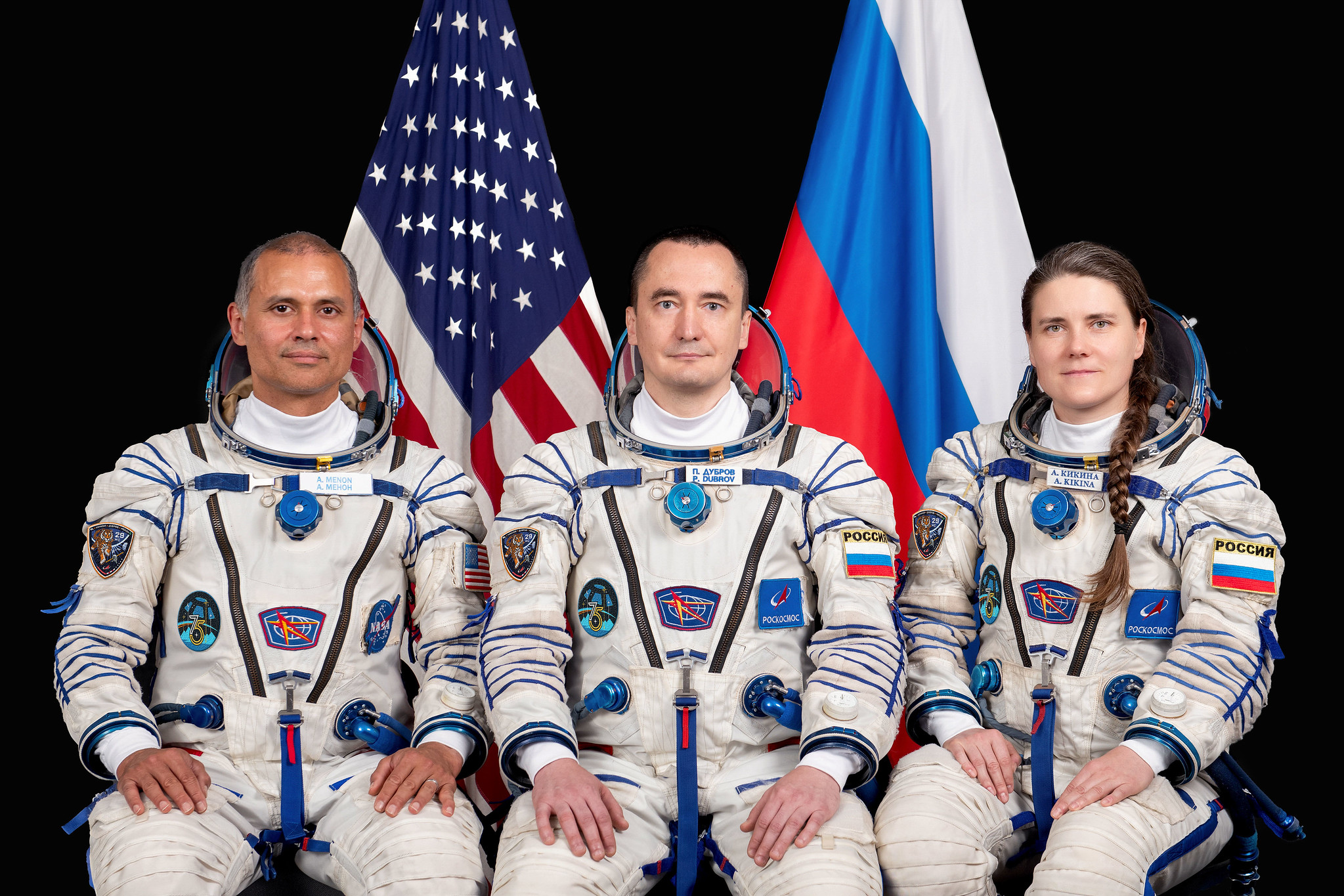
NASA astronaut Anil Menon launches to the International Space Station aboard Soyuz MS-29 on July 14 at 10:47 a.m. EDT from Baikonur Cosmodrome. Menon flies alongside Russian cosmonauts Pyotr Dubrov and Anna Kikina in this continuation of the long-standing human spaceflight partnership between NASA and Roscosmos.
The trio will dock with the ISS to join Expedition 74, the resident crew conducting continuous microgravity research. Menon brings expertise to the orbiting laboratory at a time when the station remains a critical hub for international science. The mission underscores NASA's reliance on Russian launch vehicles for crew transport, a relationship that persists despite geopolitical tensions.
Soyuz remains the proven workhorse for crewed missions to the station. Its three-person capacity and reliable track record have made it the backbone of ISS crew rotations for over two decades. The July launch adds another American to the station's rotating population while maintaining the bilateral framework that has sustained continuous human habitation in orbit since 2000.
Menon's deployment extends NASA's on-orbit presence as the agency simultaneously pursues its own commercial crew programs through SpaceX's Crew Dragon. The dual approach hedges American spaceflight capabilities while keeping costs distributed. Dubrov and Kikina bring Roscosmos expertise to the partnership, a reminder that despite terrestrial politics, orbital cooperation continues.
The Expedition 74 crew will conduct experiments across materials science, biology, and Earth observation. Every rotation adds hands to essential work that benefits research institutions across multiple nations. Menon's arrival represents the continuity required for long-duration research projects that span months and require sequential crew expertise.
The 10:47 a.m. EDT launch