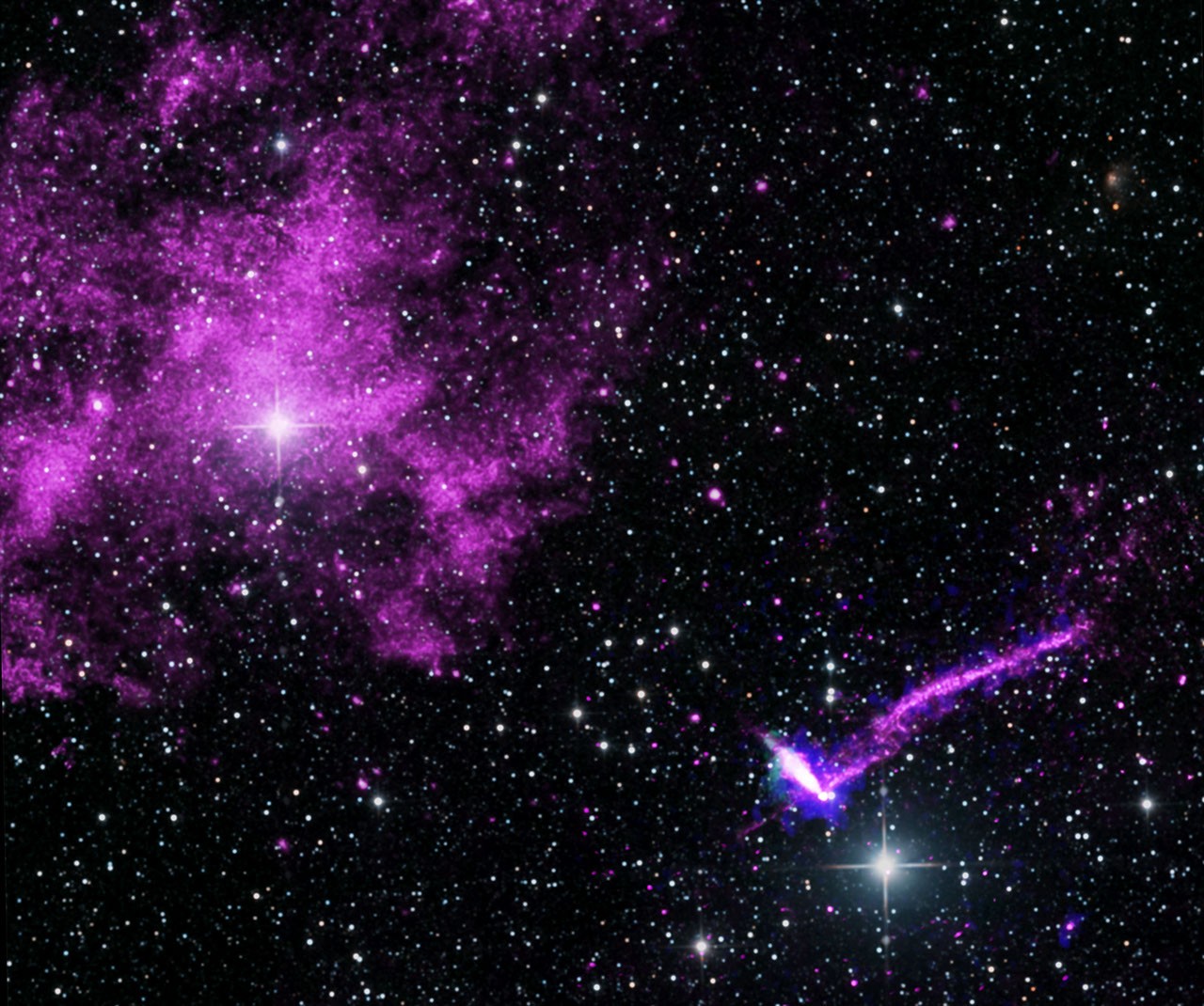
NASA's IXPE telescope has directly mapped the magnetic fields surrounding PSR J1101-6101, a pulsar embedded within the Lighthouse Nebula. This represents the first time scientists have captured such detailed polarimetric data from this specific pulsar, opening a new window into the magnetic architecture of neutron stars.
IXPE, which launched in December 2021, measures X-ray polarization by detecting the orientation and intensity of X-rays emitted from cosmic sources. Pulsars generate intense radiation as they spin, often at rates exceeding hundreds of times per second. The magnetic fields surrounding these objects shape how that radiation escapes into space. By analyzing polarized X-rays from PSR J1101-6101, researchers can now infer the geometry and strength of magnetic fields that remain otherwise invisible to traditional X-ray telescopes.
PSR J1101-6101 sits within the Lighthouse Nebula, a supernova remnant powered by the pulsar's energetic wind. The pulsar's rotation sweeps its magnetic field around like a rotating beam, earning pulsars their "lighthouse" nickname. Understanding how this field is structured reveals fundamental physics operating under conditions impossible to replicate in laboratories on Earth.
The magnetic field measurements constrain theoretical models of pulsar magnetospheres. Neutron stars compress the mass of the Sun into a sphere roughly 20 kilometers across, creating matter at densities that defy intuition. Their magnetic fields can exceed Earth's by trillions of times. These measurements from IXPE help explain how such extreme fields form and evolve after a star's catastrophic death.
The findings also improve our understanding of pulsar wind nebulae, the structures created when relativistic particles stream from the pulsar's magnetosphere. The Lighthouse Nebula's particular morphology depends directly on the underlying pulsar's magnetic