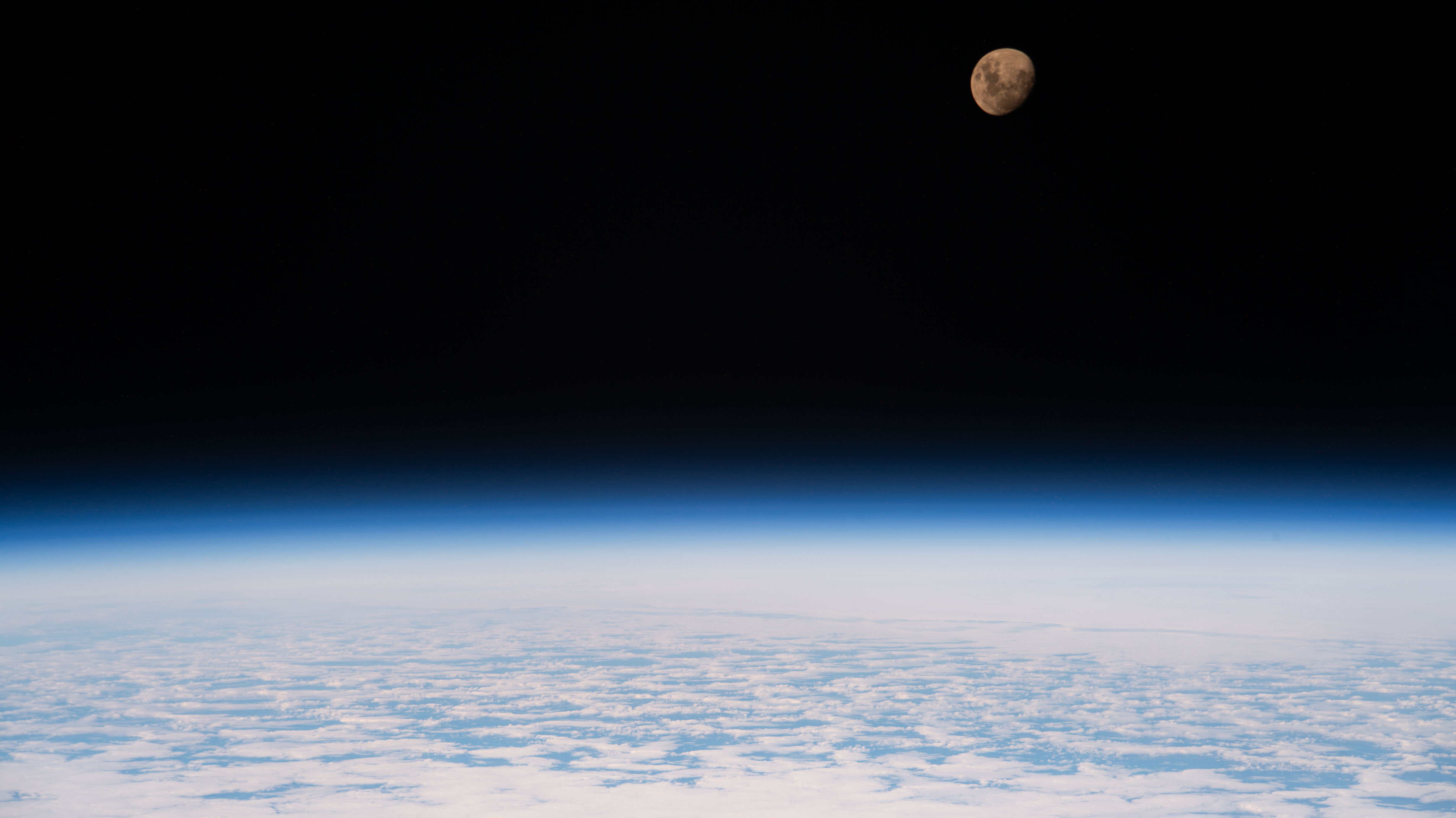
Astronauts aboard the International Space Station captured a striking photograph of the waxing gibbous moon on June 26, 2026, from an orbital altitude of 264 miles above the Indian Ocean southeast of Madagascar. The image showcases the moon during its phase cycle just before full moon, when more than half of the lunar surface reflects sunlight toward Earth but the illumination remains incomplete.
The waxing gibbous phase represents a specific moment in the lunar cycle, one of eight distinct phases that repeat every 29.5 days. During this period, the moon's brightness increases noticeably as the sun's angle relative to Earth and moon shifts, creating a crescent of shadow along the lunar terminator. Earth-based observers see the moon growing fuller each night as the phase progresses toward the full moon.
Photography from the ISS provides unique vantage points for studying Earth's natural satellite. The space station's orbital mechanics position it for capturing the moon against the darkness of space rather than Earth's bright daytime sky, eliminating atmospheric distortion that ground-based telescopes encounter. This perspective reveals lunar detail and contrast that terrestrial observations often cannot match.
The ISS completes an orbit every 90 minutes at approximately 17,500 miles per hour, placing its astronauts in position to witness lunar phases multiple times daily. Their location above the Indian Ocean southeast of Madagascar positioned them for this particular view, demonstrating how the space station's trajectory around Earth enables observations from diverse geographic locations.
Images like this serve dual purposes for NASA. They document lunar behavior for scientific study while simultaneously showcasing the capabilities of human spaceflight and orbital observation platforms. The photograph contributes to ongoing research on lunar illumination patterns and atmospheric effects visible from orbit, data valuable for mission planning and long-duration spaceflight operations.