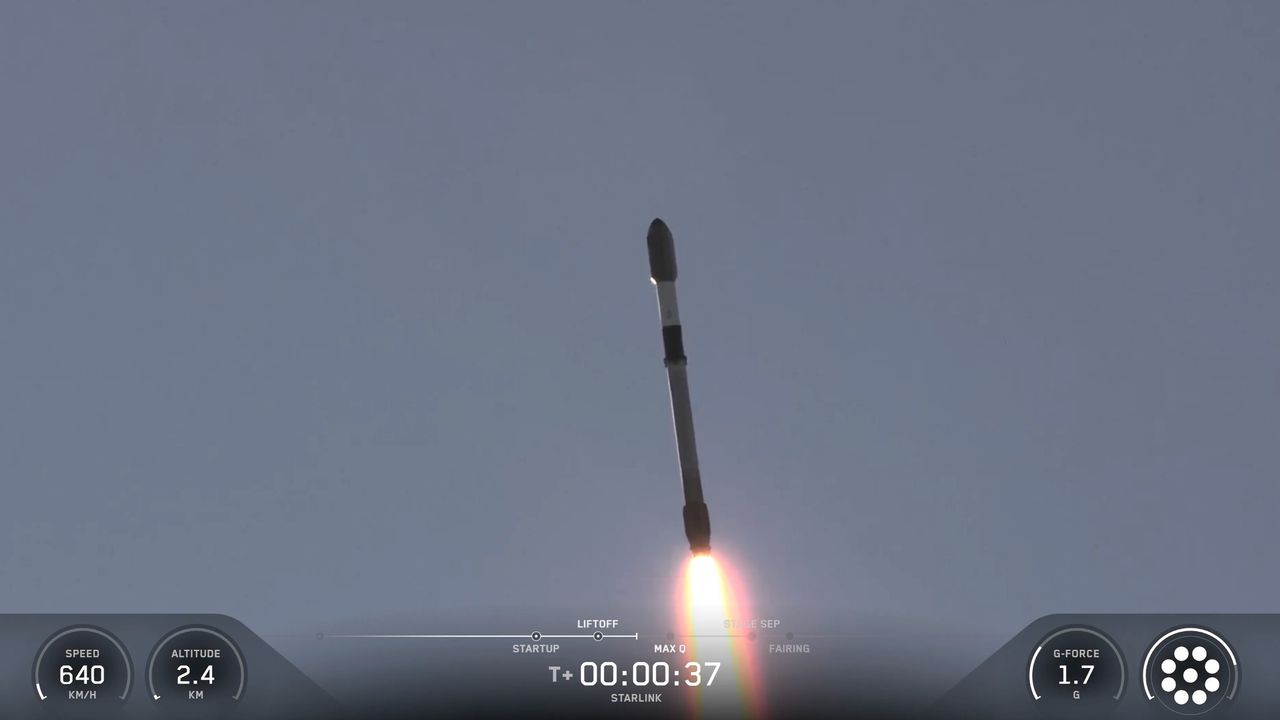
SpaceX's Falcon 9 rocket completed its 35th orbital flight on July 10, deploying 29 Starlink internet satellites to low Earth orbit. The launch marked another milestone in the company's aggressive cadence of reusable rocket operations.
The Falcon 9's first stage has become the workhorse of commercial spaceflight. Each successful flight demonstrates SpaceX's ability to rapidly turn around boosters, reducing launch costs and accelerating deployment of its broadband constellation. With 35 flights under its belt, this particular booster has helped establish reusability as the industry standard rather than the exception.
Starlink now comprises thousands of satellites in orbit, with each launch adding another layer to the network's global coverage. These 29 satellites join an infrastructure designed to deliver high-speed internet to remote areas and underserved populations worldwide. The constellation operates in low Earth orbit, roughly 550 kilometers above the surface, allowing for lower latency compared to traditional geostationary systems.
The consistent launch rate reflects SpaceX's dual objectives: advancing satellite internet service while simultaneously validating Falcon 9 as the most flown orbital rocket in history. Each successful mission reduces technical risk and operational uncertainty, proving that modern rocketry can support both commercial ventures and scientific exploration.
The achievement underscores a fundamental shift in spaceflight economics. Reusable rockets have transitioned from theoretical advantage to practical necessity, enabling companies to launch frequently without the prohibitive costs that once limited space access. SpaceX's 35-flight milestone with a single booster represents a transformation in how humanity approaches orbital operations, opening pathways for expanded commercial activity and deep space exploration beyond what was feasible in the era of expendable rockets.