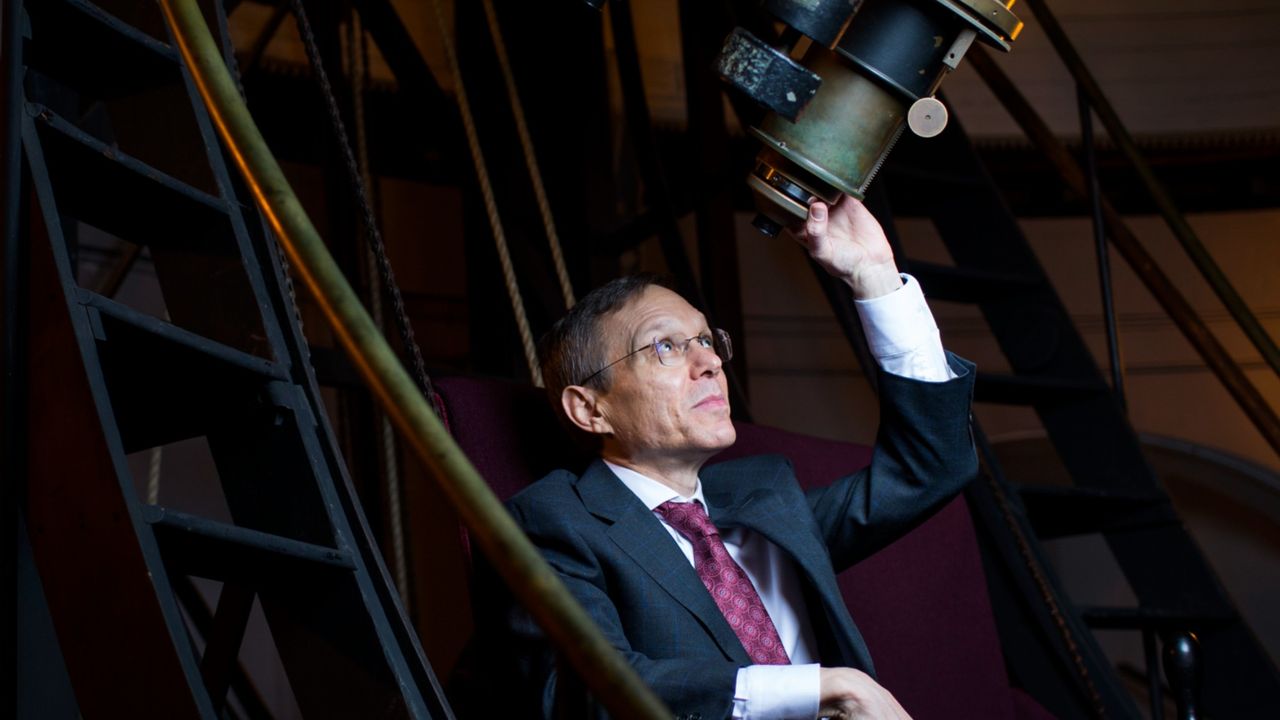
The White House appointed Harvard astrophysicist Avi Loeb to lead a newly formed government study group focused on unidentified anomalous phenomena, the official term now used instead of UFOs. Loeb brings decades of research experience to the role, having served as chair of Harvard University's astronomy department and director of the Black Hole Initiative.
Loeb has built a career examining unconventional hypotheses in astrophysics. He gained public attention for his 2019 research on Oumuamua, the first confirmed interstellar object detected by Earth's telescopes. Loeb proposed the object could represent artificial technology rather than a natural comet, a conclusion most astronomers rejected but which demonstrated his willingness to pursue provocative scientific questions. He has also conducted analysis of the so-called "Wow signal," a mysterious 1977 radio emission detected by Ohio State University's Big Ear observatory that remains unexplained.
The appointment reflects the U.S. government's shift toward treating UAP investigations as a scientific endeavor rather than purely a national security matter. The Department of Defense and intelligence agencies have released multiple reports documenting encounters between military pilots and objects displaying flight characteristics that defy conventional explanation. These incidents have generated serious congressional interest, with lawmakers demanding transparency and systematic study.
Loeb's leadership suggests the White House intends to apply rigorous astrophysical methods to UAP analysis. His scientific credentials lend legitimacy to government investigations while his history of exploring unconventional ideas makes him an advocate for open inquiry into phenomena that mainstream science has largely avoided.
The study group's formation marks a pivot in how federal authorities approach the UAP question. Rather than dismissing unexplained sightings as measurement errors or misidentifications, the government now mandates data collection and analysis by trained scientists. Whether the group uncovers natural explanations for documented incidents or