# Wild, Scenic, and Increasingly Rusty
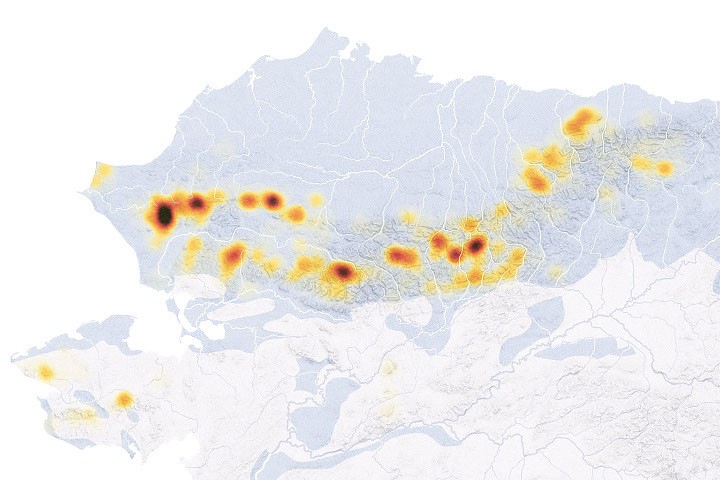
Orange streams flowing through Alaska's Brooks Range signal a dramatic shift in Earth's Arctic systems. NASA researchers have documented these rust-colored waters spreading across hundreds of watersheds in permafrost regions, a phenomenon driven by thawing ground that was frozen for millennia.
The orange coloration comes from iron oxidation. As permafrost thaws, it exposes sulfide minerals locked in the soil. Water percolating through these newly exposed materials creates sulfuric acid, which dissolves iron and manganese, staining streams bright orange. This process transforms pristine Arctic waterways into acidified systems hostile to aquatic life.
The Brooks Range sits at the frontline of Arctic warming. Temperatures in Alaska are rising roughly twice as fast as the global average, accelerating permafrost degradation. NASA's Earth observation capabilities have tracked this transformation across vast, remote terrain where ground-based monitoring would be prohibitively expensive.
These orange streams represent more than aesthetic change. The acidification alters fish habitat, disrupts nutrient cycling, and indicates wholesale restructuring of Arctic hydrology. Indigenous communities and wildlife that depend on these ecosystems face cascading ecological shifts. Salmon spawning grounds become marginal. Drinking water sources change composition. The visible color signals invisible chemical transformations happening across the landscape.
Scientists studying these watersheds are gathering data on how rapidly permafrost collapse progresses and what chemical signatures accompany it. This knowledge helps predict how other Arctic regions will respond to warming. The Brooks Range serves as an early-warning system for changes coming to permafrost zones worldwide, from Siberia to Canada to Greenland.
The orange streams tell a story written in iron oxide. They document permafrost's final chapters, the ground remembering its frozen past even as it transforms into a warmer present.