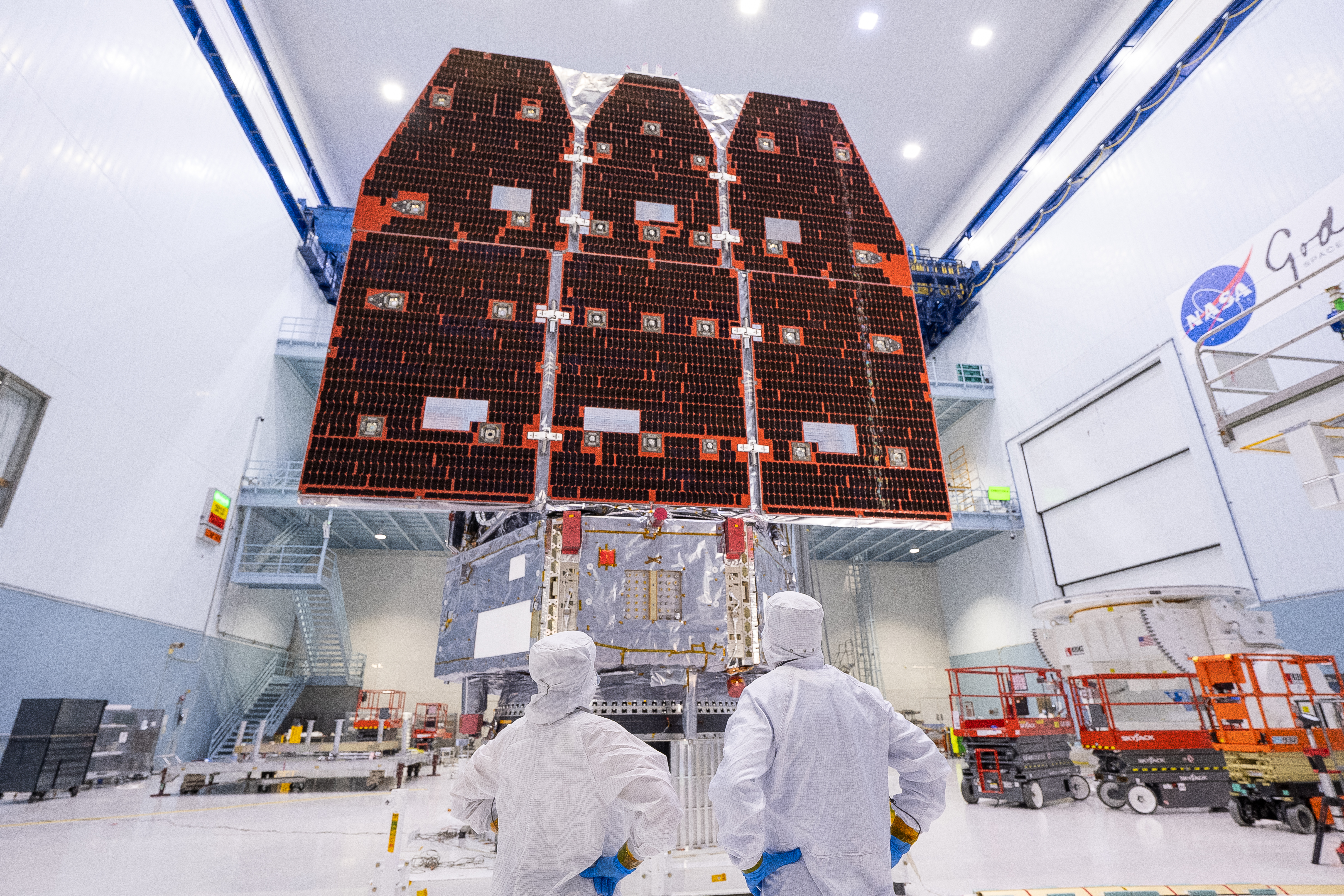
NASA has opened media accreditation for the launch of the Nancy Grace Roman Space Telescope, scheduled for no earlier than 7:20 a.m. Eastern Time on Sunday, August 30.
The Roman telescope represents a major step forward in astrophysics. Named after pioneering NASA astronomer Nancy Grace Roman, the observatory will conduct wide-field imaging and spectroscopy across infrared wavelengths. Its 2.4-meter primary mirror and advanced instrumentation will enable detection of exoplanet atmospheres, mapping of dark matter distribution across the universe, and observation of distant supernovae and galaxy evolution.
The mission follows decades of development and engineering refinement. Roman's capabilities will complement and extend beyond those of the James Webb Space Telescope, particularly in surveying large patches of sky simultaneously. This survey capability opens new pathways for discovering planets orbiting other stars and understanding the expansion history of the universe itself.
Launch details remain subject to weather and technical readiness reviews typical of space missions. The Roman telescope will operate from Sun-Earth Lagrange Point 2, approximately one million miles from Earth. This vantage point provides a stable thermal environment and unobstructed view of the cosmos.
Media accreditation for launch events typically allows journalists access to Kennedy Space Center facilities and NASA personnel conducting real-time mission operations. Coverage of major telescope launches generates public understanding of space science infrastructure and the years of collaboration required to bring such instruments to completion.
The Nancy Grace Roman Space Telescope builds on technological heritage established by Hubble and prepares methodology for future observatories in the coming decade. Roman's infrared sensitivity and wide-field design will answer fundamental questions about planetary systems, dark energy, and the prevalence of habitable worlds beyond our solar system.