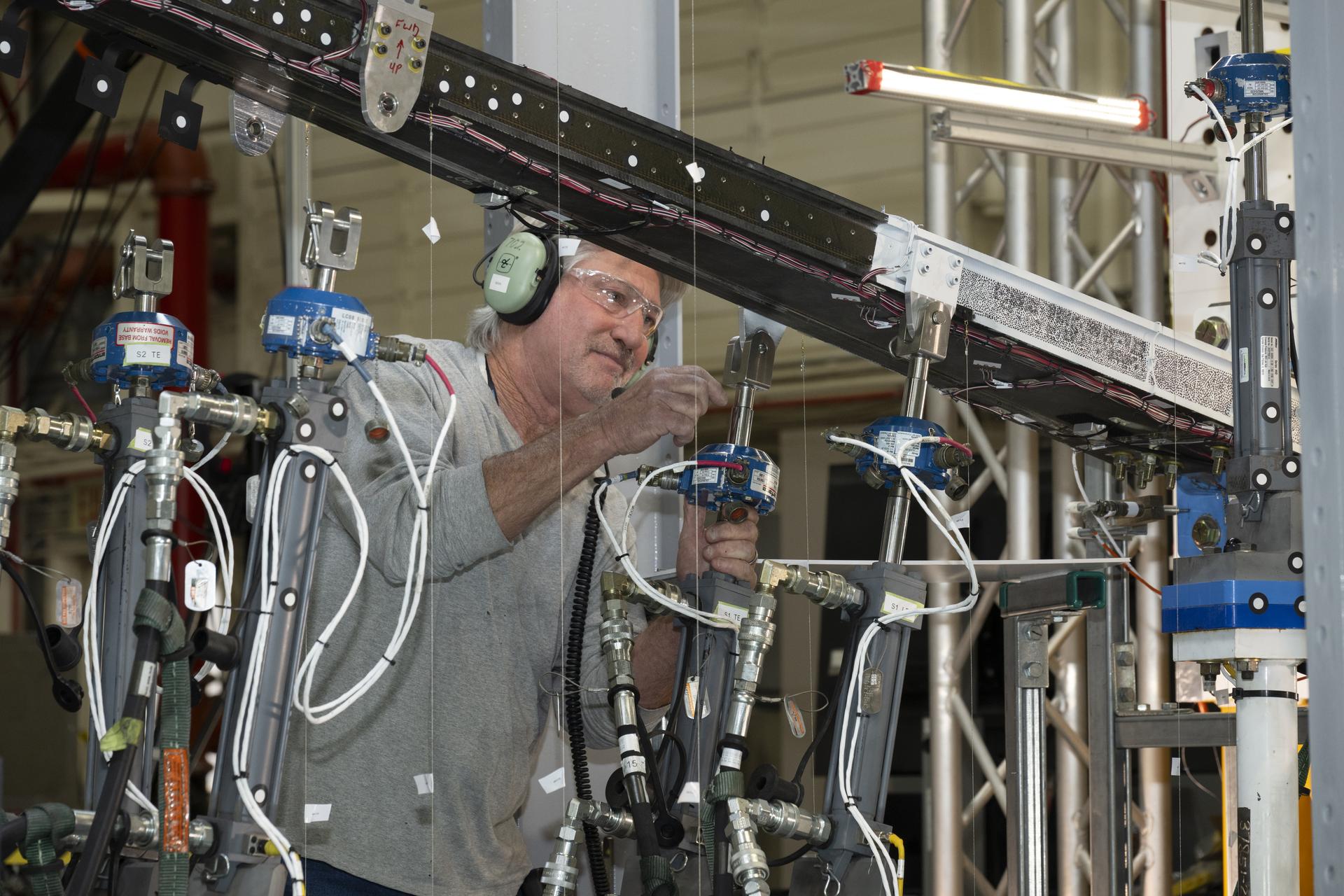
NASA engineers tested SWEET-15, a 15-foot experimental wing featuring unconventional long, thin geometry and lightweight truss-bracing structures, to determine how far the design could bend before failure. The researchers deliberately pushed the wing past its operational limits during the tests, seeking to understand exactly where structural failure occurs and how the design responds under extreme stress.
The results encouraged the team. SWEET-15 demonstrated remarkable resilience, handling loads well beyond its intended operational range before showing signs of structural compromise. This performance suggests the truss-braced wing concept could deliver significant advantages for future aircraft.
Truss-braced wings reduce weight compared to conventional designs by distributing loads across an internal framework rather than relying on thick, heavy wing surfaces. The combination of slender proportions and this load-distribution architecture creates aircraft that consume less fuel and produce fewer emissions. For commercial aviation, military transport, and eventual hypersonic vehicles, these efficiency gains translate directly to reduced operating costs and environmental impact.
NASA's structural testing program feeds directly into the agency's efforts to transform aviation technology. Researchers use these controlled failure tests to validate computer models and establish design margins. Each test data point refines our understanding of how composite materials and complex geometries behave under real-world conditions. The findings inform the next generation of wing designs that NASA engineers are already developing.
The SWEET-15 project represents practical progress toward quieter, cleaner aircraft. As commercial aviation seeks to meet climate targets and regulators demand efficiency improvements, unconventional designs like truss-braced wings move from theoretical advantage into testable reality. NASA's commitment to finding these structural limits now accelerates the timeline for implementing innovations that could reshape how we fly.