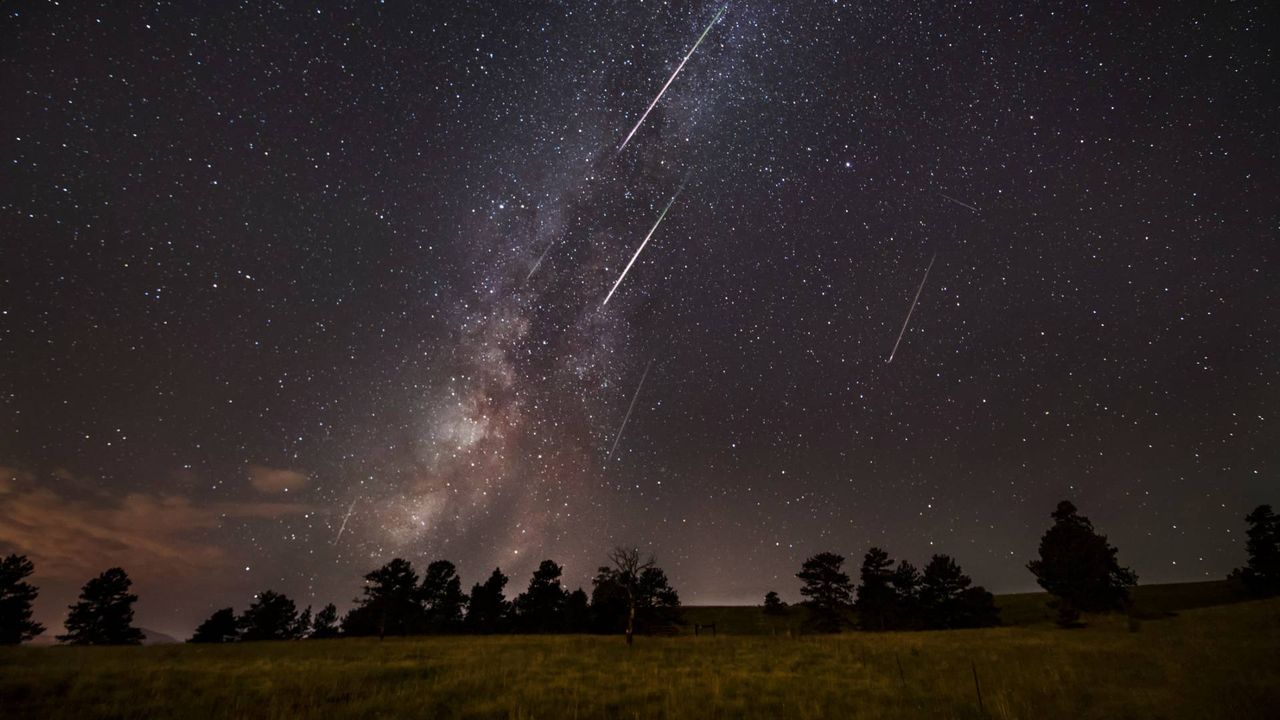
August 12, 2026, brings a rare convergence of celestial events for North American skywatchers. A partial solar eclipse during daylight hours will precede the peak of the Perseid meteor shower at night, creating exceptional viewing conditions across select regions of the United States and Canada.
The Perseid meteor shower, one of the year's most reliable displays, originates from debris left by Comet Swift-Tuttle as Earth passes through its orbital path. The shower typically produces 50 to 100 meteors per hour at peak, with the 2026 peak occurring under favorable conditions. The simultaneous partial solar eclipse amplifies the astronomical significance of the date, as the Moon passes in front of the Sun without completely blocking it across North America.
Not all locations offer equal viewing opportunities. The partial eclipse's path of visibility and the meteor shower's best observation zones overlap in specific geographic regions. Northern locations generally provide darker skies for meteor observation, while eclipse visibility depends on proximity to the eclipse path. Combining both events into a single trip requires strategic planning and site selection.
The Perseid shower results from solar radiation pressure and gravitational interactions that illuminate particles entering Earth's atmosphere at approximately 132,000 miles per hour. The partial eclipse demonstrates the geometric mechanics of our Earth-Moon-Sun system, with the Moon's shadow crossing the continent at predictable intervals.
Observers planning trips should seek locations with minimal light pollution for optimal meteor viewing and clear skies for eclipse observation. High elevation sites in remote areas of the western United States and northern Canada offer the darkest conditions. August weather patterns in these regions can be variable, making advance planning essential.
This combination occurs infrequently. Most years feature either meteor showers or solar eclipses, but rarely both on the same night with complementary visibility windows. The 2026 event presents astronomers and enthusiasts with an