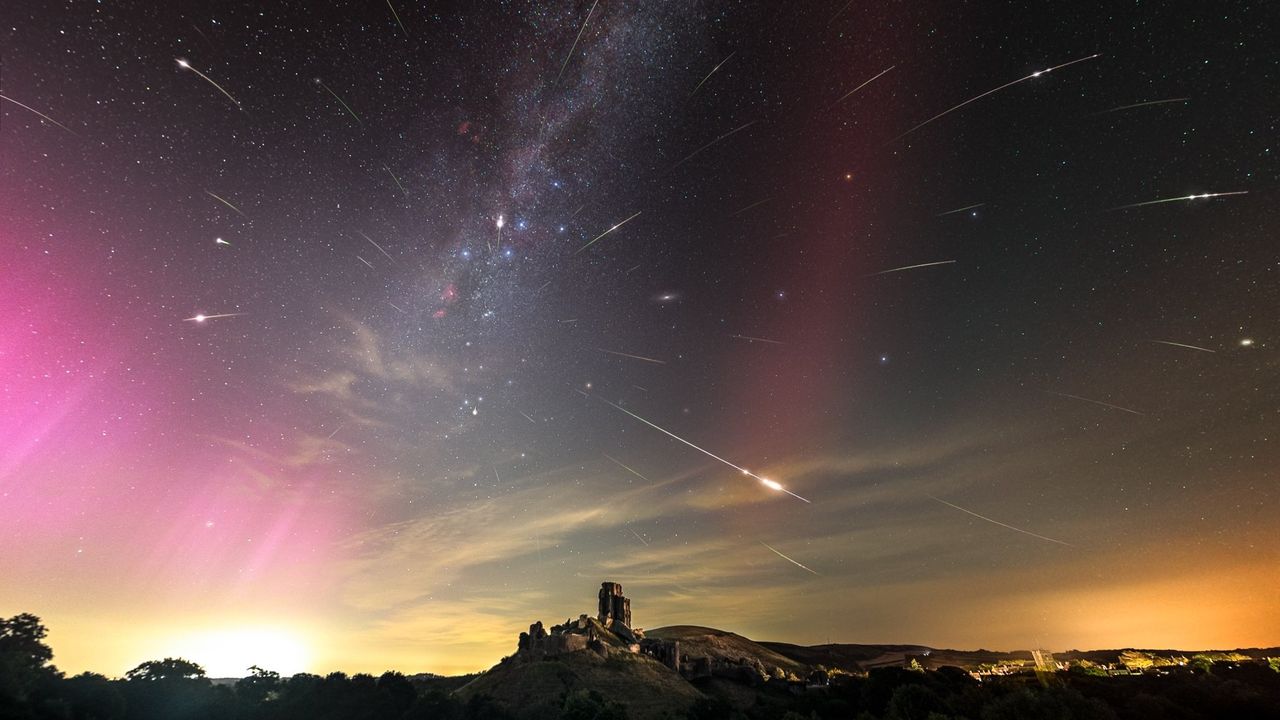
The Perseid meteor shower dominates August skies each year, but five other meteor showers offer spectacular viewing opportunities throughout the summer months that often go overlooked.
The Alpha Capillids peak in late July, delivering slow-moving meteors that trace graceful arcs across the sky. The Delta Aquariids follow in early August, producing faster streaks that radiate from the constellation Aquarius. The Kappa Cygnids appear in mid-August alongside the Perseids, though fewer people notice them competing for attention.
The Aurigids emerge in early September, while the September Epsilon Perseids arrive later that month. Each shower originates from distinct debris trails left by comets or asteroids as they orbit the sun. When Earth passes through these trails, particles enter the atmosphere at speeds ranging from 11 to 72 kilometers per second, heating the air until they glow as meteors.
Summer meteor showers typically produce fewer meteors per hour than the famous Perseid display, which can deliver 50 to 100 streaks hourly at peak. The lesser-known showers often yield 10 to 20 meteors per hour under ideal conditions, but darkness remains difficult to find during summer months in many northern locations. Summer skies stay twilight-lit until late evening, reducing observable meteors.
Observers in southern hemisphere locations gain advantages during these months, with longer darkness periods after sunset. Watching from rural areas away from light pollution remains essential for detecting the fainter meteors these showers produce.
The Alpha Capillids and Delta Aquariids carry particular interest for meteor researchers tracking parent comet fragments. Understanding how these debris streams evolve helps astronomers predict future shower intensity and reveals information about cometary orbits and ages.
Setting up for summer meteor observation requires only patience and clear skies. Peak viewing