Christopher Nolan's "Interstellar" weaponizes Einstein's theory of general relativity, transforming gravitational physics from abstract science into a force that destroys human relationships across time. The film uses time dilation, the real phenomenon where gravity slows the passage of time, not as background science but as the story's central antagonist.
In the narrative, astronaut Cooper descends to Miller's Planet near a black hole, where intense gravity warps spacetime so severely that one hour on the planet's surface equals seven years on the spacecraft orbiting above. When Cooper returns, he has aged barely at all while his daughter Murph has grown into adulthood, then old age. Physics becomes tragedy. The theory that won Einstein the Nobel Prize becomes the mechanism for severing a father from his child.
Nolan consulted with physicist Kip Thorne, a Nobel laureate specializing in gravitational waves and black hole physics, to ensure the film's depiction of spacetime warping remained grounded in established science. The collaboration anchored "Interstellar's" emotional weight in genuine relativity rather than pure fiction. Every moment Cooper loses to gravity corresponds to real equations.
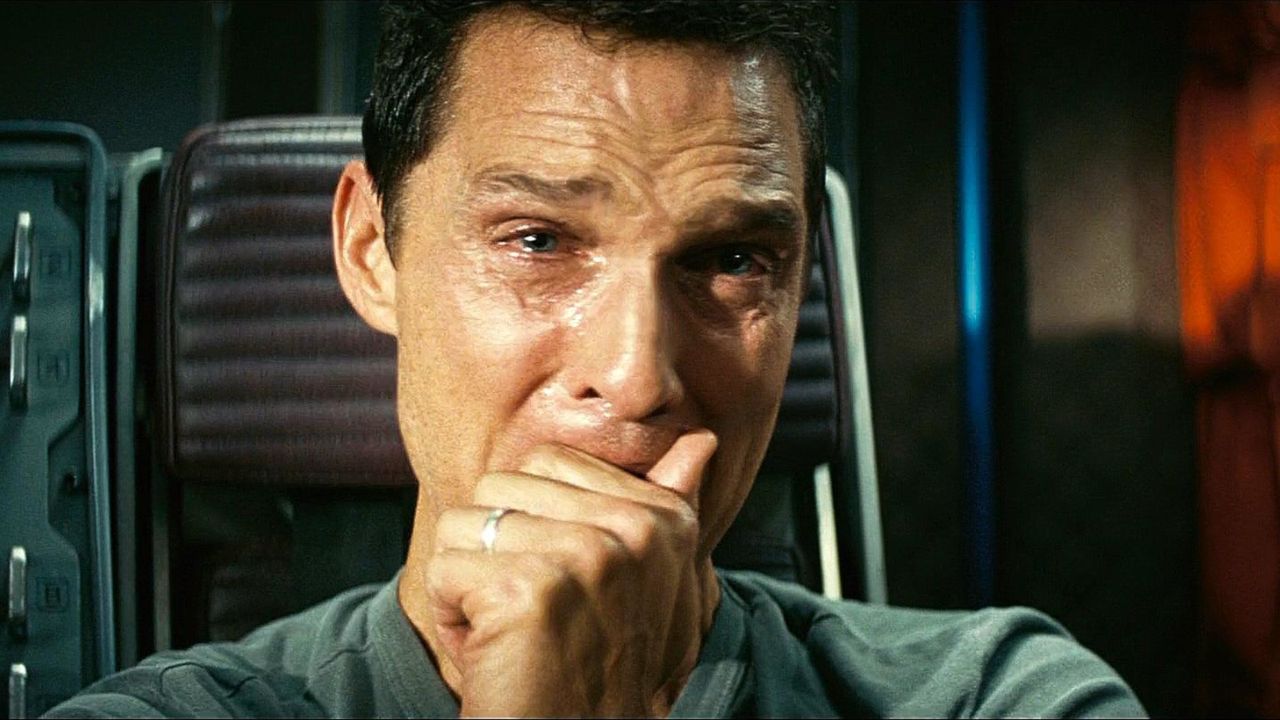
The brilliance lies in recognizing that general relativity, while mathematically elegant, carries brutal implications for human survival. Time dilation is not metaphorically cruel; it is literally deadly to families attempting space exploration near massive gravitational sources. "Interstellar" refuses to minimize this cost. It holds the camera on Cooper's face as he realizes the scope of his loss, making the universe's indifference to human emotion feel as devastating as any villain's betrayal.
As Nolan develops "The Odyssey," his new space epic, audiences may expect him to continue mining fundamental physics for dramatic tension. "Interstellar" proved that relativity itself, handled with scientific precision and emotional clarity