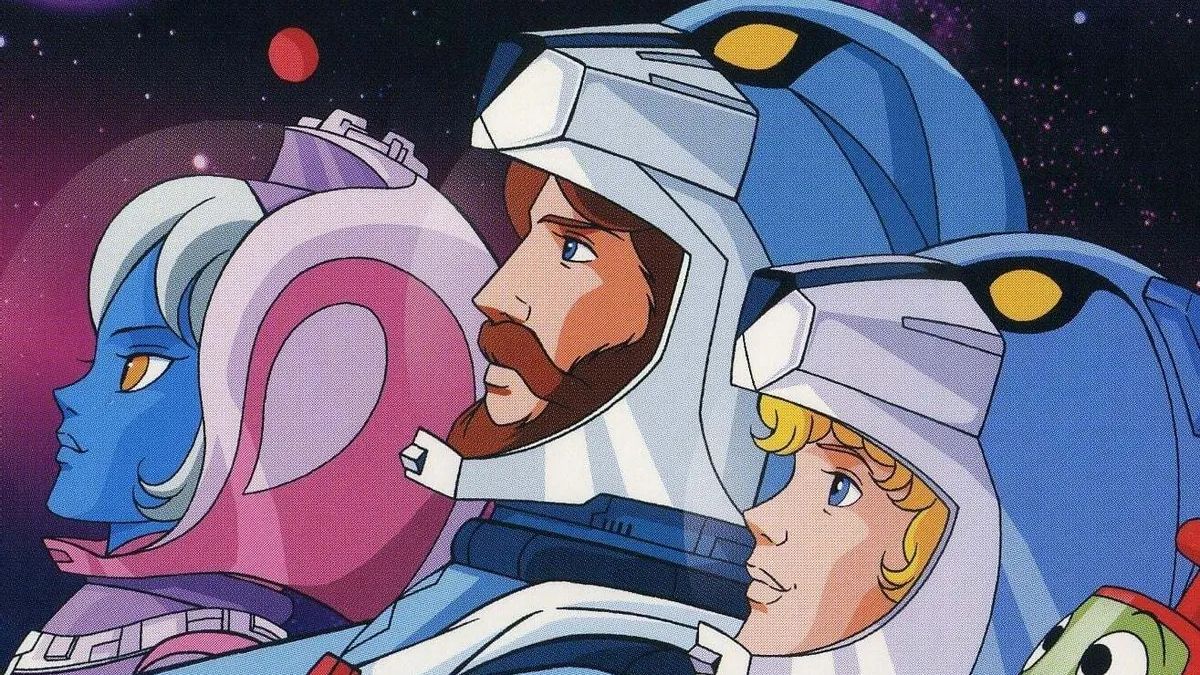
"Ulysses 31" remains a peculiar artifact of 1980s animation, a Franco-Japanese co-production that transplanted Homer's epic voyage into the cosmos. The series followed Commander Ulysses and his crew aboard the spaceship Odyssey as they navigated the galaxy, pursued by vengeful gods determined to punish their transgression against the divine.
The show aired from 1981 to 1982 and delivered 22 episodes that blended classical mythology with hard science fiction aesthetics. Unlike most children's programming of the era, "Ulysses 31" embraced genuinely unsettling imagery. The animation studio TMS Entertainment paired European storytelling sensibilities with Japanese technical precision, creating visuals that ranged from beautifully minimalist to genuinely disturbing by Saturday morning standards.
The series' opening theme became legendary among fans, its synth-driven melody proving indelible across decades. But the show's deeper achievement lay in its willingness to treat space exploration as a genuine odyssey, complete with consequence, danger, and moral complexity. Episodes featured encounters with sentient nebulae, encounters with alien civilizations, and the crew's repeated attempts to escape divine punishment.
The show's narrative embraced serialized storytelling before it became standard in children's television. Rather than episodic adventures, "Ulysses 31" maintained an overarching plot spanning the entire series, with character arcs that developed across episodes. The Odyssey's journey home became genuinely fraught with peril that threatened the crew's survival.
"Ulysses 31" found limited distribution in North America during its original run but accumulated a devoted cult following through later airings and eventual home video releases. The series influenced numerous creators who encountered it in childhood, contributing to broader appreciation for ambitious, mythology-rooted science fiction narratives.
The show