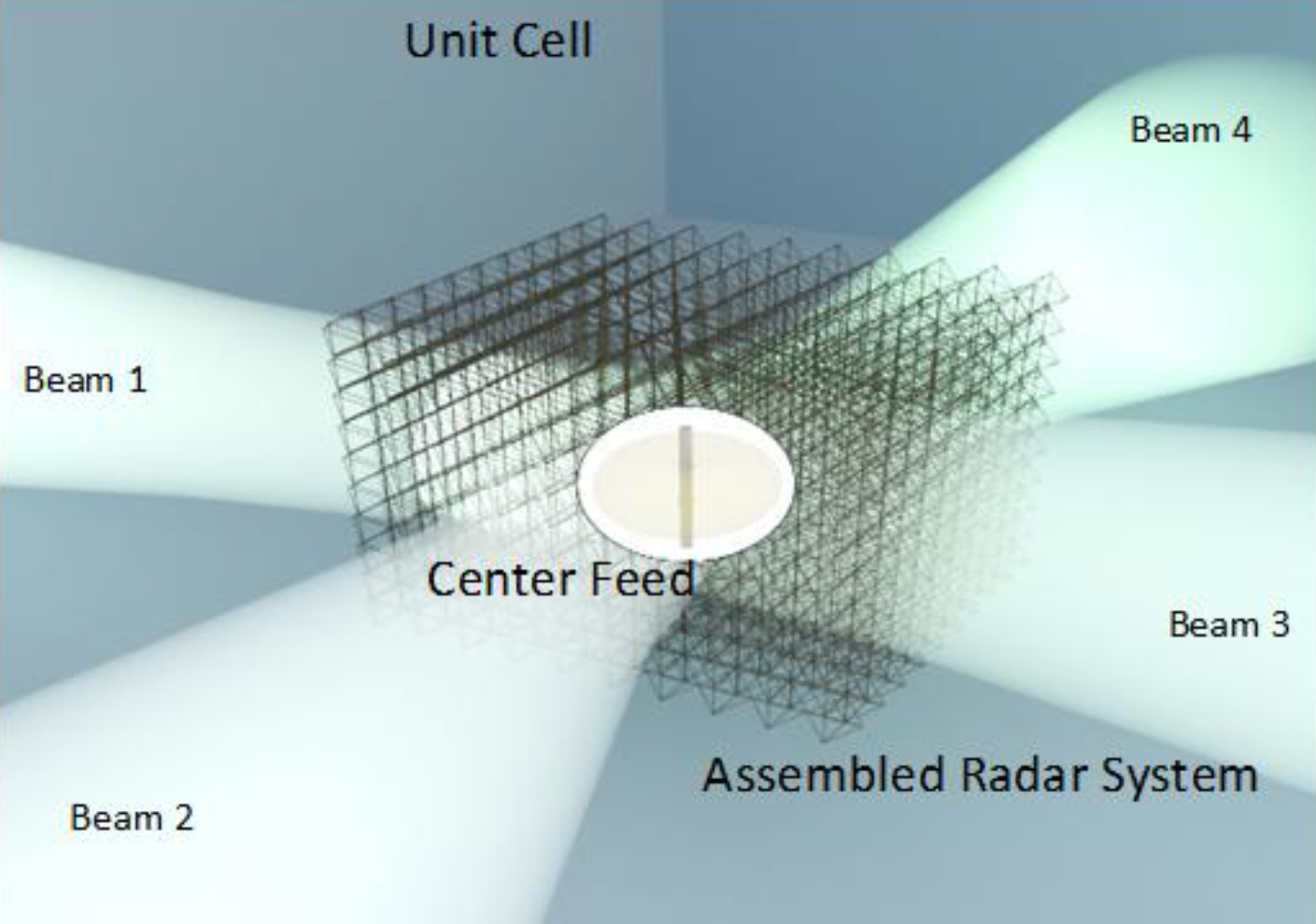
Researchers at Duke University are developing robotically assembled electromagnetic metamaterials to advance space situational awareness, addressing the growing challenge of tracking an expanding population of orbital objects.
The U.S. Space Surveillance Network currently monitors objects as small as four inches using ground-based systems like the upgraded Space Fence. These traditional tracking methods face inherent limitations tied to their Earth-bound infrastructure. David Smith's team is pursuing a fundamentally different approach, engineering metamaterials, artificial structures with properties not found in nature, through robotic assembly processes.
Metamaterials manipulate electromagnetic waves in ways conventional materials cannot. By controlling how radio waves and other signals propagate through specially designed structures, these engineered materials enable more sensitive and adaptable detection systems. Robotic assembly offers precision manufacturing at scales impossible to achieve manually, allowing creation of complex geometric patterns required for optimal electromagnetic performance.
The implications for space operations are substantial. As commercial launches accelerate through companies like SpaceX, and as satellite constellations expand for global communications, the number of trackable objects in orbit grows exponentially. Current systems struggle to maintain awareness of this debris field while simultaneously monitoring operational satellites and potential threats.
Space situational awareness directly impacts collision avoidance, launch safety, and national security. Better tracking capabilities reduce the risk of Kessler syndrome, where cascading collisions generate debris that triggers more collisions, potentially rendering certain orbital altitudes unusable.
Metamaterial-based systems could eventually support distributed sensors in space itself, rather than relying solely on ground stations. This would overcome the geometric limitations of Earth-based observation, providing continuous monitoring across all orbital regions. The robotic assembly process makes scaling such systems technically feasible and economically viable.
This NASA-funded research bridges advanced materials science with urgent operational needs. As orbital traffic intensifies, the technologies emerging from Smith's laboratory could become essential infrastructure for sustainable space operations.
CATEGORY