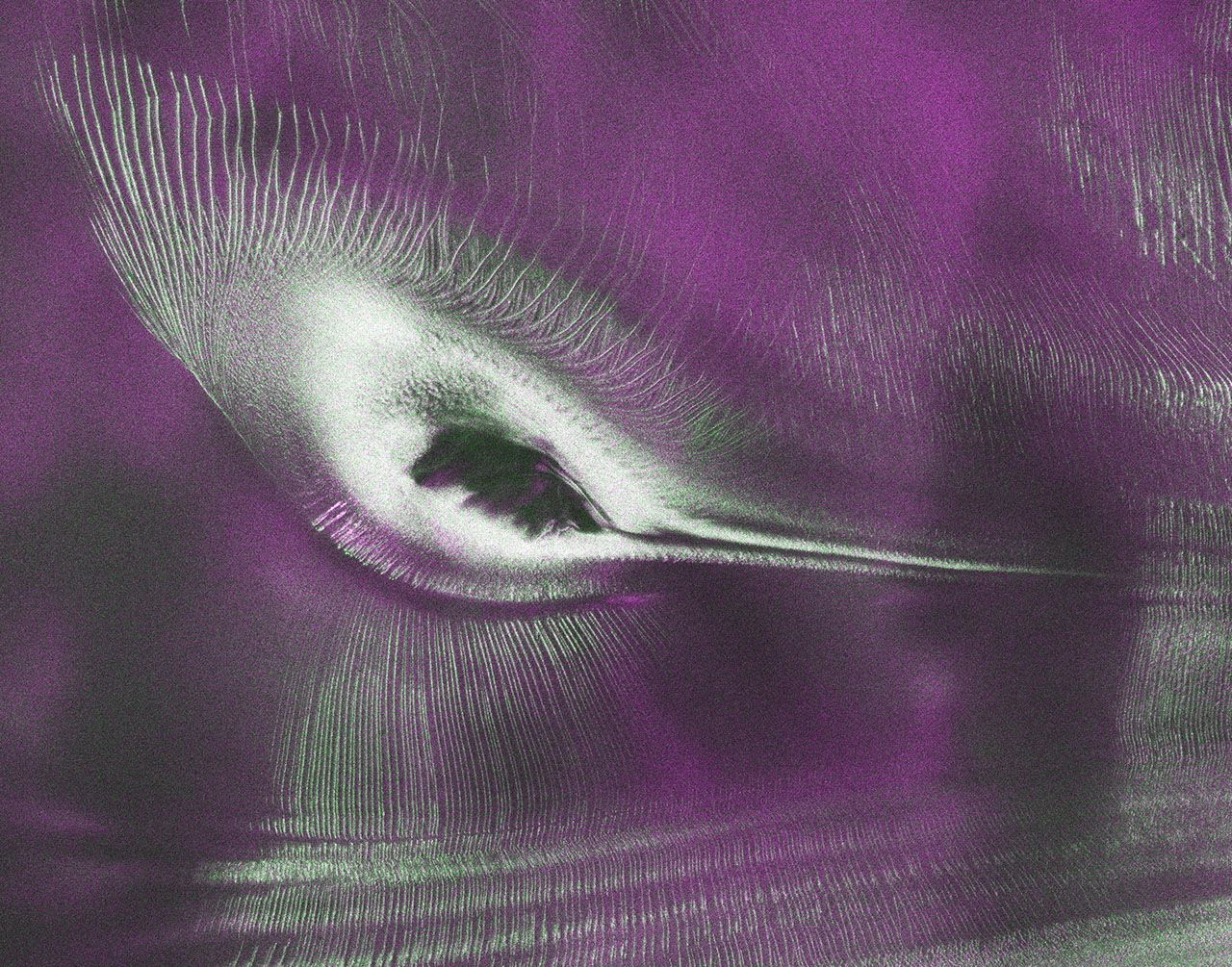
NASA and ISRO's joint NISAR satellite captured unprecedented radar imagery of a remote Antarctic nunatak acting as an obstruction within flowing glacial ice, creating fracture patterns that resemble a hummingbird in shape. The feature, Nunatak Zaterjavshijsja in East Antarctica, protrudes through the ice sheet as it streams northeast toward the ocean, generating stress concentrations that heavily fracture the surrounding surfaces.
The L-band radar aboard NISAR penetrates cloud cover and darkness to detect these structural changes in ice flow dynamics. This capability reveals how solid obstacles alter glacial motion patterns, producing distinctive stress signatures across hundreds of kilometers of ice. The hummingbird-like fracture pattern emerges from the physics of ice under compression and tension as it flows around the immovable peak.
NISAR, launched in 2024 as a collaborative mission between NASA and the Indian Space Research Organisation, operates with synthetic aperture radar technology that maps Earth's surface with centimeter-level precision. The L-band frequency penetrates deeper than typical radar, allowing scientists to observe ice motion, deformation, and structural integrity across polar regions and beyond.
Understanding glacial flow mechanics around obstacles like nunataks informs models of ice sheet stability and sea level rise projections. As Antarctica's ice sheets accelerate toward the ocean, mapping their internal stresses and flow patterns becomes essential for predicting coastal flooding timelines. NISAR's observations track these dynamics in regions where conventional optical satellites fail due to persistent cloud cover and polar darkness.
The mission continues producing detailed maps of Earth's changing surface. Each image reveals how planetary systems respond to climate forces and gravitational effects. NISAR's dual-frequency radar capability, combining L-band and S-band observations, enables researchers to measure ice velocity, track ground deformation, and monitor volcanic activity simultaneously across the globe.
This Antarctic dataset