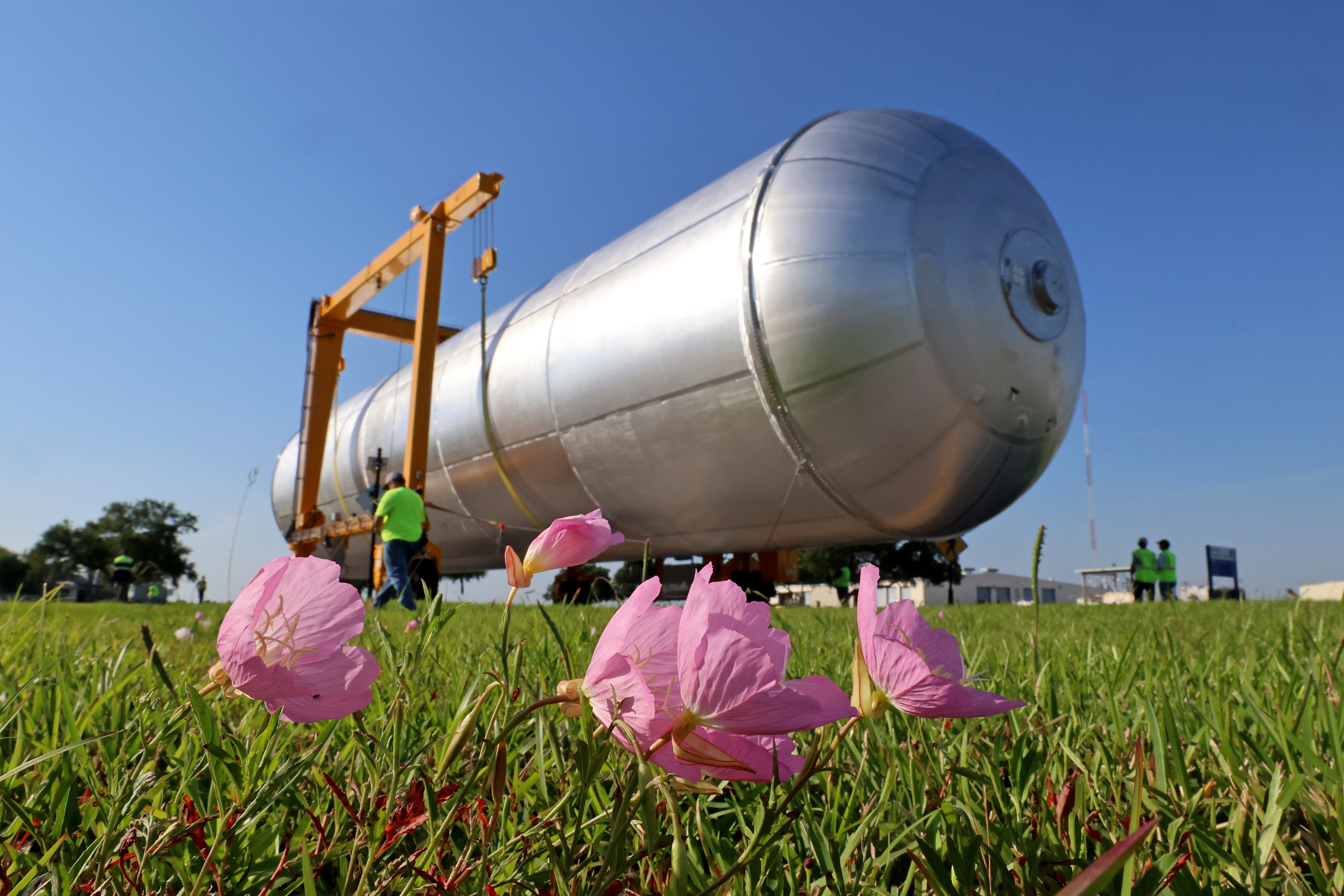
NASA's manufacturing teams at the Michoud Assembly Facility in New Orleans completed a major production milestone for Artemis IV on May 15, 2026, transporting the program's massive liquid hydrogen tank from the main factory to a dedicated test facility.
The 130-foot-tall tank represents one of the core stage's largest and most complex components for NASA's next-generation deep space launch vehicle. The Space Launch System relies on this tank to store cryogenic hydrogen fuel at temperatures near minus 423 degrees Fahrenheit, feeding the RS-25 engines that power the rocket's initial ascent.
Moving the tank across the sprawling 829-acre Michoud campus marks a critical step in Artemis IV's assembly sequence. The vehicle follows Artemis III, NASA's planned lunar landing mission using the SLS and Orion spacecraft. Artemis IV will conduct additional lunar operations and establish infrastructure for sustained human exploration of the Moon and eventual Mars missions.
Michoud Assembly Facility, operated by Boeing for NASA, has manufactured external tanks and core stages for the Space Launch System since the program's inception. The facility's production capabilities represent decades of spaceflight hardware manufacturing expertise, previously built Saturn V stages during the Apollo era.
The transport operation itself demonstrates the logistical complexity of assembling hardware at Artemis-class scale. The detached test building will subject the hydrogen tank to rigorous qualification testing, verifying its structural integrity and performance under extreme thermal and pressure conditions matching actual flight environments.
Artemis missions drive NASA's goal of returning humans to the lunar surface and establishing a sustainable presence for long-term scientific research. Each core stage component manufactured at Michoud directly enables this exploration architecture. The progression from Artemis III through subsequent missions requires multiple flight-ready core stages in various stages of assembly and testing across the facility.
This hardware movement underscores the tangible