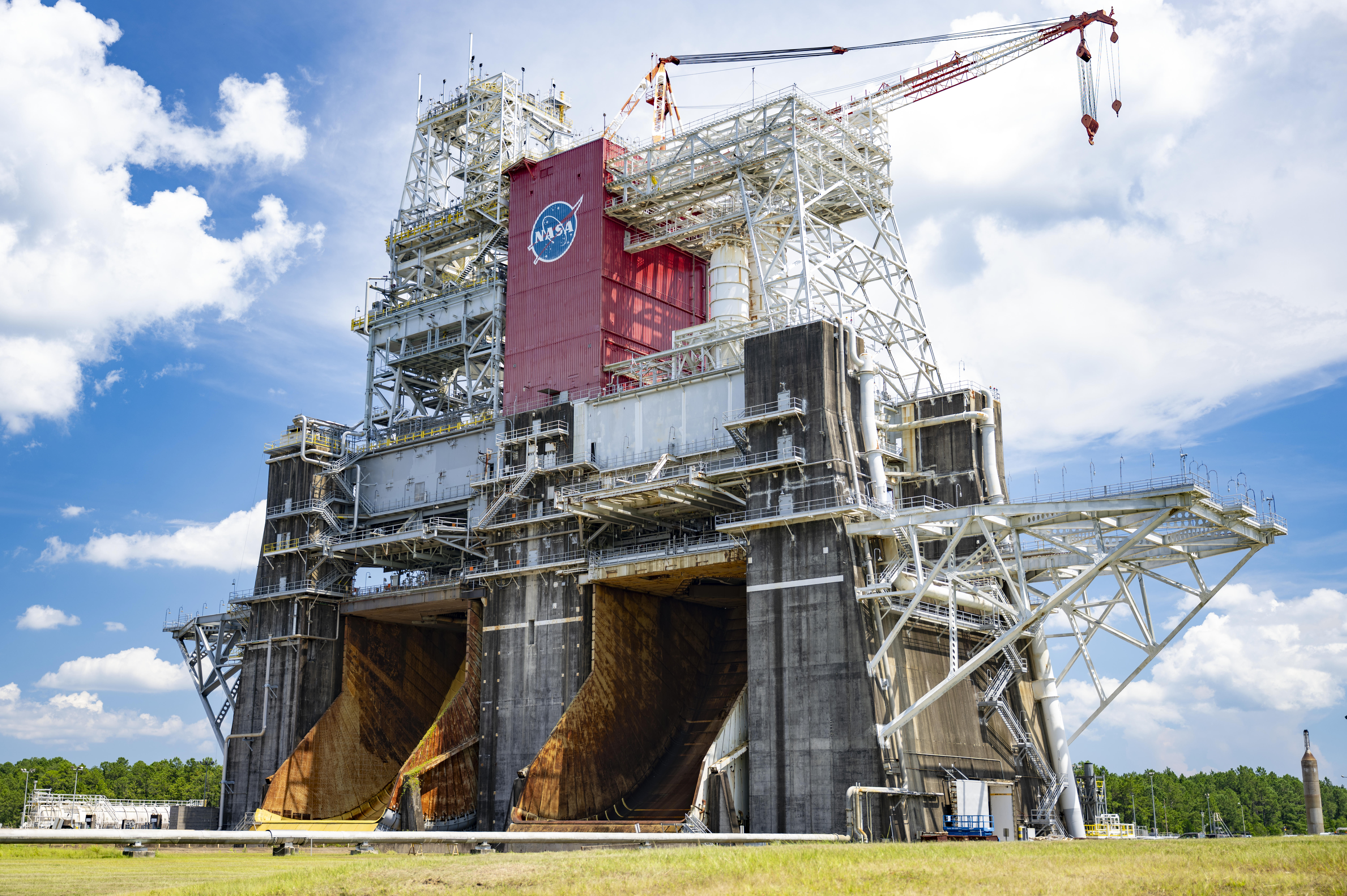
NASA and Blue Origin formalized an agreement to conduct second stage hot fire testing for the New Glenn rocket at NASA's Stennis Space Center in Mississippi. The arrangement, documented through an annex to a Space Act Agreement signed this month, expands the agencies' collaboration on commercial heavy-lift launch capabilities.
The B-2 test stand at Stennis will host the engine testing operations for New Glenn's upper stage. This facility has supported critical propulsion testing for decades, including work on Space Launch System engines. Using Stennis for New Glenn development accelerates Blue Origin's progress toward operational flights while leveraging existing NASA infrastructure.
New Glenn represents a significant commercial competitor in the heavy-lift market. The two-stage rocket will carry payloads to low Earth orbit and beyond, with thrust capabilities approaching Saturn V levels. Blue Origin has positioned New Glenn as a vehicle for national security launches, commercial missions, and deep space exploration.
The partnership directly supports NASA's Artemis program objectives. Heavy-lift capacity remains essential for lunar architecture. While NASA's SLS provides dedicated cargo and crew capability for moon missions, diversified launch options strengthen the overall exploration ecosystem. Commercial providers like Blue Origin contribute redundancy and flexibility to America's spaceflight portfolio.
Stennis Space Center serves as the nation's premier rocket engine test facility. Its sophisticated test infrastructure and remote location make it ideal for high-energy propulsion validation. By hosting New Glenn testing, NASA gains early insights into the rocket's performance characteristics while Blue Origin benefits from world-class facilities and technical expertise.
This agreement reflects NASA's strategy of partnering with commercial providers across the space industrial base. Rather than viewing Blue Origin purely as a competitor to SLS, the agency recognizes that a healthy commercial launch sector strengthens America's space leadership. Multiple capable providers create competition that drives innovation and reduces costs across the board.
New Glenn's development timeline remains aggressive. On-orbit testing will