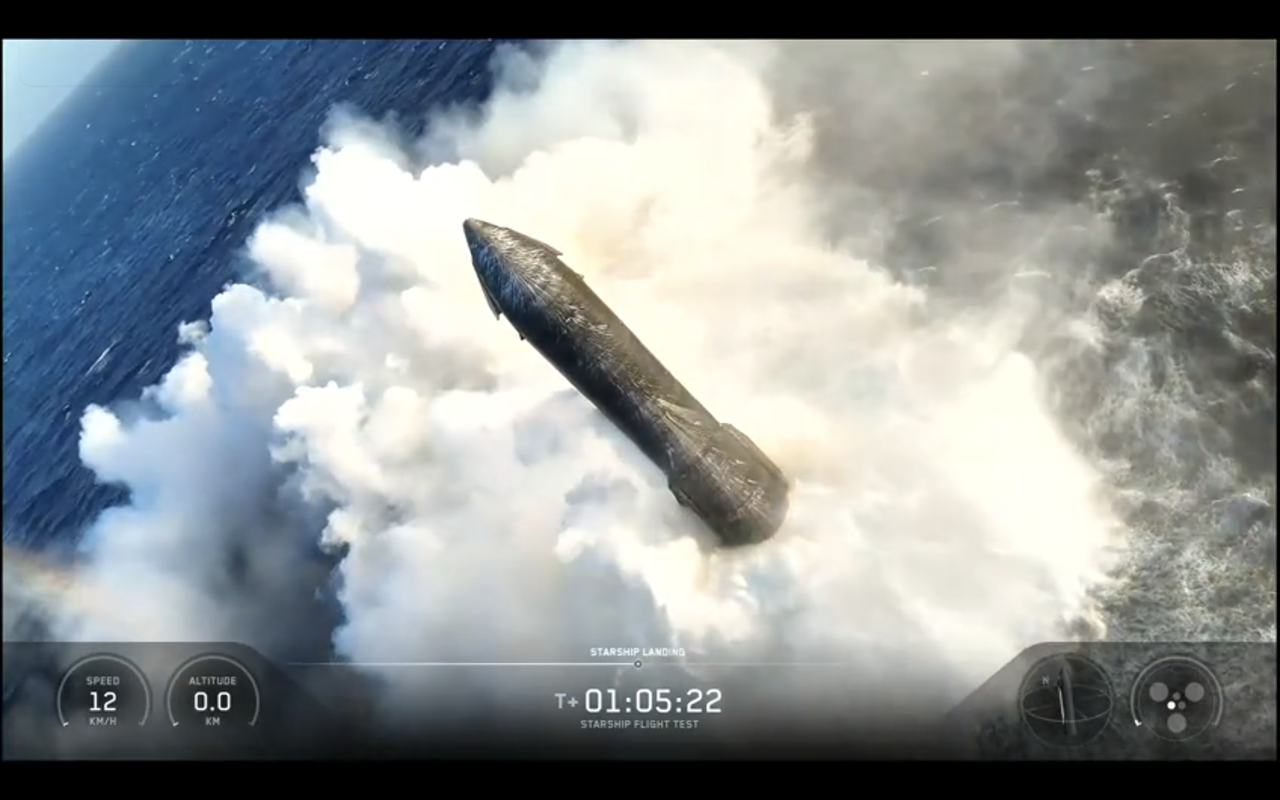
SpaceX's Starship completed its 13th test flight on July 24, achieving multiple objectives and executing an unprecedented controlled splashdown of the Super Heavy booster. The megarocket lifted off carrying a fresh batch of next-generation Starlink satellites to orbit, demonstrating the vehicle's capacity for operational payloads during developmental testing.
The flight marked a watershed moment for the fully integrated launch system. Starship, standing 120 meters tall and producing 33 million pounds of thrust at liftoff, reached orbital velocity and successfully deployed its cargo of Starlink spacecraft. The vehicle demonstrated improved stage separation and flight mechanics compared to earlier test flights.
The defining achievement came during the booster recovery phase. Rather than attempting a catch at the launch pad's "Mechazilla" arm, SpaceX commanded the Super Heavy booster to perform a controlled water landing. Mission engineers described the splashdown as the "softest" ever achieved, indicating precise velocity management and orientation control as the booster re-entered and descended toward the Gulf of Mexico. This maneuver validated critical guidance and propulsion systems essential for eventual booster reusability.
The test flight sequence demonstrated Starship's progression toward operational capability. Earlier missions struggled with stage separation, engine performance, and basic flight stability. Flight 13 proved the system could handle real payload integration while gathering engineering data on reentry dynamics.
SpaceX continues iterating rapidly on Starship, with each test flight generating specific performance metrics and system validation. The successful Starlink deployment adds operational credibility to the vehicle. These next-generation satellites represent SpaceX's commitment to expanding global broadband coverage while simultaneously developing the launch system that will eventually deploy them.
The softest splashdown sets a new technical benchmark for controlled booster recovery. Future flights may attempt pad catches again once additional confidence builds. Starship remains on track as