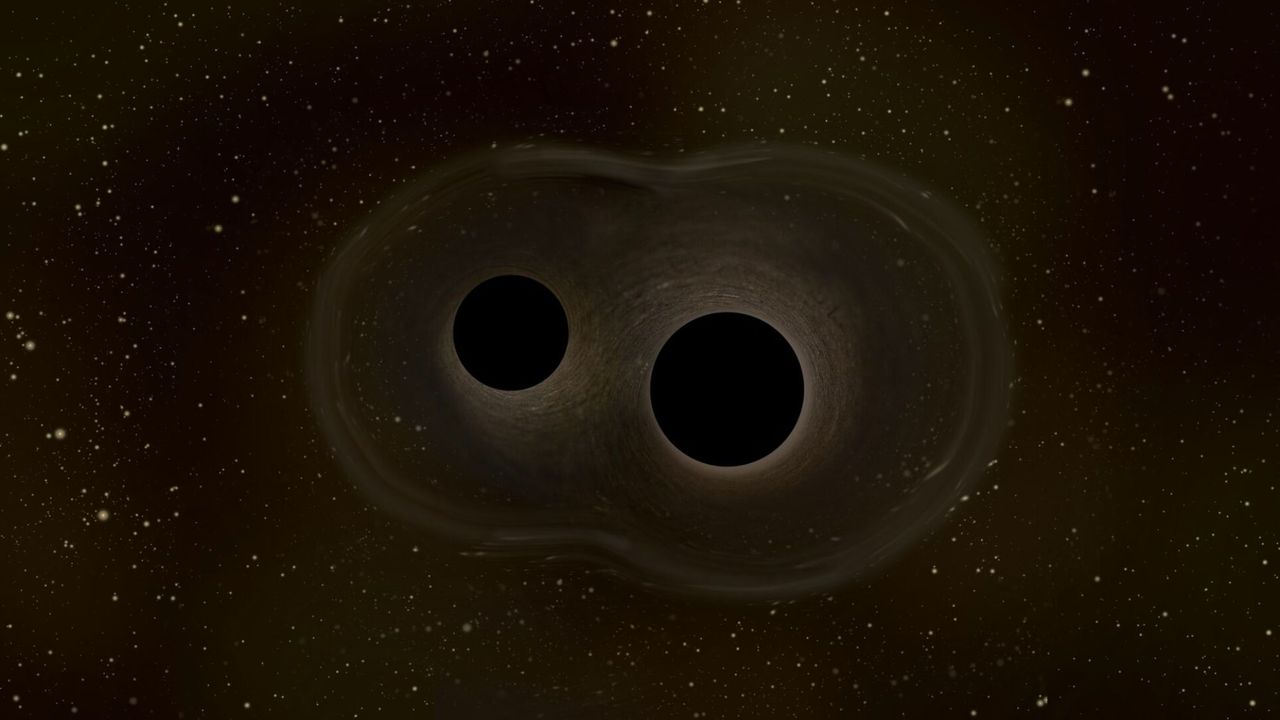
Researchers working with LIGO have discovered that a commercially available camera could enhance the detection of gravitational waves produced by merging black holes. The breakthrough eliminates the need for custom-built instrumentation, a rarity in solving detection challenges at the Laser Interferometer Gravitational-Wave Observatory.
LIGO's twin facilities in Washington and Louisiana use laser interferometry to sense the ripples in spacetime created when massive objects collide. Since the first confirmed detection in 2015, when two black holes merged 1.3 billion light-years away, the observatory has identified dozens of such events. Each detection expands our understanding of black hole populations, their masses, and their formation mechanisms across the universe.
The off-the-shelf camera addresses a specific technical limitation in LIGO's current setup. By improving the observatory's ability to capture and process data from gravitational wave events, the camera could increase detection rates without requiring years of engineering development or substantial budget increases. This practical solution reflects a shift in how advanced physics experiments leverage existing commercial technology rather than designing everything from scratch.
The implications extend beyond LIGO alone. As gravitational wave astronomy matures, the ability to detect more merger events translates directly into better statistics about black hole populations in the observable universe. Each new detection reveals information about stellar evolution, the fate of massive stars, and the prevalence of compact object binaries. More detections also improve localization accuracy, helping other telescopes pinpoint the exact locations of events and capture complementary electromagnetic observations.
This discovery underscores how innovation in experimental physics increasingly comes from creative application of existing tools rather than solely from cutting-edge custom engineering. With three gravitational wave detectors now operating globally—the two LIGO sites and the Virgo detector in Italy—improving sensitivity at any facility directly multiplies discovery potential across the network.