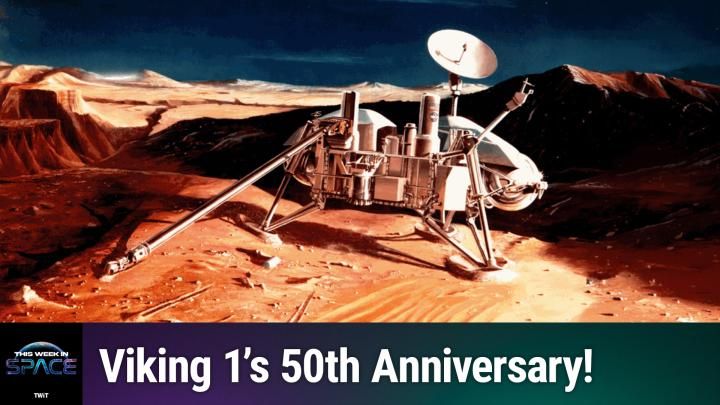
NASA's Viking 1 lander reached the Martian surface 50 years ago this week, fundamentally transforming humanity's understanding of the red planet. The milestone prompted This Week In Space podcast hosts Rod Pyle and Tariq Malik to convene with Dr. Pascal Lee and astrobiologist Dr. Penny Boston to examine the mission's legacy and enduring implications for Mars exploration.
Viking 1 touched down on July 20, 1976, in Chryse Planitia, becoming the first spacecraft to achieve a soft landing on Mars. The lander transmitted data for over six years, conducting the first in-situ chemical analysis of Martian soil and atmosphere. Its biology package sought signs of microbial life through experiments designed to detect organic molecules and metabolic activity. Though the results remained ambiguous, Viking 1 established the methodological framework for searching for life beyond Earth.
The mission's instruments provided the first close-up images of the Martian surface, revealing a landscape of rocks, dust, and geological formations that contradicted earlier assumptions about Mars. Viking 1 measured atmospheric composition, surface temperature, and weather patterns. The lander's cameras captured evidence of water erosion, suggesting Mars once harbored conditions suitable for life.
Dr. Lee, a planetary scientist, and Dr. Boston, known for her research on extremophiles and biosignatures, bring expertise directly relevant to modern Mars missions. Their analysis connects Viking 1's discoveries to contemporary rovers like Perseverance and Curiosity, which continue investigating Martian geology and searching for ancient biosignatures in the Jezero Crater and Gale Crater regions.
The 50th anniversary reflection highlights how Viking 1's pioneering data shaped decades of subsequent Mars exploration strategy. NASA's Artemis program aims to establish human presence on the Moon as a proving ground for eventual cr