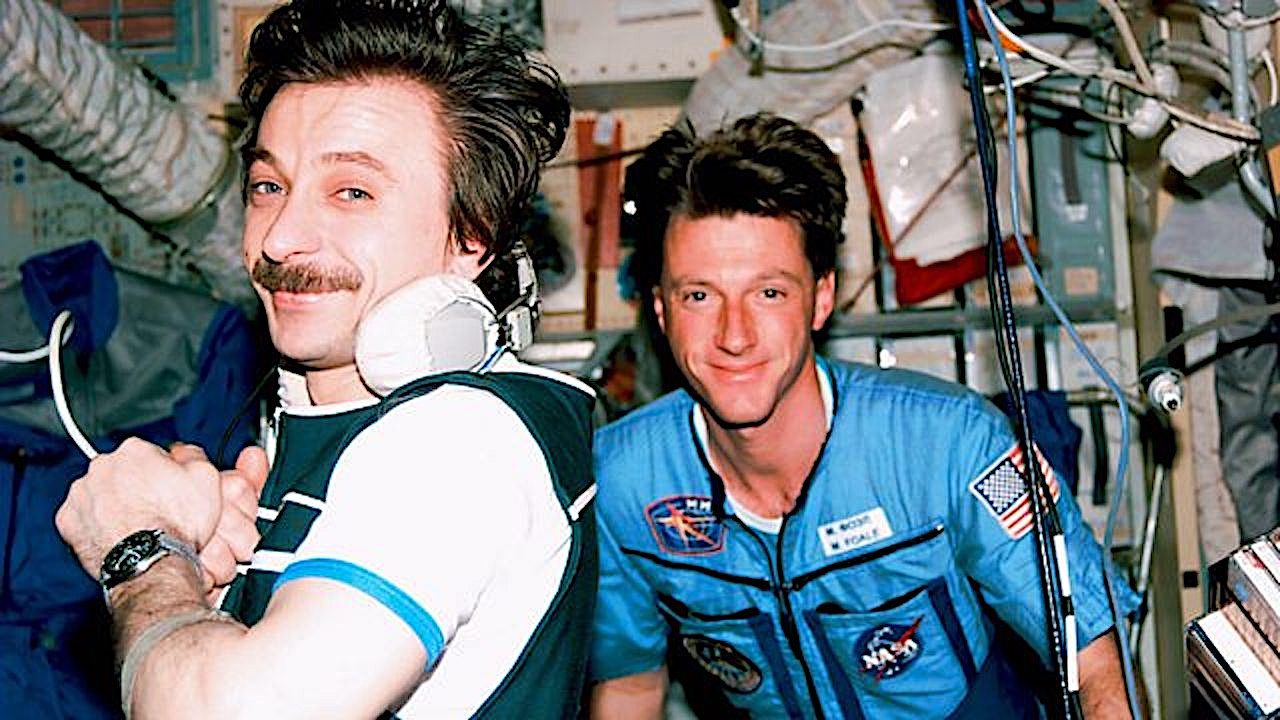
Astronaut Michael Foale recounted the harrowing collision that struck the Russian space station Mir on June 25, 1997, when an unmanned Progress cargo vehicle struck the orbiting complex during a docking procedure. Foale served aboard Mir during the accident, which damaged the station's Spektr module and compromised its structural integrity.
The Progress vehicle, piloted remotely by cosmonaut Vladimir Titov from mission control, failed to dock properly and collided with Mir at approximately 5 meters per second. The impact punctured the Spektr module, causing rapid decompression and forcing the crew to seal off the damaged section to prevent total station failure. Foale and cosmonaut Aleksandr Lazutkin worked quickly to isolate the breached module, then managed power systems and life support to stabilize the station.
Foale emphasizes crew initiative saved Mir that day. Rather than panic or await ground control instructions exclusively, the astronauts aboard took decisive action to preserve the station. Their rapid response prevented cascading failures that could have forced immediate evacuation or station loss.
What stands out in Foale's reflection is the responsibility cosmonaut Titov assumed for the accident. Despite protocol complexities and multiple contributing factors, Titov accepted accountability for the docking failure. Foale notes that Titov "took all the blame of the collision on his shoulders," displaying the professional ethos demanded in human spaceflight operations.
The 1997 Mir collision tested every system aboard the station and every decision-making protocol both crews and ground teams possessed. The incident exposed vulnerabilities in automated docking systems and demonstrated human judgment remains irreplaceable in crisis situations. Recovery required weeks of repairs and careful power management while maintaining habitation.
This crisis ultimately strengthened cooperation between Russian and American space programs. It accelerated plans for