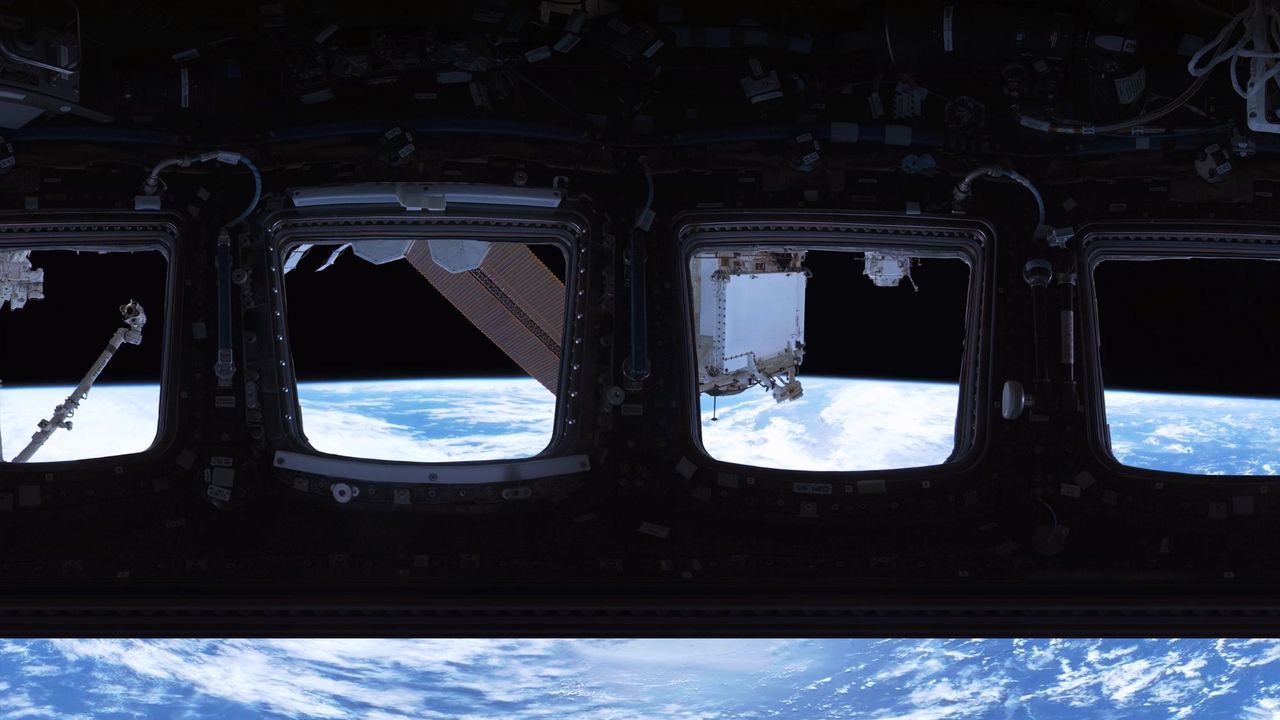
A visitor experienced the International Space Station through advanced simulation technology rather than actual spaceflight. The encounter highlights how ISS training methods and virtual reality systems now allow civilians to engage with orbital operations in unprecedented ways.
The International Space Station, maintained jointly by NASA, Roscosmos, ESA, JAXA, and CSA, operates continuously as humanity's only permanent human outpost in space. Its 24-year operational history represents a feat of sustained international cooperation. Crews rotate every six months, conducting experiments in microgravity across materials science, biology, physics, and Earth observation.
The simulation experience referenced in the article underscores how ISS training protocols have evolved. Astronauts themselves train extensively in virtual environments before launch, using computer models and mockups to prepare for on-orbit tasks. These same technologies now become accessible teaching tools for public engagement.
The quoted observation captures an essential truth about the station. Its continuous operation demands constant resupply missions, crew rotations, and maintenance cycles. SpaceX Dragon spacecraft deliver cargo and personnel. Russian Soyuz vehicles carry crews. European ATV vehicles, Japanese HTV craft, and now commercial vehicles contribute to station logistics. This sustained presence in orbit requires solving problems repeatedly: thermal management, radiation shielding, power generation, waste management, and psychological support for isolated crews.
The ISS orbits Earth every 90 minutes at 17,500 miles per hour, traversing 16 sunrises and sunsets daily. Its presence overhead, visible to naked-eye observers worldwide, connects ground-based humanity to active space exploration. The station generates scientific data continuously, from protein crystal growth experiments to atmospheric research to maintenance of the microgravity environment itself.
Virtual access to ISS operations democratizes engagement with spaceflight. Not every person can launch to orbit, yet simulations preserve the educational value and sense of wonder. For