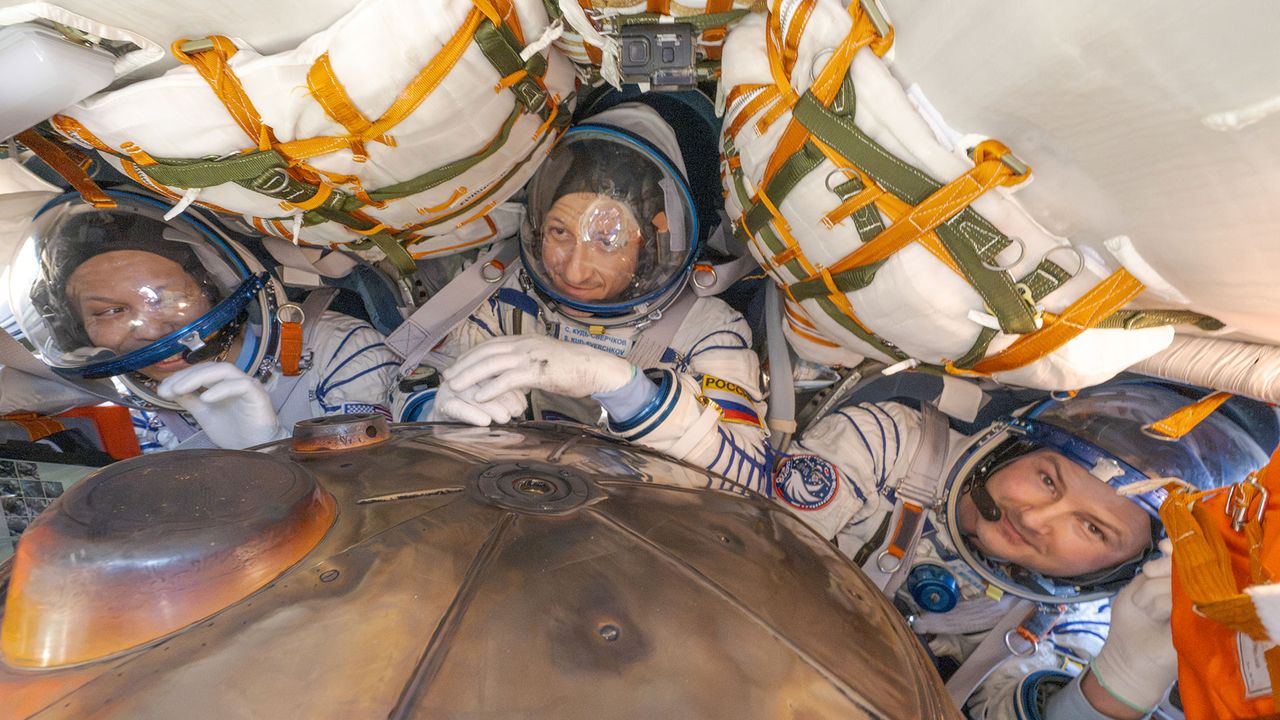
NASA astronaut Chris Williams and Russian cosmonauts Aleksandr Misurkin and Andrey Fedyaev landed safely in Kazakhstan early Sunday, July 26, concluding a 241-day mission aboard the International Space Station. The trio returned aboard a Soyuz MS-23 spacecraft, which touched down in the Zhezkazgan region after undocking from the ISS on July 23.
Williams spent more than eight months conducting experiments and maintaining the orbital laboratory. The astronaut participated in critical research ranging from materials science to biological studies that benefit from the microgravity environment. His tenure reflected the ongoing collaboration between NASA and Roscosmos, the Russian space agency, despite geopolitical tensions on Earth.
Misurkin and Fedyaev also completed their extended stay at the station. The cosmonauts contributed to various operational tasks and scientific investigations essential to the ISS mission timeline. Their return marked another successful Soyuz recovery operation, demonstrating the reliability of Russia's spacecraft design that has served as the primary crew rotation vehicle to and from the station for over two decades.
The landing concluded Expedition 69, with the remaining crew members continuing operations aboard the station. NASA and international partners including ESA, JAXA, and CSA maintain continuous human presence at the ISS, which orbits Earth at approximately 17,500 miles per hour and completes one circuit every 90 minutes.
The mission underscores the ISS program's dual role in advancing scientific discovery and maintaining peaceful international cooperation in space. The station remains the only laboratory where experiments operate in true microgravity, enabling research impossible on Earth that addresses challenges from medicine to manufacturing.