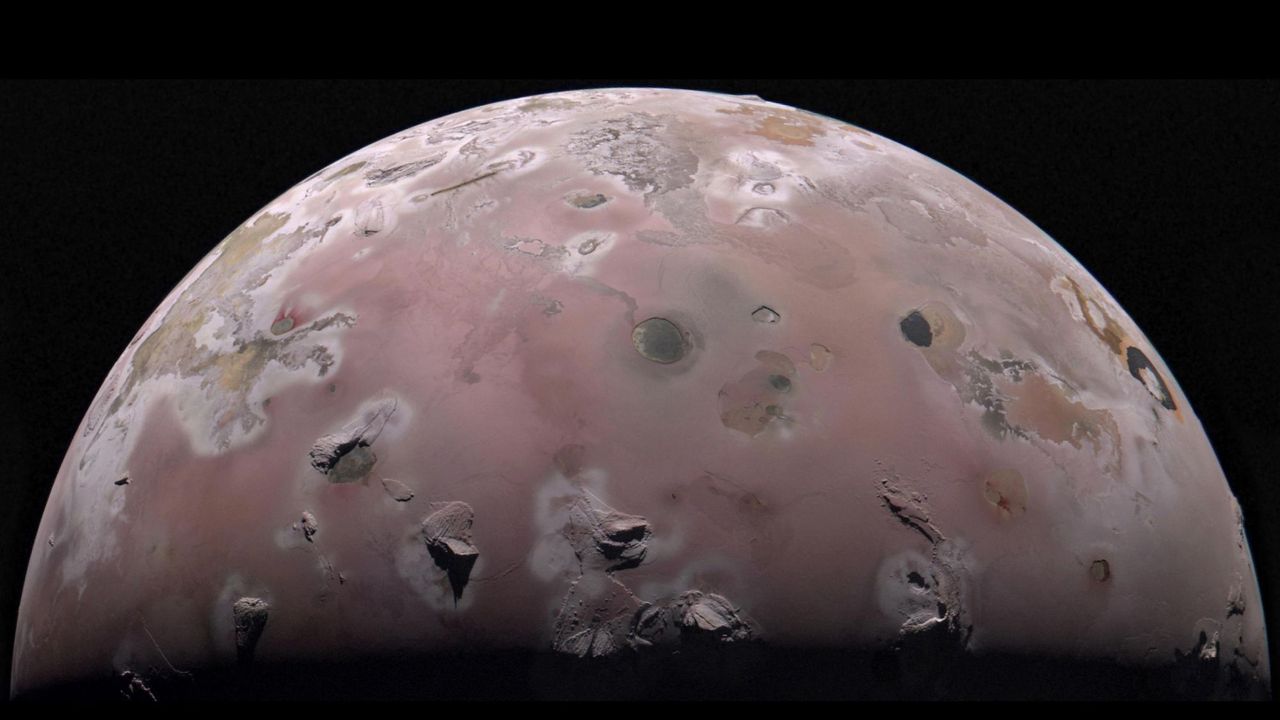
NASA's Juno spacecraft has gathered new data on the subsurface structure beneath Io's volcanic landscape, offering unprecedented insights into how the moon's internal heat engine operates. The probe's instruments detected variations in the gravitational and magnetic fields directly above Io's most active volcanic regions, revealing clues about molten rock reservoirs and magma chambers hidden kilometers below the surface.
Io orbits Jupiter within the gas giant's intense gravitational field, which stretches and compresses the moon constantly. This tidal heating generates enough internal energy to power the most volcanically active body in the solar system. Juno's close flybys captured measurements that scientists are now using to map subsurface magma systems with greater precision than ever before possible.
The findings matter beyond Io. Understanding how tidal forces drive volcanic activity on a distant moon directly informs models of volcanism on Earth. Volcanologists study terrestrial eruptions using seismic data and surface measurements. Juno's remote sensing techniques now provide a template for studying planetary interiors where direct observation remains impossible.
The Juno mission, which arrived at Jupiter in 2016, was designed primarily to investigate the gas giant's atmospheric composition and internal structure. Its instruments, including a magnetometer and gravity measurement tools, have proven invaluable for studying Jupiter's moons as well. Io presents a laboratory where extreme tidal heating creates conditions found nowhere else in Earth's neighborhood.
Scientists expect these subsurface maps will help predict where future eruptions might occur on Io and reveal how magma circulates through the moon's crust. The data also constrain models of how other icy moons, like Europa and Enceladus, might harbor subsurface oceans and potential microbial life.
By studying Io's violent internal dynamics, researchers develop better frameworks for understanding planetary evolution across the solar system. J