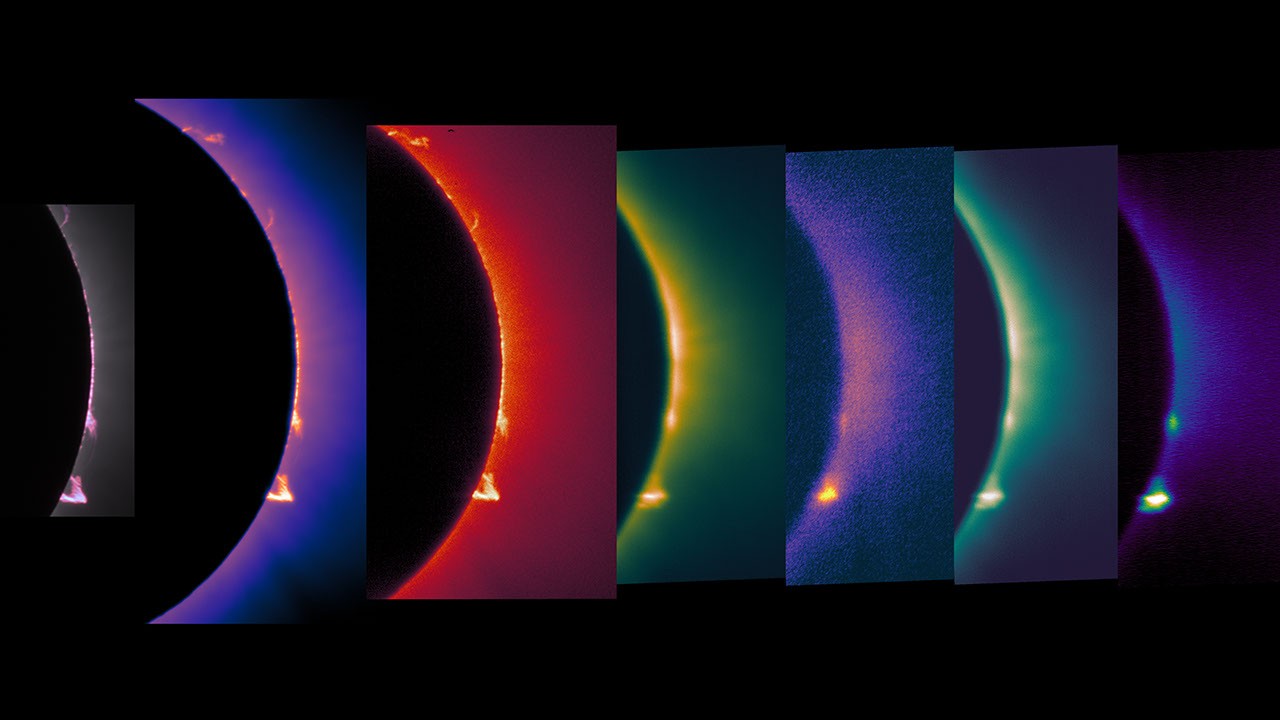
NASA will conduct extensive scientific observations during the total solar eclipse crossing Greenland and Iceland on August 12. The event offers researchers a rare opportunity to study the Sun's corona, the thin, super-heated outer atmosphere normally invisible against the Sun's bright disk.
Eclipse observations provide unique data about the corona's structure and behavior. Ground-based telescopes and aircraft-mounted instruments can capture high-resolution images and spectroscopic measurements during the brief totality window. NASA coordinates multiple observation campaigns across different wavelengths, from visible light to infrared and ultraviolet radiation.
The corona remains one of solar physics' outstanding puzzles. Despite residing adjacent to the Sun's relatively cool surface, the corona reaches temperatures exceeding one million degrees Kelvin. Understanding this extreme heating mechanism requires detailed observations of magnetic field configurations and plasma behavior that become visible only during totality.
These observations feed directly into broader solar research efforts. The Sun's corona generates solar wind, produces coronal mass ejections, and drives space weather phenomena that impact Earth's magnetosphere and satellites. Better characterization of coronal properties improves forecasting models for geomagnetic storms and radiation events that threaten communications infrastructure and astronauts in orbit.
NASA typically deploys instruments aboard high-altitude aircraft, establishing observation posts at optimal locations along the eclipse path, and coordinates with international partners. The agency's Solar Dynamics Observatory and other space-based assets continue collecting data before, during, and after totality, providing complementary perspectives.
Amateur astronomers and citizen scientists contribute valuable observations from ground locations across the eclipse path. Their distributed network captures temporal variations and provides backup datasets if primary instruments experience technical issues.
The August eclipse path's routing over the Arctic presents logistical challenges but offers scientific advantages. The high latitude trajectory means extended eclipse duration and favorable atmospheric conditions in certain locations. Greenland and Iceland's research infrastructure supports deployment of specialized equipment.
Data collected during this