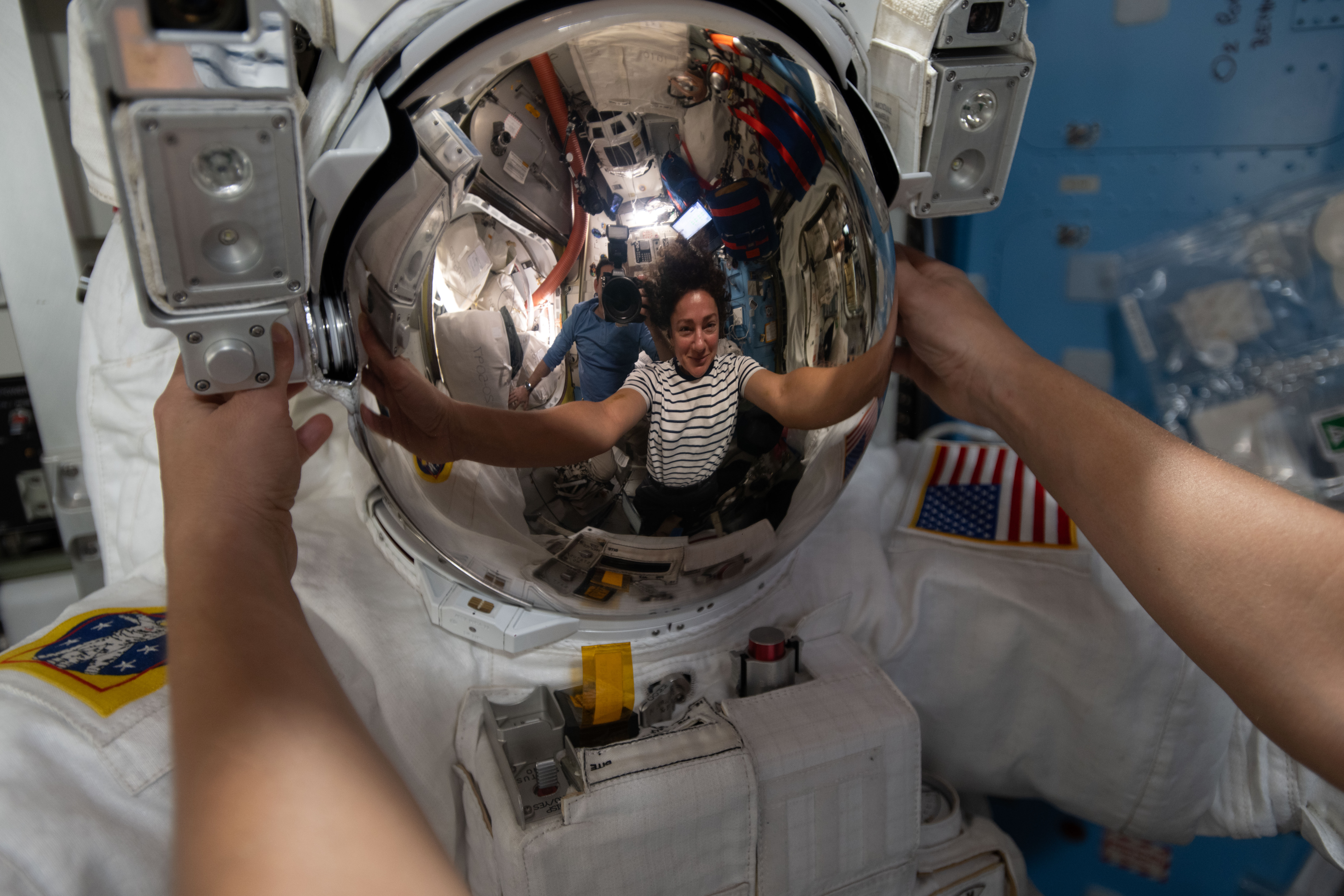
NASA will broadcast three spacewalks in August as astronauts conduct critical maintenance and upgrades on the International Space Station. The missions involve upgrading the outpost's solar arrays, replacing a communications antenna, and installing power and data cables. A preview news conference will precede the activities.
The first spacewalk occurs Thursday, August 6, with an updated start time reflecting recent scheduling adjustments. Two additional spacewalks follow in the coming weeks. Each excursion addresses essential station infrastructure that sustains long-duration research operations and keeps the orbiting laboratory functional.
Solar array upgrades represent a priority for ISS operations. The station's power generation capacity demands continuous modernization to support expanding research activities and crew operations. Communications antenna replacement ensures reliable data transmission between the station and ground control centers. New power and data cable connections integrate systems necessary for station systems integration and scientific experiments.
NASA will provide public coverage of all three spacewalks, allowing audiences to monitor real-time operations from mission control and the station itself. The agency hosts preview briefings before major extravehicular activities to explain mission objectives, technical challenges, and safety protocols.
These spacewalks underscore the ongoing operational demands of maintaining the ISS as an active research platform. The station requires regular maintenance and component replacement to remain operational. Astronauts must conduct these tasks while wearing spacesuits in the harsh vacuum environment, managing equipment, tethers, and communications while orbiting Earth at 17,500 miles per hour.
The ISS continues its role as humanity's orbital laboratory, hosting experiments in microgravity across biology, materials science, fluid dynamics, and numerous other disciplines. Ground-based research depends on the station's infrastructure remaining fully operational. These August spacewalks ensure the ISS can continue supporting both current investigations and future missions planned through the 2030s.