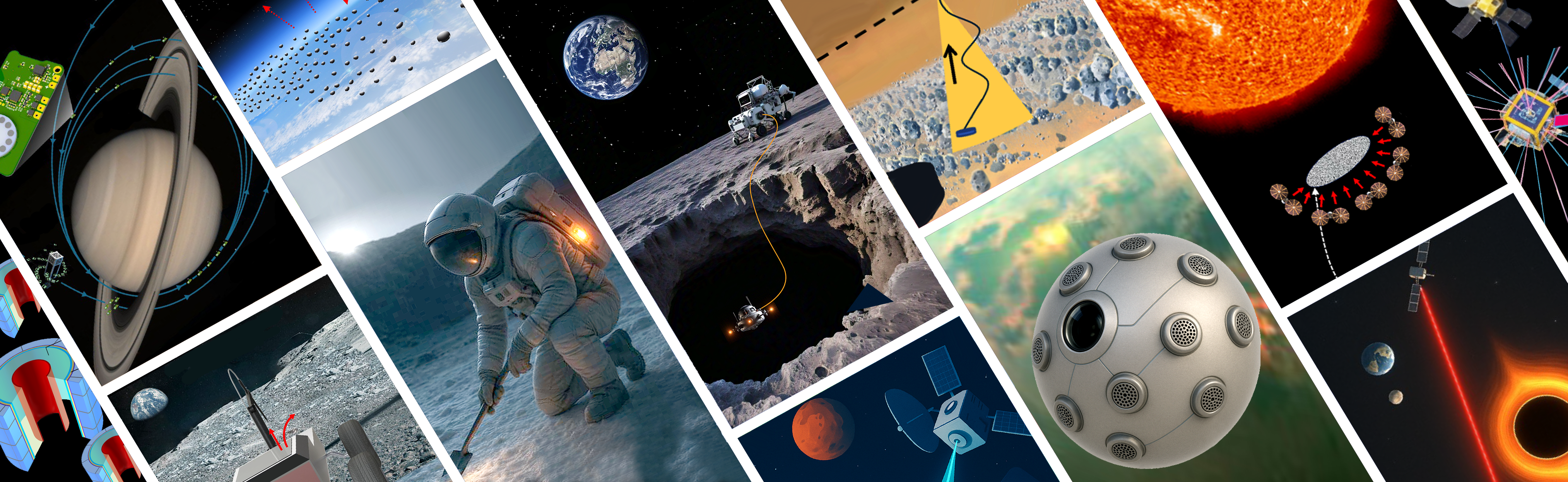
NASA's Innovative Advanced Concepts program selected 18 Phase I proposals for funding, allocating $3.2 million total to explore technologies that could transform aerospace exploration across the solar system and beyond. Each winning concept receives up to $175,000 for a nine-month feasibility study.
The NIAC program functions as NASA's high-risk, high-reward incubator for transformative technologies. These Phase I awards identify the most promising early-stage ideas before advancing them to Phase II development with larger budgets. The concepts selected this cycle span propulsion systems, in-situ resource utilization, advanced materials, and instrumentation designed for extreme environments.
This funding structure reflects how NASA prioritizes innovation. Phase I winners validate technical approaches and identify potential obstacles. Successful projects graduate to Phase II, where they receive approximately $500,000 for a two-year development period. The most mature concepts occasionally advance to Phase III for final demonstration.
The 2026 awards represent NIAC's continued commitment to funding ideas that existing industry standards cannot yet support. These are technologies operating at the boundaries of what's scientifically possible. Past NIAC-funded research produced concepts now entering operational missions, including advanced power systems, novel spacecraft materials, and autonomous exploration architectures.
The breadth of this year's selections indicates NASA's strategic focus areas: sustainable exploration infrastructure, deepspace communication networks, life support systems for long-duration missions, and sensing technologies for detecting biosignatures on distant worlds. Each concept addresses specific challenges encountered during extended operations beyond Earth orbit.
For the aerospace industry, NIAC Phase I awards function as proof-of-concept validation. Successful demonstration of novel technologies at this stage attracts additional investment from commercial partners and government agencies. This year's cohort will undergo intensive technical review, with high performers selected for Phase II advancement in 2027.
The program also serves as a