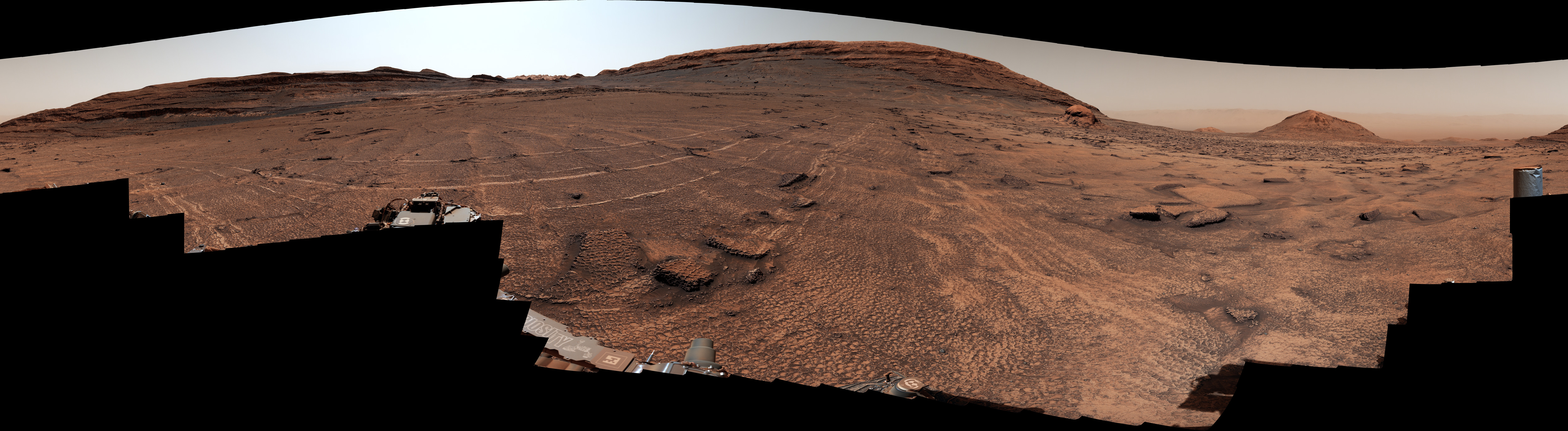
NASA's Curiosity rover has documented extensive honeycomb-patterned terrain as it ascends Valle Grande in Gale Crater. The distinctive polygonal fractures measure 1.5 to 3 inches across and form through thermal contraction of subsurface materials as Mars loses heat over time.
These geometric patterns result from ancient wet-dry cycling. When water-saturated mud dried out, it contracted and cracked into hexagonal shapes. The rover has encountered similar formations before, but this field represents one of the largest concentrations observed during Curiosity's twelve-year mission.
The discovery carries implications for understanding Mars' hydrological history. The presence of such extensively fractured ground indicates sustained moisture availability in the past, consistent with the geological record Curiosity has assembled since landing in 2012. The rover's Mastcam instruments captured high-resolution images revealing the cracks' geometric precision.
These formations develop slowly under Martian conditions. Modern Mars lacks sufficient atmospheric pressure to support liquid water at the surface, so this terrain predates the transition to the cold, dry planet we observe today. The polygonal fractures preserve evidence of ancient climates when standing water existed in Gale Crater.
Curiosity continues its investigation of Valle Grande's composition while climbing toward Mount Sharp, the central peak rising 3.4 miles above the crater floor. The rover's Drill instrument can acquire rock samples for analysis by its onboard laboratory, the Sample Analysis at Mars (SAM) instrument suite. These samples help determine whether ancient Mars possessed environmental conditions suitable for microbial life.
The honeycomb textures themselves pose no scientific mystery, but their distribution across this region emphasizes the extent of Mars' past water-rock interactions. Each fractured surface tells a story of evaporation, desiccation, and geological transformation spanning billions of years.