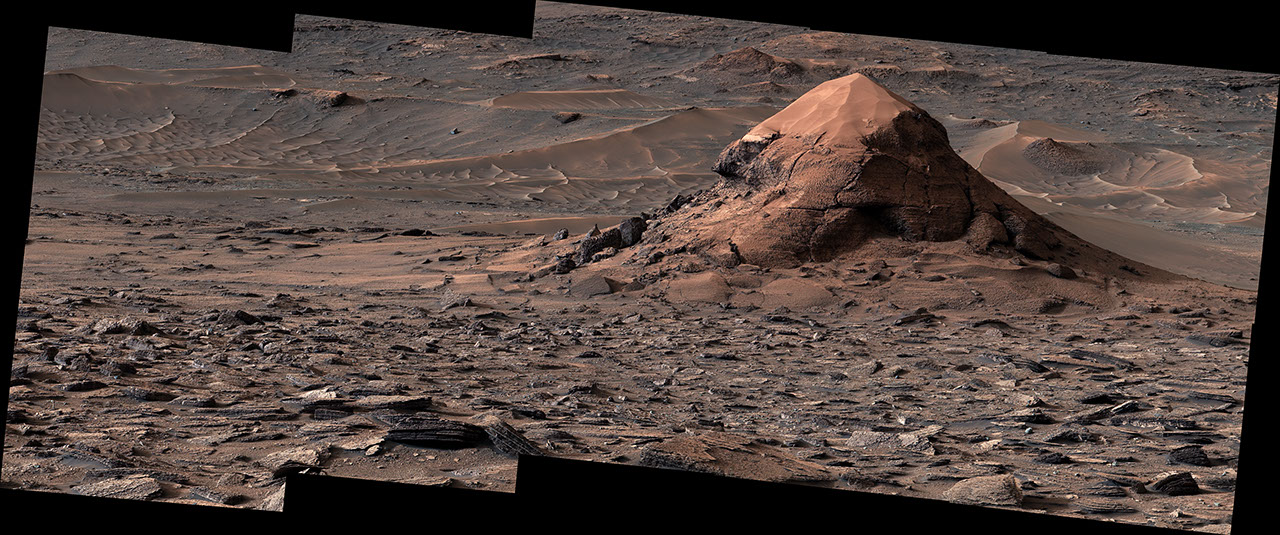
NASA's Curiosity rover photographed a distinctive sand-capped butte on Mars, nicknamed "Miraflores," using its Mastcam instrument on June 11, 2026. The formation stands approximately 20 feet tall and represents a classic erosional landscape feature. Curiosity documented the butte on sol 4,923 of its ongoing mission, now in its thirteenth year of operation on the Red Planet.
The butte formed through differential erosion. Harder rock layers at the top resisted weathering better than softer materials around it. As surrounding terrain eroded away over millions of years, this resistant cap remained standing, creating an isolated column or mesa in miniature. The sand covering the summit hints at ongoing aeolian processes that shape Mars's surface today.
Observations like these advance understanding of Martian geology and climate history. Erosional patterns reveal how water and wind have sculpted the landscape across vast timescales. The Gale Crater region where Curiosity operates shows extensive evidence of ancient water activity and atmospheric interactions that continue reshaping terrain.
Curiosity's Mastcam provides high-resolution color imaging critical for geological analysis. The rover documents rock formations, mineralogy, and surface processes that inform models of Mars's habitability history. Each image contributes to the broader scientific mission tracking how the planet transitioned from a potentially habitable world with liquid water to the cold, arid environment observed today.
The rover's longevity exceeds original expectations dramatically. Launched in 2011, Curiosity was designed for a two-year mission. Instead, it continues climbing Mount Sharp toward the crater's rim, investigating layered deposits that preserve records of Mars's atmospheric and hydrological evolution. Such extended operations maximize scientific return and test life-support technologies relevant for eventual human exploration.