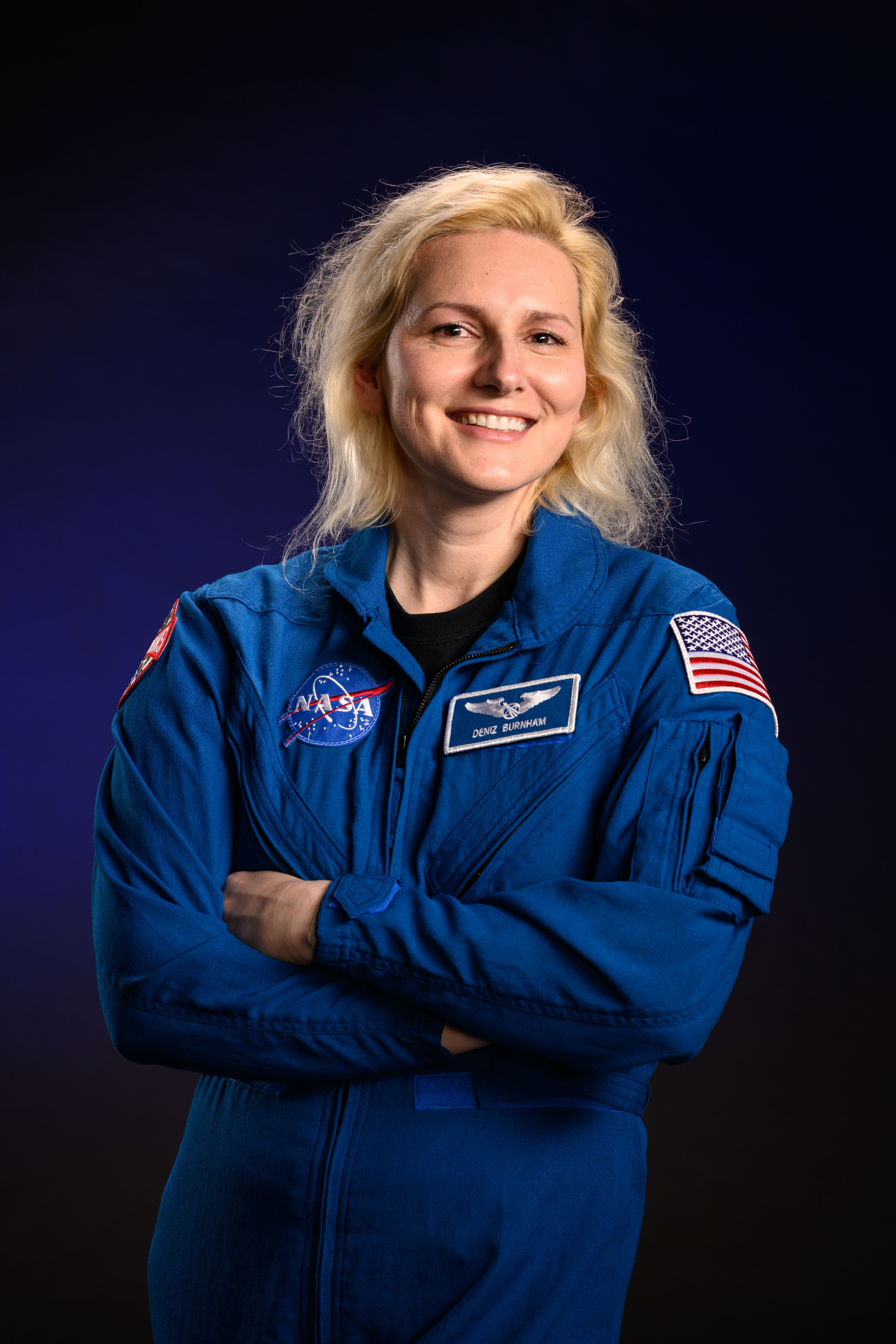
NASA astronaut Deniz Burnham will launch to the International Space Station in March 2027 aboard Soyuz MS-30, flying with Russian cosmonauts Dmitri Petelin and Konstantin Borisov. Burnham will serve as a flight engineer for Expedition 76, departing from the Baikonur Cosmodrome in Kazakhstan.
This assignment marks Burnham's first mission to the orbital outpost. Her placement on a Soyuz vehicle reflects the continued cooperation between NASA and Roscosmos on human spaceflight operations, a partnership that persists despite geopolitical tensions. The International Space Station depends on Soyuz launches to rotate crew members to and from orbit, with each expedition typically lasting approximately six months.
Burnham represents the next cohort of NASA astronauts selected to expand the agency's capacity for long-duration spaceflight and research operations in microgravity. Her assignment comes as NASA expands human missions beyond low Earth orbit while maintaining continuous occupation of the ISS through the 2030s.
The station functions as a laboratory for experiments in materials science, biology, combustion, and fluid dynamics that cannot be conducted effectively in Earth's gravity. Expeditions like 76 enable continuous research across these disciplines while advancing preparations for deep space exploration. The three-person crews aboard Soyuz vehicles transport not only personnel but critical resupply missions and scientific equipment.
Burnham's flight occurs within a broader context of international space collaboration, where American, European, Russian, and Japanese partners work together to operate a facility orbiting at roughly 17,500 miles per hour. The mission schedule extends years into the future, allowing NASA to plan training and preparation timelines for astronauts and their international counterparts.
The March 2027 launch date positions Burnham's mission during a period of