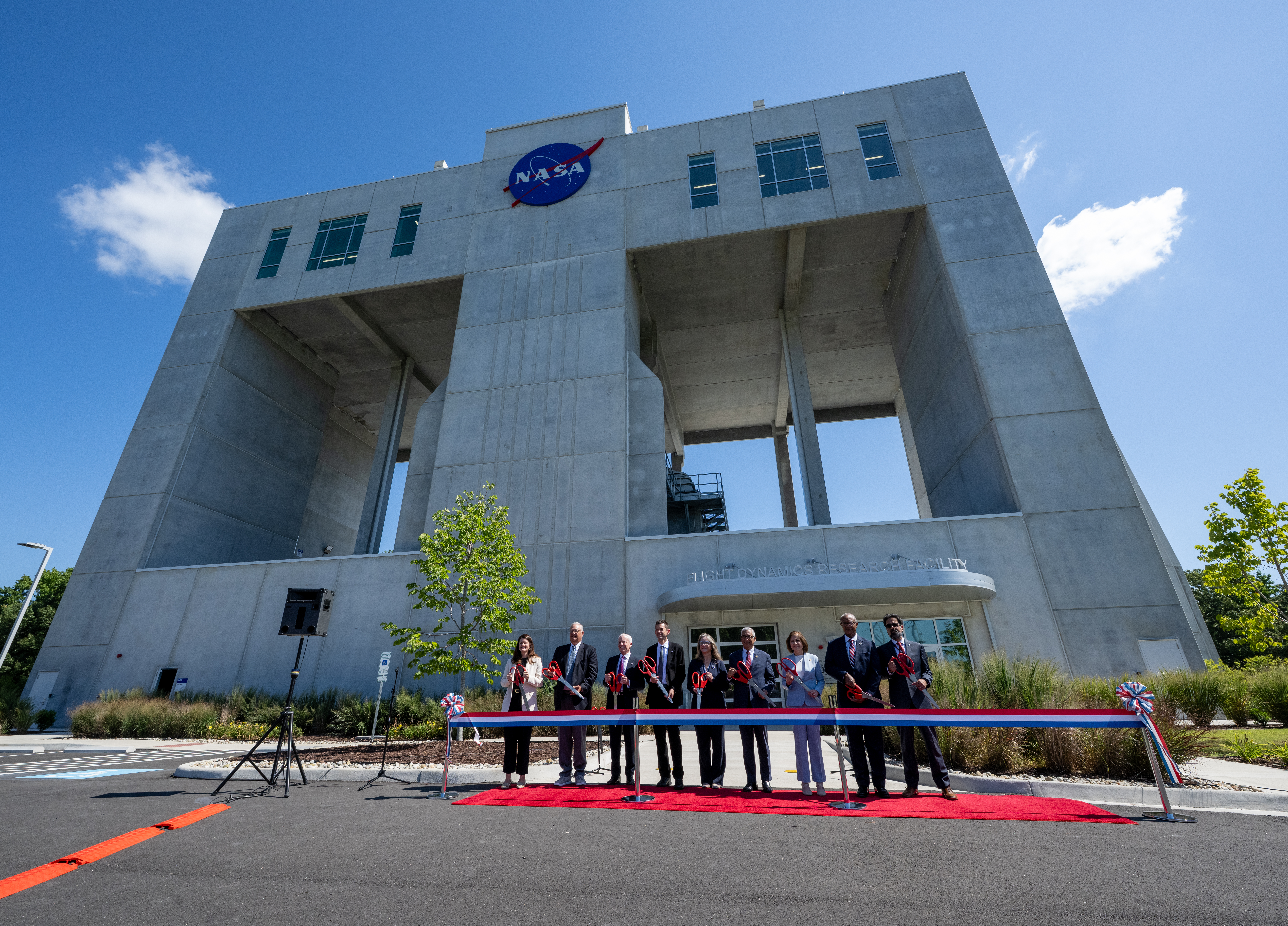
NASA inaugurated the Flight Dynamics Research Facility at Langley Research Center on July 31, 2026, marking the agency's first major wind tunnel addition in four decades. The state-of-the-art installation in Hampton, Virginia represents a watershed moment for American aeronautics research.
Wind tunnels remain foundational tools for testing aircraft and spacecraft designs before flight. The new facility addresses critical gaps in NASA's testing capacity, enabling researchers to evaluate aerodynamic performance across multiple speed regimes and flight conditions. This infrastructure supports development of next-generation aircraft, hypersonic vehicles, and exploration systems that will carry crews beyond Earth orbit.
Langley Research Center has anchored American aeronautics since 1917, producing foundational research on aircraft stability, control, and performance. The new facility extends that legacy into contemporary challenges. NASA's aeronautics portfolio increasingly focuses on sustainable aviation technologies, electric propulsion systems, and advanced materials. The Flight Dynamics Research Facility provides the experimental backbone for validating these innovations before they reach prototypes.
The facility also serves broader exploration objectives. NASA's Artemis program requires advanced thermal protection systems and entry, descent, and landing technologies for lunar missions. Future Mars missions demand spacecraft capable of surviving atmospheric entry at higher speeds than Earth return vehicles. The Flight Dynamics Research Facility enables testing of these systems in controlled environments, reducing development timelines and risk.
NASA leadership and Virginia officials recognized the facility's strategic importance to both the agency and the regional economy. Langley employs over 3,000 people and anchors Hampton's workforce. Investment in research infrastructure strengthens Virginia's position as a hub for aerospace engineering and maintains American competitiveness in aeronautical science.
The 40-year gap since NASA's previous major wind tunnel construction reflects funding constraints and shifting priorities. This new facility signals renewed commitment to ground-based research infrastructure alongside spaceflight programs. As