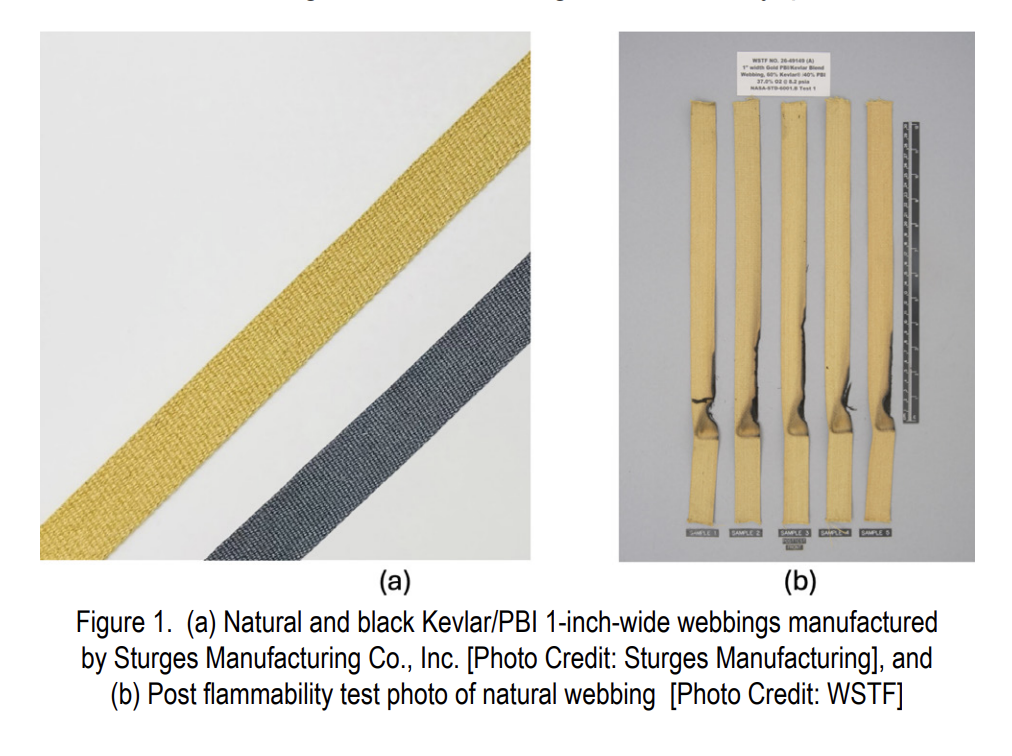
NASA has completed flammability testing on commercial webbing materials designed for spacesuits and equipment in the oxygen-rich atmospheres of future lunar and Martian habitats. The agency tested off-the-shelf webbings against NASA-STD-6001B standards, the rigorous protocol governing materials exposed to elevated oxygen concentrations.
A hybrid webbing from Sturges Manufacturing Company excelled in testing. The material combines 60 percent Kevlar, the aramid polymer known for heat resistance, with 40 percent polybenzimidazole, a high-performance polymer engineered for extreme thermal environments. The natural version passed NASA flammability protocols under Test 1 conditions.
The distinction matters because lunar and Martian missions require different atmospheric compositions than Earth operations. Future pressurized habitats on the Moon and Mars will use elevated oxygen concentrations to reduce total atmospheric pressure, lowering the mass of air life support systems must manage. Higher oxygen levels, however, dramatically increase flammability risks for textiles and other materials.
Spacesuits, habitat interiors, and equipment rely on webbings for structural integrity and fastening. Straps, harnesses, and reinforcement patches see constant use in harsh environments. Materials must withstand both thermal stress and fire exposure without degrading or igniting.
NASA's flammability standards ensure that materials tested in simulated lunar or Martian cabin atmospheres will not accelerate combustion or contribute fuel to potential fires. The Kevlar/PBI blend offers proven performance in thermal protection while meeting the agency's stringent oxygen environment requirements.
This work supports the Artemis program's goal of establishing sustained human presence on the lunar surface and later Mars missions. Qualifying materials now prevents equipment failures during extended operations. The testing data becomes a foundational resource for suit manufacturers and habitat engineers designing systems for deep space exploration.
CATEGORY