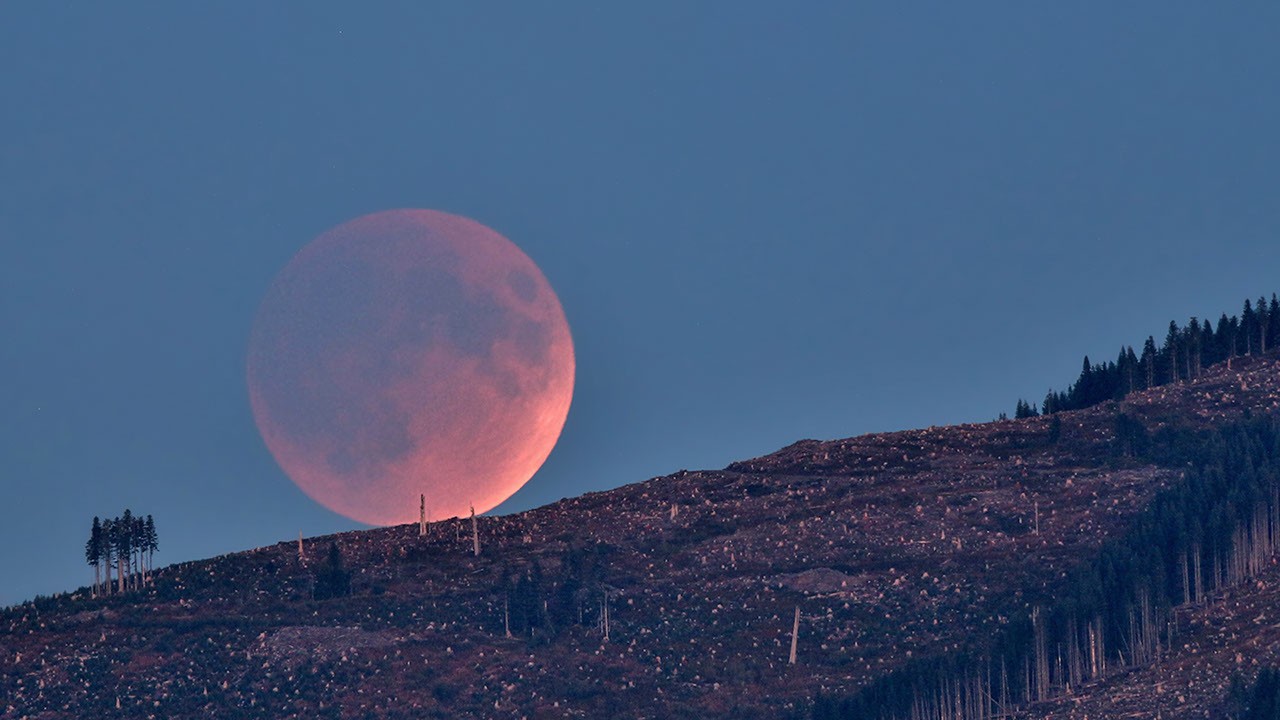
August 2026 delivers four major skywatching events that will reward observers with naked eyes or binoculars. A solar eclipse opens the month, followed by the Perseid meteor shower at its peak, brilliant evening appearances of Venus, and a deep partial lunar eclipse closing August.
The solar eclipse occurs early in the month. Observers positioned along the eclipse path will witness the Moon passing directly in front of the Sun. The exact visibility depends on geographic location, with some regions experiencing totality while others see a partial eclipse.
The Perseid meteor shower peaks mid-August, producing one of astronomy's most reliable annual displays. This shower occurs when Earth's orbit intersects debris from Comet Swift-Tuttle. Under dark skies away from light pollution, observers can expect dozens of meteors per hour at peak activity. The radiant point lies in the constellation Perseus, though meteors streak across much larger portions of the sky.
Venus reaches maximum brightness in the evening sky during August. The planet shines brighter than any star or other planet visible from Earth, making it impossible to miss after sunset in the western sky. Venus remains visible for several hours after the Sun dips below the horizon.
A deep partial lunar eclipse concludes the month. During this event, the Moon passes through Earth's shadow, creating a dramatic reddish or copper tint across most of the lunar disk. Unlike solar eclipses, lunar eclipses are safe to observe without special equipment and remain visible from the entire night side of Earth.
These events require no special equipment beyond clear skies and patience. NASA recommends checking local weather forecasts and traveling to dark-sky locations away from city lights to maximize visibility, particularly for meteor shower observations. August 2026 offers accessible windows into celestial mechanics and the dynamics of Earth's place in the solar system.