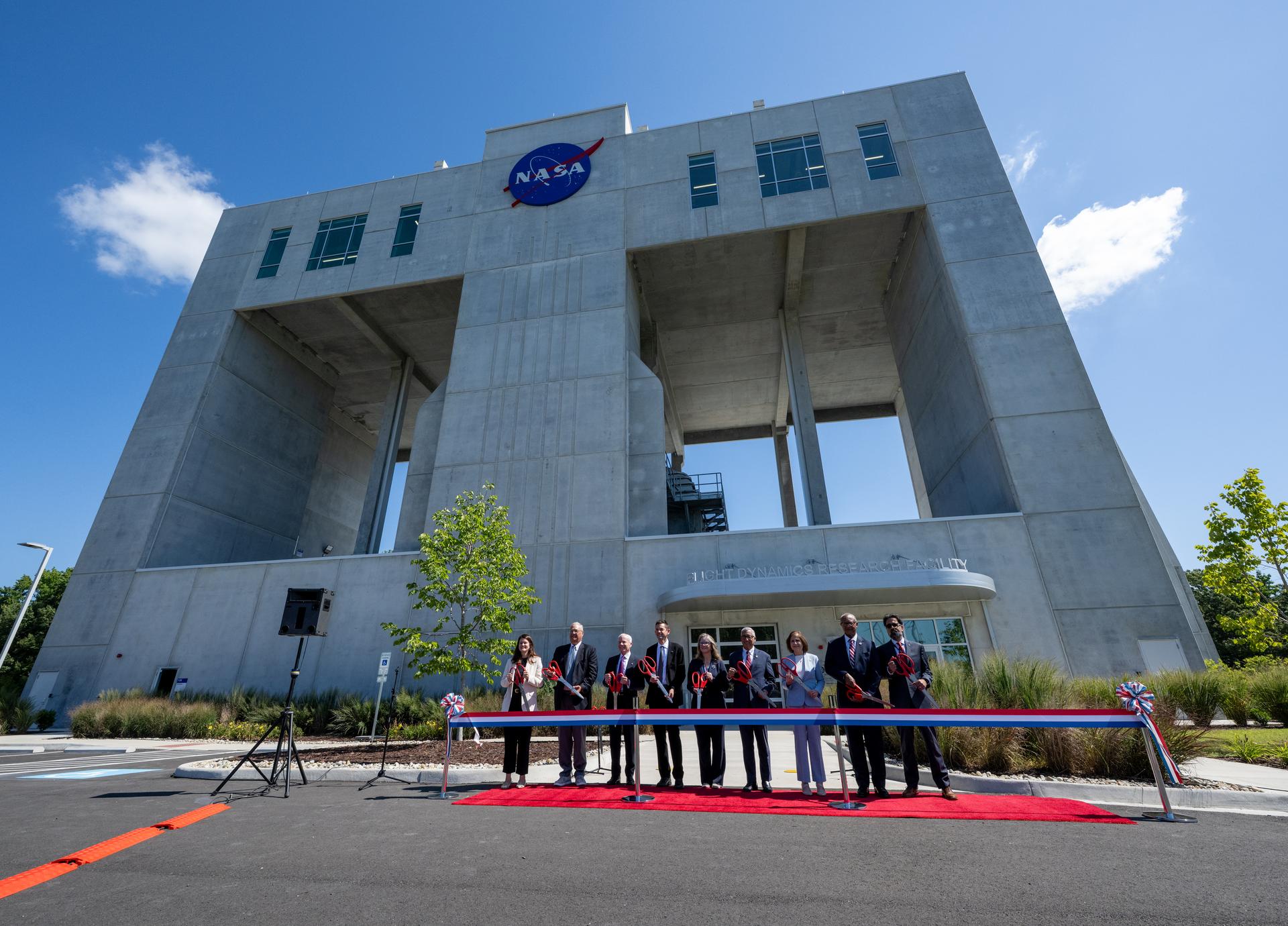
NASA inaugurated the Flight Dynamics Research Facility at its Langley Research Center in Hampton, Virginia, a wind tunnel built to test aircraft, rockets, and space vehicles before they reach operational status. The facility provides NASA and its industry partners with testing capabilities for the next generation of aerospace hardware across multiple mission types.
Wind tunnels remain essential infrastructure for aerospace development. Engineers use them to measure aerodynamic forces, validate computational models, and identify design flaws before hardware enters flight testing. The new facility at Langley expands NASA's capacity to conduct these tests across a broader range of vehicle types and flight regimes.
Langley Research Center, established in 1917, has long served as a hub for aeronautics and space research. The center's existing wind tunnels have supported development of aircraft from the X-15 experimental plane to the Space Shuttle. This newest addition continues that legacy while addressing gaps in testing infrastructure for contemporary vehicle designs.
The facility supports NASA's broader exploration agenda. Testing capabilities for rocket performance and space vehicle aerodynamics directly feed into programs like Artemis, which aims to return humans to the Moon and establish sustainable lunar exploration. Commercial partners developing crew and cargo vehicles also rely on such facilities to validate designs before operational missions.
NASA faces increasing demand for ground testing as the agency pursues simultaneous programs in low Earth orbit, lunar exploration, and Mars preparation. Distributed wind tunnel facilities across NASA centers allow parallel testing programs and reduce bottlenecks in vehicle development timelines.
The Flight Dynamics Research Facility represents continued investment in ground infrastructure at a moment when space exploration activities are expanding. Rather than relying entirely on computational fluid dynamics modeling, physical testing remains irreplaceable for identifying unexpected phenomena and validating safety-critical vehicle behavior. For NASA and its partners, reliable test infrastructure translates directly into confidence in vehicle performance before flight operations commence.