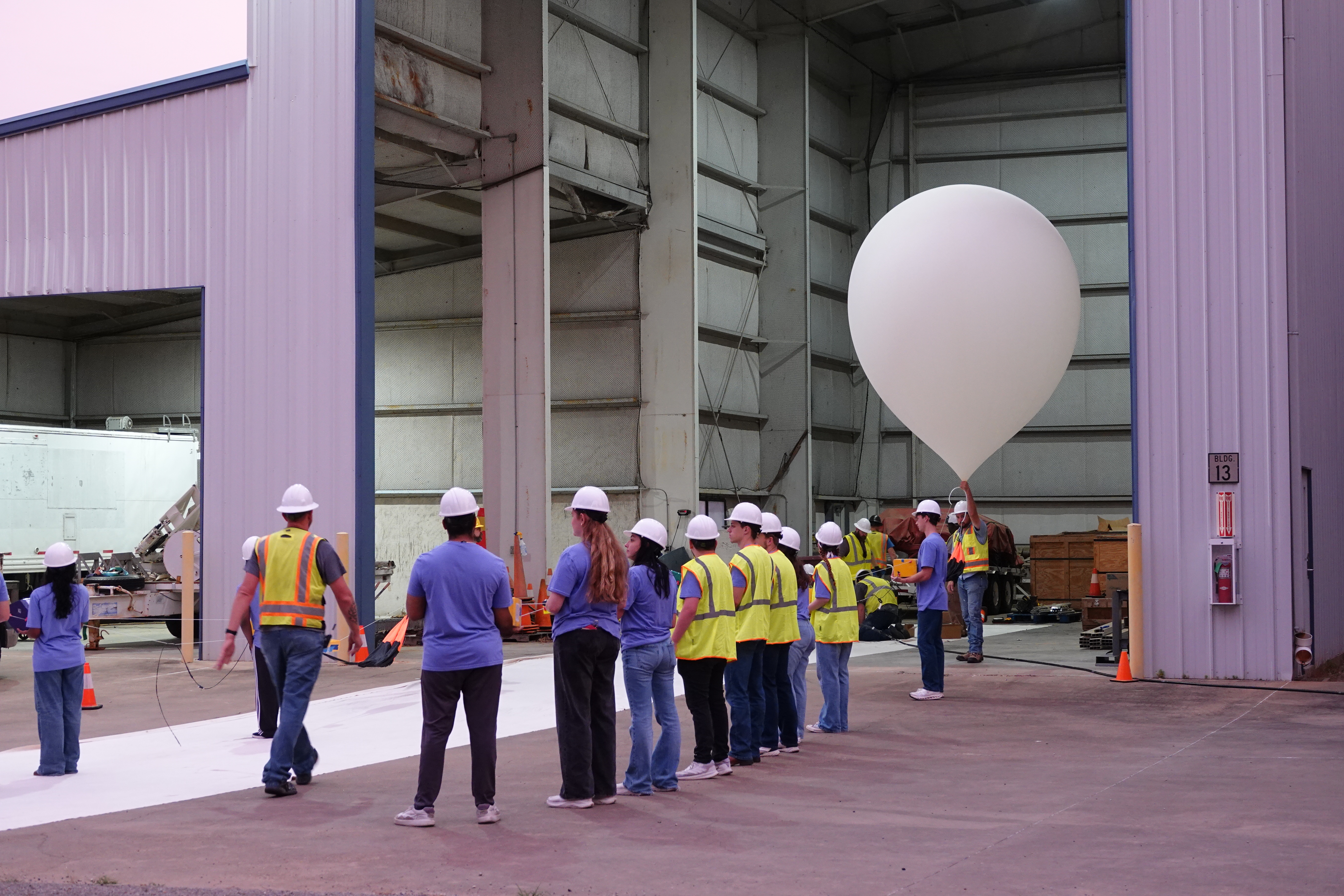
Louisiana students are launching scientific experiments to near-space altitudes using NASA's high-altitude balloon program at the Columbia Scientific Balloon Facility in Palestine, Texas. Every spring, teams of students and faculty travel to the facility carrying payloads they have engineered over months of preparation.
The high-altitude balloon program offers direct access to the near-space environment, where students can conduct experiments at altitudes where conditions begin approaching those of space itself. The Columbia Scientific Balloon Facility operates as NASA's primary platform for this type of educational outreach, enabling students to design, build, and test real scientific instruments under conditions that mirror operational space missions.
These student-built payloads typically include sensors and data collection systems that measure atmospheric conditions, radiation exposure, or other parameters relevant to space science and Earth observation. Students operate laptops to monitor their experiments in real time as the balloons ascend, then recover their payloads after descent for post-flight data analysis.
The program delivers authentic research experience that goes beyond classroom learning. Students encounter genuine engineering constraints, troubleshoot equipment failures, and analyze real scientific data collected from the upper atmosphere. The hands-on nature of the work builds competency in experimental design, data interpretation, and problem-solving.
Louisiana's participation in this program reflects the broader mission of NASA's educational initiatives to inspire and prepare the next generation of scientists and engineers. By providing access to authentic space-adjacent environments and tools, the agency demonstrates that rigorous scientific work remains accessible to students outside traditional research institutions.
The spring balloon campaigns at the Columbia Scientific Balloon Facility continue to draw students and faculty from Louisiana schools, creating annual opportunities for experiential learning in atmospheric and space science. Each launch represents months of student effort translating into tangible flight hardware and valuable datasets.