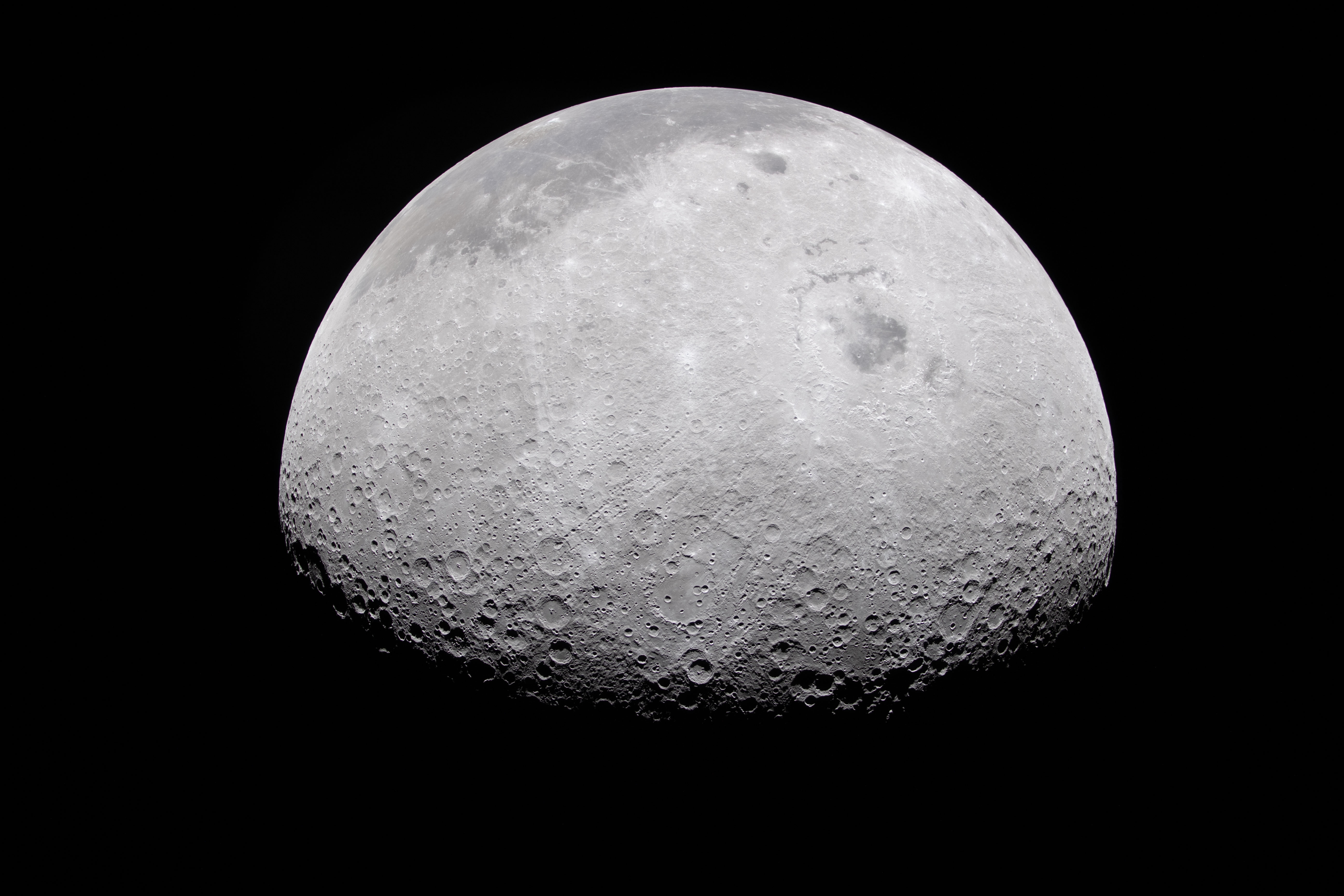
NASA and SpaceX will observe a Falcon 9 upper stage rocket body colliding with the Moon on Wednesday, August 5, near the Einstein and Bell craters. The impact event offers a rare opportunity to gather direct measurements of lunar surface conditions and subsurface composition.
The upper stage, spent from a commercial satellite launch, will strike the lunar surface at approximately 5,500 miles per hour. NASA deployed ground-based telescopes and space-based instruments to document the collision, which poses no hazard to Earth. The impact trajectory and velocity enable scientists to study how the lunar regolith responds to hypervelocity projectiles, data critical for understanding the Moon's structural integrity and dust behavior.
This observation leverages assets from multiple NASA missions already positioned to capture the event. Space-based platforms will record the initial impact flash and thermal signature, while ground telescopes will track debris plumes and surface changes. The coordinated observation strategy maximizes scientific return from what would otherwise be an unmonitored debris strike.
Such events provide empirical data that simulations alone cannot replicate. The collision generates seismic waves that propagate through lunar geology, detectable by sensitive instruments. Scientists can infer subsurface density, composition, and layering from how these waves travel and reflect. Understanding lunar surface mechanics becomes increasingly relevant as NASA plans sustained human presence through the Artemis program.
SpaceX's Falcon 9 upper stages frequently complete their missions and eventually reenter Earth's atmosphere or, occasionally, impact other celestial bodies. This particular stage, released after deploying commercial payloads into orbit, entered a trajectory intersecting lunar orbit. Rather than viewing it as debris, NASA converted the predictable impact into a controlled scientific experiment.
The August 5 observation demonstrates how space agencies extract research value from routine operational trajectories. Similar impacts have occurred previously, but coordinated documentation efforts remain uncommon