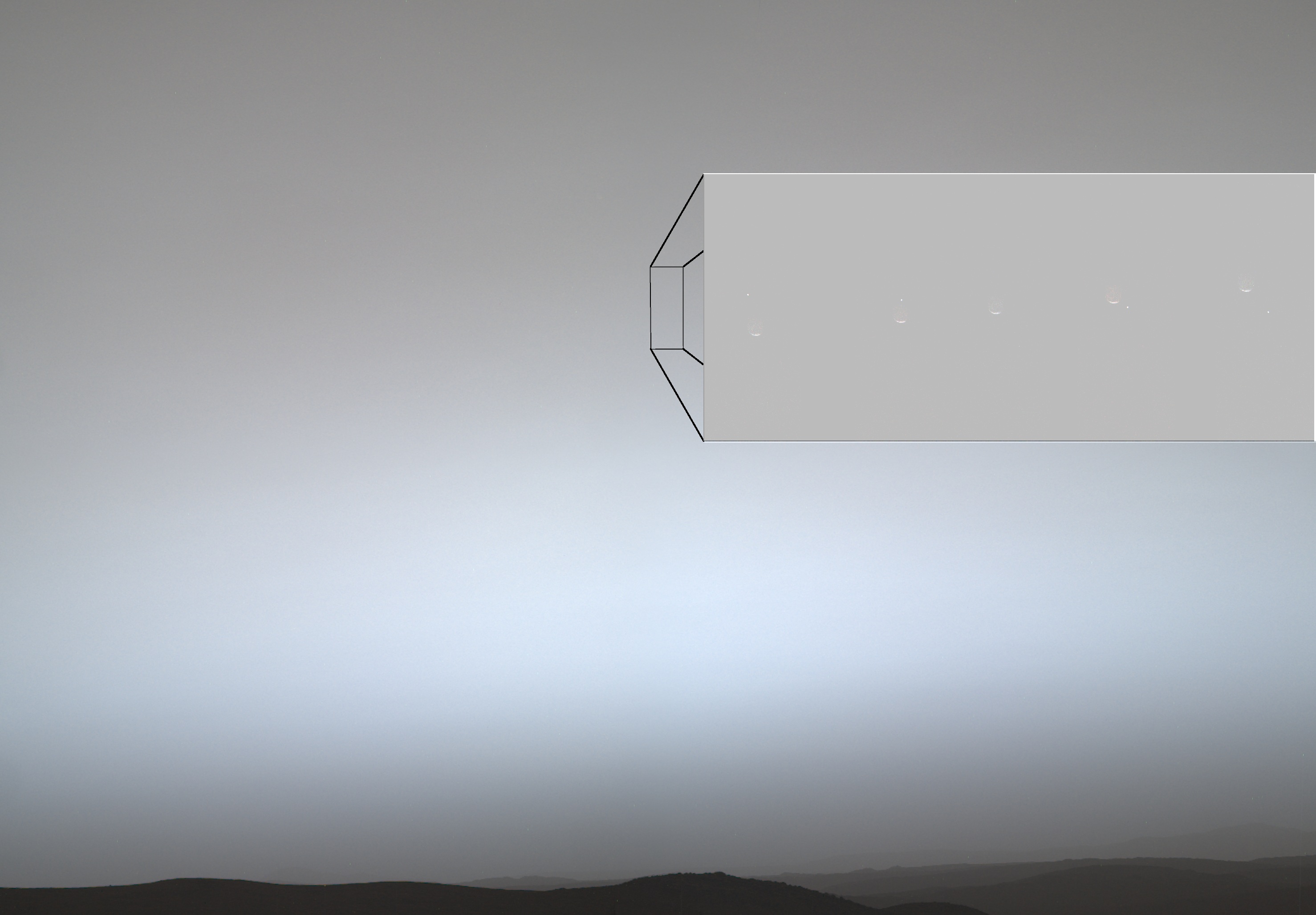
NASA's Perseverance rover has captured the first images from Mars' surface showing Earth disappearing behind Phobos, the larger of Mars' two moons. The sequence records our home world as a point of light in the Martian sky, gradually obscured by the crescent shape of Phobos during what astronomers call an occultation event.
Perseverance acquired these images using its Mastcam-Z instrument, which combines high-resolution imaging with zoom capability. The rover operates in Jezero Crater, where it has been searching for signs of ancient microbial life since its February 2021 landing. This observation extends the rover's scientific reach beyond its primary mission objectives.
The images hold dual significance. First, they demonstrate the capabilities of Perseverance's camera systems in tracking celestial objects from the Martian surface. Second, they provide direct visual evidence of Earth's position and brightness as seen from another world, offering perspective on how our planet appears to instruments designed for extraterrestrial observation.
Phobos itself remains a target of intense scientific interest. The moon orbits Mars every 7.66 hours, closer to its primary body than any other moon in the solar system. Understanding Phobos' characteristics helps planetary scientists refine models of moon formation and orbital mechanics. Japan's Martian Moons eXploration mission, or MMX, plans to collect samples from Phobos and return them to Earth, making observations like Perseverance's increasingly valuable for mission planning.
These images also carry symbolic weight. They document Earth as others would see it from Mars, a reminder of humanity's expanding reach across the solar system. As NASA continues operating Perseverance and planning future crewed missions to Mars, such observations anchor our understanding of the Mars environment and the view that awaits future explorers standing on that distant surface.